“I think of my images as advocating, gently and persistently, for the value of noticing.”
The Poetry Hidden in the Mundane
Eva Berler built her photographic practice through a gradual shift in perspective rather than a sudden reinvention. After spending years in marketing, she chose in 2019 to dedicate herself fully to creative work, embracing photography as a way of paying closer attention to the world around her. What emerged from that decision was not a search for spectacle or dramatic subjects, but an ongoing commitment to observing details that often escape notice. Her personal phrase, “my little mundane world,” encapsulates this approach, expressing a fascination with quiet moments, subtle textures, and overlooked fragments of everyday life. Through her lens, ordinary surroundings become opportunities for reflection, inviting viewers to reconsider what they routinely pass by. This attentiveness extends across both natural and urban settings, where she finds visual possibilities in fleeting encounters, delicate forms, and transient conditions. Rather than separating observation from personal experience, Berler uses photography as a means of connecting external environments with internal reflection, creating images that function as visual meditations on presence and awareness.
Photography also became a pathway back to a deeper relationship with nature and self-discovery. The act of observing carefully transformed into an intimate dialogue between perception and emotion, allowing Berler to understand herself through the subjects she encountered. Whether focusing on macro details or broader abstract compositions, her work consistently demonstrates sensitivity toward what exists at the edges of attention. This perspective was strengthened through educational experiences, including seminars in Greece and participation in the Museum of Modern Art’s Seeing Through Photographs online course in New York. These studies expanded her understanding of visual language, helping her recognize how photographs communicate meaning, evoke emotional responses, and shape interpretation. The combination of intuitive observation and formal learning remains central to her practice. Instead of relying solely on instinct or theory, she balances both, creating photographs that feel emotionally resonant while remaining carefully considered. This dual foundation has helped define a body of work that values subtlety, emotional depth, and thoughtful visual storytelling.
At the core of Berler’s artistic identity lies a belief that meaningful experiences are often found in places that receive little attention. She did not initially pursue photography with the ambition of becoming an artist. Instead, she sought a slower pace and a more attentive way of engaging with the world. Over time, the discipline itself revealed an artistic voice that aligned naturally with her way of seeing. Her images encourage contemplation rather than explanation, inviting viewers into atmospheres shaped by memory, stillness, wonder, and emotional resonance. Rather than directing audiences toward a single interpretation, she creates space for personal reflection. The resulting photographs often feel suspended between observation and imagination, presenting visual narratives built through association and mood rather than straightforward documentation. This commitment to quiet discovery has become one of the defining characteristics of her work, establishing a distinctive presence within contemporary photography that champions the value of noticing and the significance of seemingly modest moments.

Eva Berler: Constructing Meaning Through Atmosphere
The visual language developed by Eva Berler is rooted in suggestion, rhythm, and emotional connection. Her photographs rarely depend on direct statements or overt narratives. Instead, they operate through atmosphere, encouraging viewers to experience images through feeling before analysis. This approach reflects her attraction to poetic forms of storytelling, where meaning emerges gradually through relationships between photographs rather than through isolated images. Nostalgia, dreamlike qualities, silence, and wonder frequently appear within her work, yet they do so with restraint. Nothing is exaggerated or overly explained. The power of the image often resides in what remains unsaid, allowing space for interpretation and emotional participation. By prioritizing subtlety, Berler creates photographs that reward prolonged attention. The viewer becomes an active participant, discovering connections and meanings that unfold slowly over time. This emphasis on emotional rhythm distinguishes her work from more literal forms of visual communication and reflects her desire to create experiences that resonate on an intuitive level.
Several recurring themes provide continuity throughout her practice. Questions of connection, visibility, memory, and the traces left by human and natural presence repeatedly surface within her images. She is interested in what remains after an event has passed, in signs of existence that persist quietly within landscapes, objects, and environments. These concerns are closely linked to her broader interest in stillness and contemplation. In a culture characterized by speed and constant stimulation, Berler’s photography offers an alternative rhythm. Her work advocates for pause, reflection, and attentiveness, encouraging audiences to recognize value in moments that might otherwise be overlooked. Visible and invisible elements coexist within her photographs, creating a sense of mystery while emphasizing the complexity of perception itself. Through this lens, photography becomes more than documentation. It becomes a method of exploring relationships between presence and absence, permanence and impermanence, revealing how meaning can emerge from subtle visual clues and understated encounters.
One project that exemplifies these ideas is Suspended Worlds, a series that achieved significant recognition when it won the Wildlife and Nature category in the Professional competition of the 2024 Sony World Photography Awards. The series later entered the permanent contemporary collection of the Museum of Avant-Garde in Switzerland, marking an important milestone in Berler’s career. Beyond its accolades, however, the project holds particular significance because it encapsulates the central motivations behind her work. Through images that reveal unexpected beauty within ordinary and frequently ignored subjects, Suspended Worlds demonstrates her commitment to transforming perception. The series highlights the richness hidden within everyday environments and reinforces her belief that attentive observation can uncover remarkable depth. Rather than searching for extraordinary subjects, Berler reveals the extraordinary qualities already present within familiar surroundings. The project stands as a concentrated expression of her artistic philosophy, illustrating how patience, curiosity, and sensitivity can transform modest details into powerful visual experiences.

Influences Beyond the Frame
The creative influences shaping Eva Berler extend far beyond the boundaries of photography. Literature, music, cinema, and painting all contribute significantly to the emotional and aesthetic foundations of her work. She is particularly drawn to artistic traditions that prioritize atmosphere, vulnerability, and poetic expression, qualities that resonate strongly throughout her photographs. Paintings associated with and following Impressionism have been especially important in shaping her sensitivity to light, mood, and visual suggestion. Rather than seeking direct inspiration from specific techniques, she responds to the emotional qualities present within artistic works across multiple disciplines. This openness allows her photography to maintain a broad cultural and imaginative vocabulary. The resulting images often feel connected to larger traditions of storytelling and emotional expression while remaining distinctly photographic in form. By engaging with diverse creative influences, Berler continually expands her understanding of how images can communicate and how visual experiences can evoke personal reflection.
Nature remains her most consistent and enduring source of inspiration. Within natural environments she discovers a sense of freedom that encourages experimentation, curiosity, and imaginative exploration. Organic forms, subtle changes in light, and fleeting details offer endless opportunities for observation and creative interpretation. While urban settings also play a role in her work, nature provides a particularly fertile space for visual discovery because of its unpredictability and openness. Beyond landscapes and environmental subjects, inspiration frequently emerges from conversations, films, books, and everyday experiences that carry unexpected emotional significance. A passing moment in a city street, a compelling sentence in a novel, or a deeply personal exchange can all influence the way she sees and photographs the world. This sensitivity to experience allows her practice to remain dynamic and responsive, continuously shaped by encounters that might appear ordinary but contain emotional depth beneath the surface.
Underlying these influences is a belief in art’s ability to create meaningful sensory experiences. Berler is interested in how creative works can awaken emotions that often remain hidden within daily routines. She values artistic expression that invites contemplation rather than instruction, preferring works that open possibilities rather than dictate conclusions. This perspective informs her own approach to image making. Through carefully observed photographs and evocative visual sequences, she seeks to create moments of recognition and emotional connection for viewers. Her goal is not simply to present beautiful imagery but to offer new ways of experiencing familiar subjects. By encouraging audiences to engage with subtle details and overlooked spaces, she creates opportunities for reflection that extend beyond the image itself. This emphasis on emotional accessibility and personal interpretation helps explain the quiet power of her work and its ability to resonate with viewers from different backgrounds and experiences.

Eva Berler: From Digital Observation to Handmade Presence
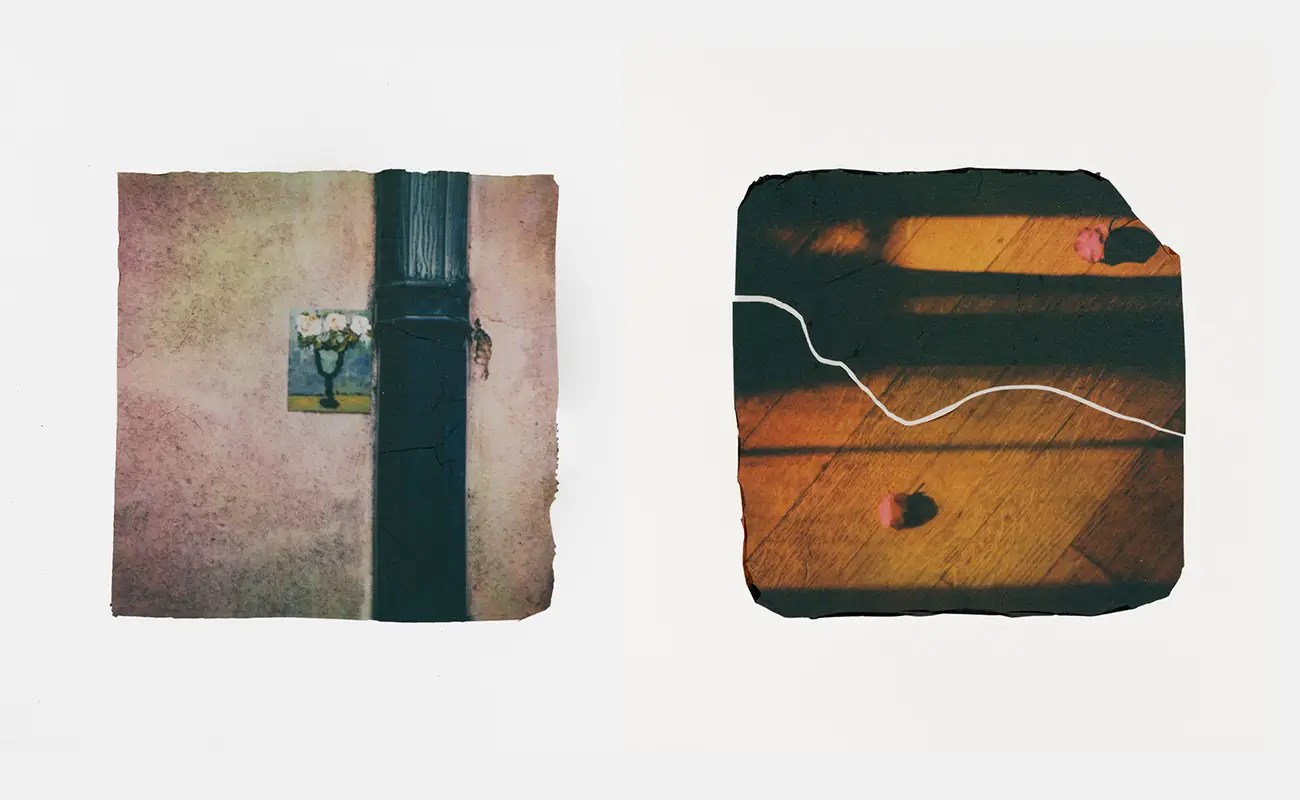
A significant recent development in Eva Berler’s practice involves expanding beyond purely digital photography into alternative and handmade processes. While photography remains the foundation of her work, she has begun transforming digital images through techniques that introduce greater materiality and physical engagement. This evolution reflects a desire to deepen the relationship between image, object, and viewer. Processes such as Polaroid emulsion lifts, cyanotypes, photocollage, linocut printing, and combinations of photography with ceramics introduce new dimensions of texture and unpredictability. Each technique alters the image in unique ways, creating artworks that carry the marks of both process and material. Rather than treating these methods as separate from her photographic practice, Berler views them as a natural continuation of the same attentiveness that defines her image making. The transition from screen-based presentation to handcrafted object allows her photographs to acquire a different kind of presence, one that encourages tactile engagement and prolonged observation.
What attracts her to these analogue approaches is closely connected to the values that first drew her to photography. Slowness, concentration, and close attention remain central motivations. Handmade processes introduce variables that cannot be fully controlled, creating opportunities for discovery throughout the act of making. Materials respond in unexpected ways, producing outcomes shaped by interaction rather than precise prediction. This unpredictability contributes to the uniqueness of each work and reinforces her interest in the beauty of imperfection. The resulting pieces maintain their photographic origins while gaining additional layers of meaning through physical transformation. Viewers encounter not only an image but also evidence of process, touch, and experimentation. Through this expanded practice, Berler continues her exploration of overlooked details and subtle experiences, translating them into objects that possess both visual and material richness.
Her future ambitions are equally connected to narrative construction and thoughtful presentation. Berler’s day-to-day practice remains intuitive, guided by observation rather than rigid planning. She follows curiosity, allowing subjects and connections to emerge organically while photographing. Meaning often becomes clearer later during editing and sequencing, when relationships between images begin to reveal themselves. This interest in sequencing naturally extends into bookmaking, an area that has become increasingly important within her artistic development. She has already published Little Miracles in 2022 through iFocus Editions, a collection celebrating flowers and the beauty of nature, followed by Tracing the Unseen in 2026, a self-published project examining overlooked and nearly imperceptible traces within everyday environments. Looking ahead, she is eager to continue transforming both digital and handmade projects into carefully structured photobooks. For Berler, the book format provides an ideal space where images can converse with one another, creating immersive visual narratives that unfold gradually and invite sustained engagement.