“It is the plastic that becomes painting.”
Matter Between Instinct and Transformation
The work of Devid Biscontini exists in a space where industrial material loses its conventional identity and acquires emotional density, physical vulnerability, and unexpected vitality. Based in Umbria, the Italian contemporary artist has built a distinctive visual language through experimentation rather than academic instruction, developing an instinctive relationship with matter that shapes every stage of his practice. Plastic, often associated with disposability and industrial repetition, becomes under his intervention a reactive surface charged with tension, memory, and movement. Through heat, combustion, and controlled instability, Biscontini transforms coextruded plastic films into layered compositions that stand between painting and sculpture, creating works that appear simultaneously wounded, organic, and alive. His process does not seek perfection or static form. Instead, it embraces mutation, allowing material behavior to participate actively in the creation of the final image.
Growing up in Umbria deeply influenced his perception of material and form. The region’s historical atmosphere, marked by traces of ritual, craftsmanship, and ancient culture, contributed to his sensitivity toward objects as carriers of memory and transformation. References to archaic sculpture, Etruscan forms, and prehistoric imagery continue to echo through his work, though never through direct imitation. These influences emerge as sensations embedded within texture, silhouette, and physical presence. His artistic language also draws from natural processes such as erosion, growth, combustion, and collapse, translating these forces into visual structures shaped through thermal manipulation. Rather than presenting plastic as artificial and detached from life, Biscontini reveals its capacity to behave like skin, tissue, or geological matter suspended in flux.
This continuous investigation into metamorphosis defines the conceptual foundation of his practice. Identity, emergence, and instability recur throughout his works, often appearing through fragmented bodily forms that oscillate between abstraction and figuration. His compositions resist fixed interpretation because they exist in transitional states, neither fully dissolving nor completely solidified. Heat and gravity become collaborators rather than tools, generating unpredictable deformations that introduce vulnerability into the process. Every gesture remains irreversible, every fusion permanent. Through this approach, Biscontini transforms industrial material into a poetic territory where destruction and creation unfold simultaneously, revealing how synthetic surfaces can hold emotional and psychological resonance far beyond their utilitarian origins.

Devid Biscontini: The Physical Language of Heat and Color
At the center of Biscontini’s practice lies a rigorous and deeply physical method rooted in thermal transformation. Working with coextruded polyethylene plastic films, he exposes surfaces to open flame and high-temperature air, allowing the material to contract, expand, fuse, and collapse under controlled conditions. This process produces chromatic layering, translucent depth, and sculptural tension that challenge conventional distinctions between two-dimensional and three-dimensional art. The resulting works possess a visual ambiguity that recalls painting while maintaining the physical density of sculpture. Light interacts with folds, burns, and fused pigments to create shifting surfaces that appear constantly in motion, as though the material continues transforming long after the process has ended.
The artist’s statement, “I do not paint on plastic. It is the plastic that becomes painting,” encapsulates the essence of this approach. Rather than treating material as passive support, Biscontini allows plastic itself to determine structure and visual rhythm. His interventions introduce energy into the surface, yet the final form emerges through collaboration with tension, instability, and chance. This balance between intention and unpredictability gives his works their visceral presence. Color does not merely coat the material but appears embedded within it, creating fields of intensity that pulse through folds and transparent layers. Through thermal deformation, industrial plastic acquires a painterly sensibility while preserving traces of combustion and resistance, producing works that feel simultaneously fragile and forceful.
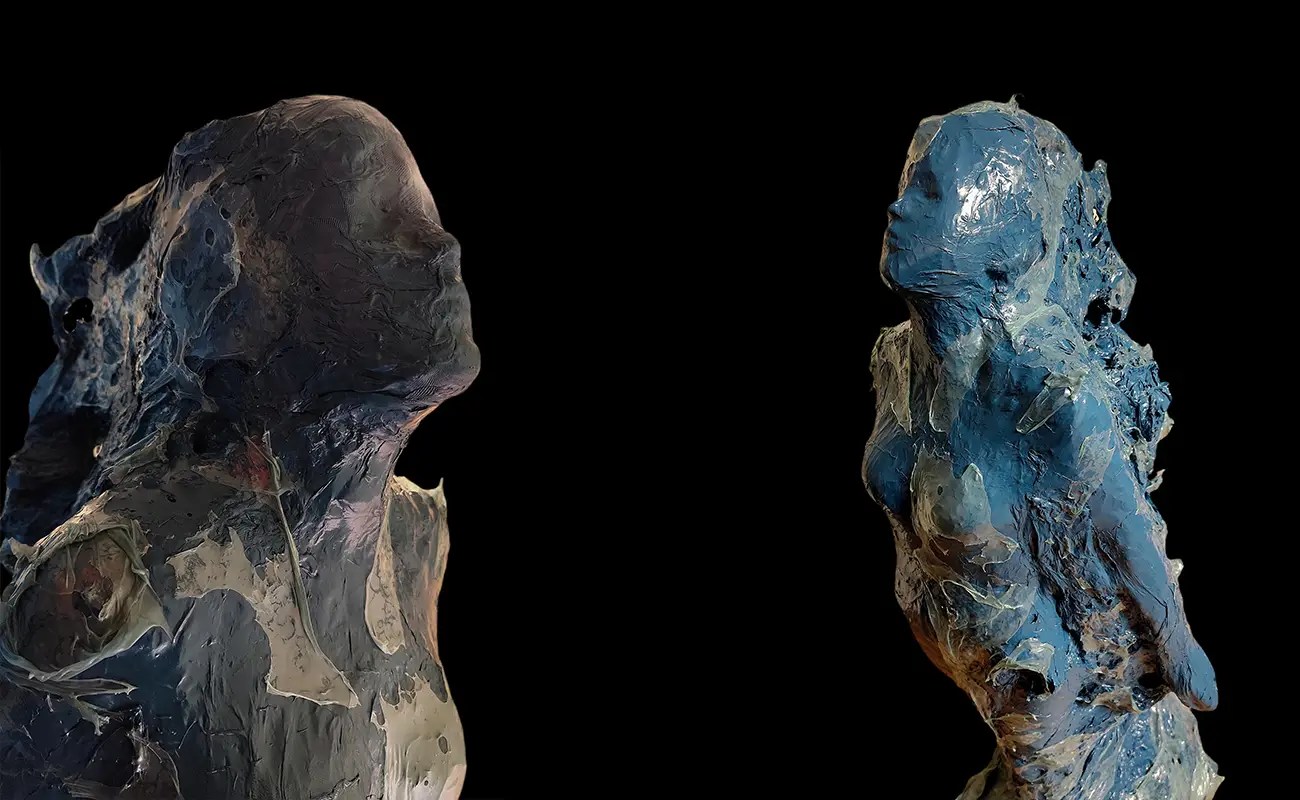
One of the most significant pieces within his practice emerged from the thermal deformation of layered industrial plastic that gradually resembled a fragmented body suspended between dissolution and birth. This work became central to his research because it condensed the themes that continue to define his artistic investigation: transformation, corporeality, and the unstable boundary between synthetic and biological existence. Heat and open flame caused the material to collapse and fuse unpredictably, allowing tension within the plastic itself to guide the composition. The resulting form suggested a body in transition, neither fully formed nor entirely erased. Through this work, Biscontini articulated the possibility that industrial matter can carry emotional presence, memory, and even vulnerability when subjected to processes of transformation and exposure.

Surfaces of Memory and Post Organic Presence
Many of Biscontini’s compositions evoke bodies, landscapes, or biological fragments without fully settling into recognizable representation. This ambiguity allows the viewer to encounter the work physically before assigning symbolic meaning to it. Surfaces ripple like skin, chromatic fields resemble internal anatomy, and fused layers suggest erosion or mutation. These visual associations emerge naturally from the behavior of the material rather than from imposed imagery. The artist often begins without a fixed plan, preferring to discover forms progressively through direct interaction with heat and matter. This openness introduces an atmosphere of uncertainty into the work, reinforcing the sense that each composition records a living process rather than illustrating a predetermined concept.
The recurring presence of the body, especially the female figure, occupies an important position within his visual vocabulary. In projects such as Chromatic Transformations, Biscontini explores corporeal metamorphosis through thermoformed plastic sculptures where color becomes structural and anatomy dissolves into movement. Bodies appear fragmented, stretched, or suspended within chromatic tension, reflecting broader psychological and existential concerns linked to fragility, identity, and regeneration. These works avoid literal representation in favor of suggestion, allowing physical form to emerge gradually through transparency and distortion. The body becomes less a subject than a site of transformation where material instability mirrors emotional and psychological transition.
Another notable project, Venus of Colors, presented during Milano Scultura at Villa Bagatti Valsecchi, reinterprets classical figurative tradition through industrial plastic and thermal manipulation. Instead of reproducing historical ideals of permanence and harmony, Biscontini introduces instability and mutation into the classical image. The sculpture maintains echoes of ancient form while simultaneously appearing fluid and contemporary, shaped by combustion, translucency, and chromatic intensity. Through this reinterpretation, he establishes a dialogue between historical memory and industrial material culture. Plastic, typically considered temporary and functional, becomes capable of carrying symbolic and aesthetic weight comparable to traditional sculptural materials, revealing unexpected possibilities within contemporary material experimentation.

Devid Biscontini: Toward Immersive Environments of Metamorphosis
Biscontini’s daily process remains rooted in experimentation and direct physical engagement with materials. Heat, gravity, and instability are not obstacles within his studio practice but active participants guiding the evolution of each work. Rather than sketching rigid compositions in advance, he approaches creation through gradual emergence, observing how the plastic responds under pressure and temperature. This improvisational method preserves spontaneity while also demanding intense technical control. Every burn mark, contraction, and fusion becomes part of the visual language, creating surfaces marked by both violence and beauty. The irreversible nature of the process heightens the emotional intensity of the work because each decision permanently alters the material, leaving visible traces of risk and transformation.
His current research project, titled MATRICE, expands these investigations into immersive sculptural environments centered on body, memory, and post organic transformation. Through this evolving body of work, Biscontini seeks to move beyond isolated objects and construct spaces where sculpture becomes experiential and enveloping. The project continues his exploration of emergence and instability while introducing new spatial dimensions that allow viewers to physically enter environments shaped by thermal transformation and material tension. These installations aim to blur distinctions between object, architecture, and organism, creating atmospheres where synthetic surfaces appear alive and continuously evolving.
Exhibitions such as Muta-menti at Rocca Museo di Umbertide, Milano Scultura, and the Passoscuro Art Festival have contributed to the visibility of his distinctive approach within the contemporary Italian art landscape. Across these presentations, Biscontini has continued refining a personal language that merges instinctive gesture with material experimentation. His work challenges assumptions surrounding industrial plastic by revealing its capacity for emotional resonance, visual depth, and poetic transformation. Through combustion, transparency, and chromatic intensity, he constructs forms that exist in constant negotiation between destruction and regeneration. The result is a body of work that transforms synthetic matter into an expressive force capable of carrying memory, vulnerability, and human presence.