“Sometimes people think that because I can’t speak, I don’t have a voice. But I do — and I also use colors instead of words. That’s how I paint: with my hands, my energy, with hope and love. And even if my voice sounds different, I want you to hear me.”
A Voice Beyond Words
The story of Clara Woods enters the contemporary art landscape with a rare intensity that immediately captures attention and invites reflection. Her journey is inseparable from the profound personal circumstances that shaped her earliest moments, beginning with a stroke she experienced while still in her mother’s womb. Although she cannot speak, write, or read, she understands Portuguese, English, and Italian, navigating communication through intuition, presence, and above all through visual creation. Painting became far more than a pastime or profession for her. It emerged as a language capable of expressing identity, emotion, and aspiration in ways conventional speech could never provide. Within her canvases, she constructs spaces where silence transforms into resonance, and where selfhood is affirmed through color, movement, and form.
Growing up with the persistent sensation of existing slightly outside the rhythms of the surrounding world deeply influenced how she perceives connection and belonging. Art gradually became the means through which she could define her own territory, crafting a domain in which she felt fully seen and empowered. This process was neither immediate nor effortless. It required resilience in the face of discouraging predictions from medical professionals who once suggested she would live without meaningful agency. Over time, painting offered her a source of dignity and responsibility, allowing her to shape both personal purpose and professional identity. Through sustained dedication, she established herself as an artist who not only creates but also leads, managing her own career with her mother’s help as her business partner and developing a global presence that continues to grow.
The magnitude of her accomplishments speaks volumes about her determination and vision. Today, Clara Woods commands a following of more than two million people who engage with her work across digital platforms, while her original artworks have reached collectors in many parts of the world. Each piece she releases carries the imprint of a life defined by persistence and optimism. Instead of retreating from adversity, she has converted challenge into creative momentum. Her practice stands as an inspiring reminder that artistic expression can transcend physical and linguistic limitations, offering a compelling testament to the power of imagination and will.

Clara Woods: Instinct, Influence, and the Birth of a Visual Language
Clara Woods did not set out with a deliberate plan to become an artist. Her return to painting occurred after experimenting with other activities that failed to ignite a genuine sense of fulfillment. At first, the process felt uncertain and even frustrating. Early works were dominated by dark tones, with black paint covering the surfaces as she searched for direction. Over time, however, she began to explore the possibilities of vibrant hues, dynamic shapes, and expressive motion. This gradual shift marked the emergence of an instinctive visual vocabulary that now defines her practice. Rather than adhering to academic conventions or structured techniques, she paints with a deeply intuitive approach, allowing emotion and sensation to guide each decision. The resulting compositions carry an immediacy that invites viewers to experience feeling before interpretation.
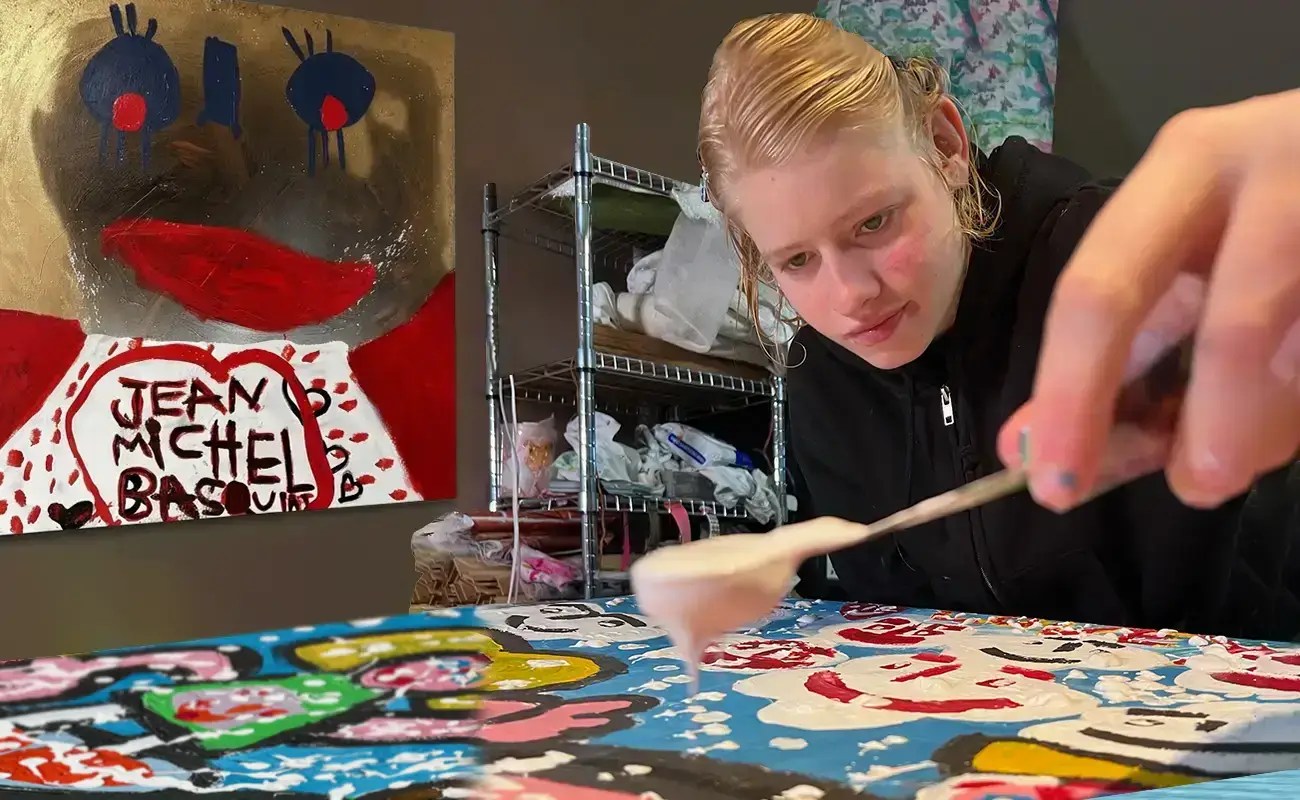
A pivotal moment arrived when her mother introduced her to the art of Frida Kahlo through a book that profoundly reshaped her understanding of creativity. Kahlo’s ability to transform pain into strength resonated deeply with Woods, offering both inspiration and validation. From that point onward, the act of painting became a conscious commitment rather than a casual experiment. Additional influences broadened her perspective, including admiration for figures such as Vincent van Gogh, Jean Michel Basquiat, Gregory Siff, Gianpiero D’Alessandro, and Kathia Lagacé Nadon. These artists contributed diverse examples of emotional intensity, expressive gesture, and fearless individuality. Yet Woods’ inspiration extends well beyond historical or contemporary art references. Encounters with family members, strangers, and everyday experiences continually shape the narratives embedded in her canvases.
Today, her thematic focus revolves around hope, love, resilience, and the universal desire to be recognized without condition. She frames her work as an invitation to dream expansively and pursue those dreams with conviction. This philosophy manifests not only in her imagery but also in the energy with which she engages her audience. Her paintings operate as visual affirmations that celebrate difference while encouraging connection. By channeling instinct and lived experience into her artistic language, Clara Woods has cultivated a style that feels both personal and inclusive, enabling viewers from varied backgrounds to find their own meanings within her compositions.

Chromatic Emotion and the Physical Presence of Paint
A defining characteristic of Clara Woods’ artistic expression lies in her bold and emotionally charged use of color. Saturated tones such as luminous reds, vivid blues, sunflower yellows, and playful pinks function as structural elements that shape the atmosphere of each composition. Rather than serving merely decorative purposes, these hues operate as carriers of psychological depth and mood. Backgrounds often transform into immersive environments that envelop figures and symbols in waves of tenderness, urgency, or exuberance. The interplay of complementary shades introduces a palpable vibrational tension that gives her paintings a sense of vitality. Through this chromatic strategy, Woods constructs emotional architecture that invites viewers to step into spaces where feeling becomes the dominant form of perception.
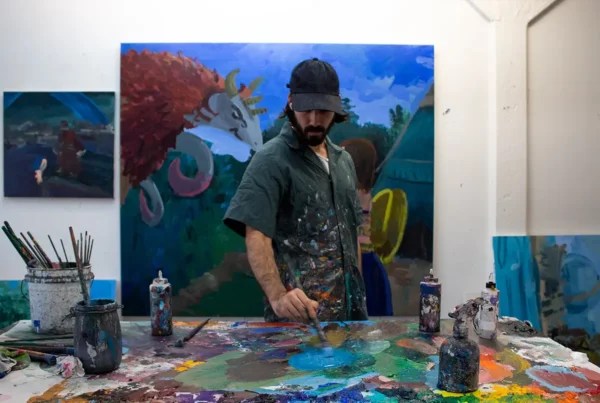
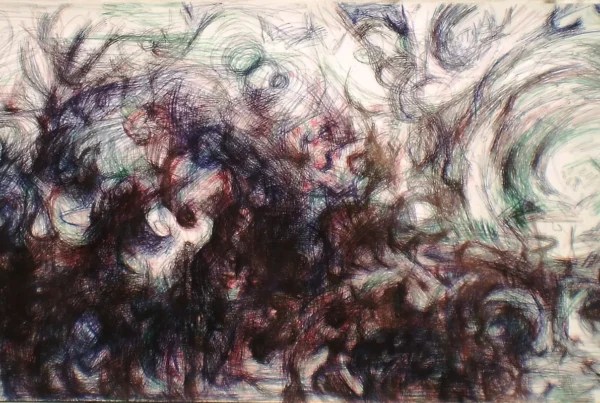
Equally compelling is her approach to gesture and mark making, which reveals an embrace of the tactile qualities inherent in acrylic paint. Thick applications, splashes, scratches, and sweeping strokes create surfaces that appear animated by the momentum of their creation. Each mark seems to record the physical presence of the artist at a specific moment in time, transforming the canvas into a site of performance and memory. In works that lean toward abstraction, directional lines and layered textures generate spatial complexity through motion rather than traditional perspective. This emphasis on movement fosters an experience in which the viewer senses not only the finished image but also the dynamic process that brought it into existence.
Her compositional tendencies often favor direct engagement, with portraits positioned frontally and monumental forms occupying central positions within the frame. Such arrangements lend a ceremonial quality to the work, as though each painting becomes a stage for emotional narratives to unfold. At other times, she fragments the pictorial space into zones of pattern and color reminiscent of dreamlike recollection. The apparent simplicity of playful lettering or cartoon inspired faces coexists with assertive line work and intense tonal contrasts. This duality between innocence and intensity allows her art to operate across multiple registers, communicating celebration and defiance simultaneously while maintaining an unmistakable authenticity.

Clara Woods: Memory, Movement, and Expanding Horizons
Among the many works that hold special significance in Clara Woods’ oeuvre, one painting stands out for its deeply personal origins. Created in honor of her beloved guinea pig Choco after his passing, the large acrylic on canvas composition features his likeness surrounded by abundant floral motifs. This piece exemplifies how she transforms intimate experiences into visual tributes that resonate with universal themes of affection and remembrance. The flowers surrounding Choco function not only as decorative elements but also as symbolic gestures of care and continuity. Through scale, color, and expressive detail, the painting becomes both a memorial and a celebration, demonstrating her capacity to channel grief into beauty and emotional connection.
Her daily practice continues to evolve through ambitious projects that extend beyond the studio walls. A central focus in recent months has been the Unmuted Tour, an initiative that brings her work to diverse audiences across continents. Presentations have already taken place in cities such as Los Angeles and Newport Beach in California, as well as Florence and Milan in Italy. These events create opportunities for viewers to encounter her paintings in person while engaging with the broader narrative of her artistic journey. The tour reflects her commitment to visibility, dialogue, and shared experience, reinforcing the idea that art can foster meaningful bonds across cultural boundaries.
Simultaneously, Woods has embraced a new chapter through her residency at Rogue Collective in Newport Beach, where she now works in a dedicated studio environment. This setting offers both stability and creative stimulation, enabling her to pursue future projects with renewed enthusiasm. Anticipation is building for upcoming presentations in Canada, marking another step in her expanding international presence. Through these endeavors, Clara Woods continues to redefine what artistic success can look like when shaped by perseverance and instinct. Her path illustrates how imagination, courage, and community engagement can converge to create a practice that is as impactful socially as it is visually compelling.