“Art should be a bridge, not a barrier, and creativity can transform lives if given a chance.”
A Practice Shaped by Experience and Renewal
Dreü Wolé stands as a contemporary neo expressionist whose creative life is inseparable from lived experience, reflection, and renewal. Known also as a poet and creative advocate, he approaches art not as an isolated act of production but as a means of restoring voice, dignity, and connection. His path toward artistic clarity was not linear, and that irregular journey informs the gravity and sincerity that define his work today. Time spent away from society fostered an inward reckoning that later translated into an outward commitment to service, communication, and openness. Art emerged not merely as self expression, but as a way to reconnect with others and to offer something meaningful beyond personal catharsis. This grounding belief gives his practice a sense of purpose that resonates across disciplines and audiences.
That sense of purpose is evident in how Wolé frames the role of creativity within a broader human context. Rather than treating art as a luxury or closed system, he positions it as a bridge that invites participation and understanding. His work is motivated by the conviction that creative expression can heal, empower, and shift perspectives when access is not restricted. Each painting, installation, or mixed media work carries an intention that reaches beyond aesthetic consideration. The act of making becomes a form of advocacy, encouraging viewers to see themselves as capable of transformation. Through this lens, art is not separate from life but intertwined with the challenges and possibilities that shape it.
This foundational outlook sets the stage for understanding Wolé’s presence within the contemporary art landscape. His practice aligns emotional honesty with social awareness, resulting in work that feels immediate and necessary. The balance between personal history and communal responsibility defines his creative identity, allowing his art to speak both inwardly and outwardly. By grounding his work in experience while remaining open to dialogue, he establishes a framework where expression and empathy coexist. This approach forms the connective tissue between his background and the evolving body of work that continues to define his career.

Dreü Wolé: Language, Material, and Emotional Urgency
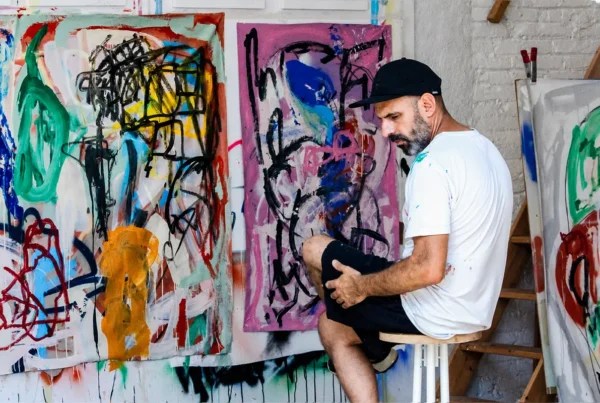
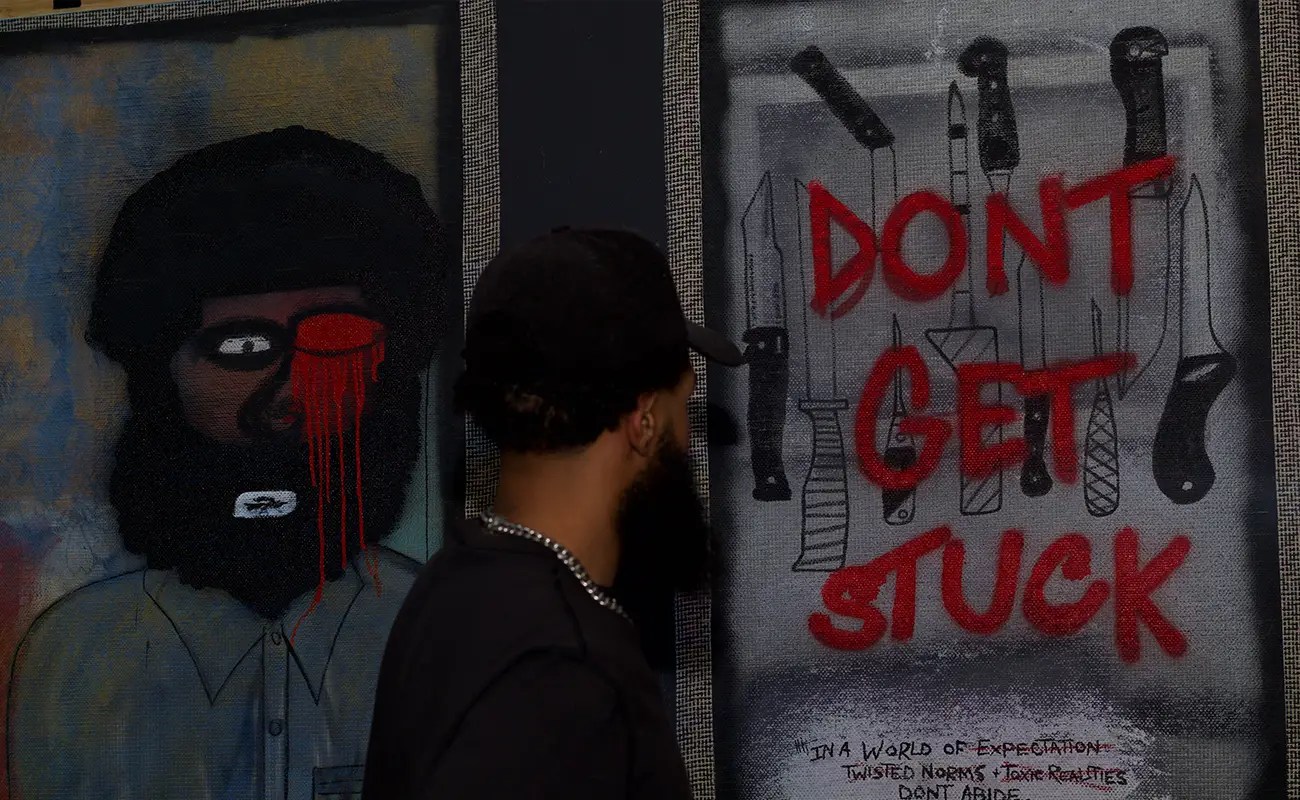
The visual language that characterizes Dreü Wolé’s work is bold, raw, and intentionally unrefined. Working across painting, installation, and mixed media, he favors strong color relationships, assertive line work, and tactile surfaces that carry emotional weight. Figures often appear simplified yet psychologically charged, echoing influences from neo expressionist traditions while remaining firmly rooted in contemporary urgency. Heavy outlines and direct symbolism recall public visual culture such as street imagery and protest signage, emphasizing clarity of message over academic precision. This aesthetic choice reinforces his commitment to accessibility, ensuring that the work speaks directly rather than abstractly.
Material choice plays a significant role in shaping the meaning of his compositions. Wolé incorporates textured surfaces and found elements not as embellishment but as narrative devices that hold memory and experience. Layers of paint are built up, scraped back, and reworked, allowing each surface to convey struggle, persistence, and renewal. Text frequently appears within the imagery in the form of handwritten phrases and declarations. These words function as testimony rather than explanation, reinforcing the inseparability of voice and image within his practice. The imperfect nature of the text underscores sincerity, emphasizing the human presence behind each mark.
Conceptually, his style centers on liberation, self belief, and human connection. The work resists passivity and instead invites engagement, asking viewers to confront limitation while also offering possibility. Wolé’s influences range from artists such as Jean Michel Basquiat to poets, mentors, and everyday individuals who demonstrate courage and resilience. Life itself serves as his primary teacher, and that influence is honored through compositions that feel lived in rather than polished. This fusion of influence, material, and intention creates a body of work that communicates urgency without alienation, reinforcing his belief that art should invite rather than exclude.

Movement, Meaning, and the Power of a Singular Work
Among Wolé’s body of work, a large scale painting titled “Freedom in Motion” holds particular significance. Standing six feet tall, the piece combines oil, acrylic, and mixed media, with shards of recycled materials embedded directly into the surface. The physical presence of the work commands attention, while its layered construction mirrors the complexity of the journey it represents. Each element contributes to a narrative of struggle and perseverance, transforming the canvas into a record of lived experience. The choice of materials reinforces the theme of reclamation, turning fragments into structure and weight into meaning.
The importance of “Freedom in Motion” lies in its deeply personal origins and its broader symbolic reach. For Wolé, the painting reflects his own process of breaking free and reclaiming agency over his life. The composition does not present freedom as something bestowed, but as something actively built through effort, reflection, and resolve. Textures accumulate across the surface, suggesting movement and resistance rather than stasis. Viewers encounter a work that communicates hope without erasing hardship, acknowledging the labor required to arrive at self determination. This balance allows the painting to resonate across individual experiences while remaining rooted in the artist’s truth.
Within the context of his practice, this piece encapsulates the values that guide his broader output. It demonstrates how material, scale, and message can converge to create an emotionally legible statement. The painting also exemplifies his commitment to honesty over refinement, allowing visible process to stand as evidence of persistence. “Freedom in Motion” functions not only as a milestone within his career but also as a touchstone for understanding his philosophy. Through it, Wolé affirms that creation itself can be an act of liberation, offering viewers a shared space to reflect on their own capacity for change.

Dreü Wolé: Community, Access, and Shared Creative Space
Community occupies a central position within Dreü Wolé’s artistic practice, shaping both how he works and why he creates. His day to day life balances studio production with mentorship and community focused initiatives, reflecting a belief that art gains strength through shared experience. The studio functions not only as a workspace but as a collaborative hub where emerging artists are encouraged to experiment and grow. By opening his process to others, he challenges the notion of the solitary artist and replaces it with a model rooted in exchange and mutual support. This environment reinforces his view that creativity flourishes when barriers are removed.
Accessibility remains a guiding principle in how Wolé engages the public. He hosts workshops, pop ups, and collaborative events designed to make art approachable and participatory. One notable practice involves allowing guests to name their own price for artwork, a gesture that directly confronts economic exclusion within the art world. This approach reframes value as relational rather than transactional, emphasizing connection over commerce. Through these efforts, he seeks to expose art to all people, regardless of background or means. The resulting interactions transform art from an object of distance into a shared experience that fosters empowerment.
Looking forward, Wolé is focused on expanding this vision through projects that merge public installations, community engagement, and interactive experiences. These ambitions reflect a desire to meet audiences where they are, offering encounters with art that feel personal and transformative. His work continues to evolve in dialogue with the people it serves, reinforcing the idea that creativity is a collective resource. By grounding his practice in community and access, Dreü Wolé sustains a model of art making that prioritizes inclusion, participation, and lasting human connection.