“Art became the only language wide enough to hold my grief.”

The Art of Emotional Excavation
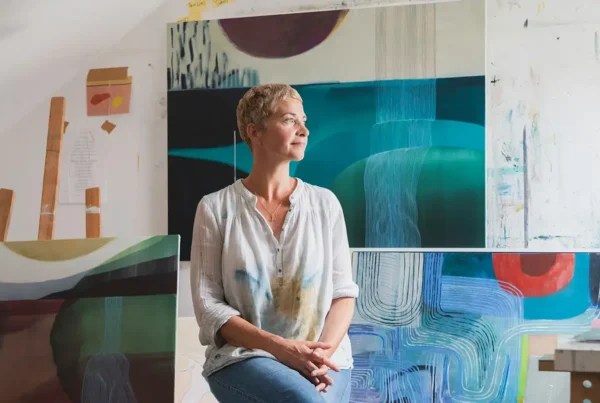
Surien Fourie’s work unfolds like a conversation long overdue — not loud or declarative, but intimate, attentive, and profoundly moving. A South African-born artist now based in the Canadian Prairies, Fourie creates abstract works that do more than fill a canvas; they mine emotional depth and cultural complexity with every brushstroke, tear, and thread. Her journey across continents and identities is not a background detail but the central current of her creative voice. Through painting, collage, poetry, and pedagogy, she offers a rare synthesis of artistic expression and emotional inquiry.
Fourie’s artistic practice began as a necessity rather than a profession. The passing of her mother — her emotional anchor and first guide — marked a turning point, transforming art from a sanctuary into a vehicle for survival and articulation. That foundational experience shaped her inaugural collection, which explored the entanglement of grief and healing. The loss did not simply inspire her work; it reshaped her creative vocabulary and anchored her commitment to emotional honesty. From that moment, her art became a conduit for truth that resists simplification and embraces the complexity of feeling.
Her work today resides at the intersection of abstract aesthetics and emotional resonance. Through Beyond Creative Studio, Fourie facilitates creative exploration for others, encouraging them to uncover what resides beneath the surface of their own stories. Whether through a densely layered painting, a fragile collage, or an aching poem, her creations invite viewers into a process of recognition — not of what is seen, but of what is felt. Fourie’s practice insists that art is not merely a mirror; it is a vessel for memory, rupture, and reassembly.

Surien Fourie: The Poetics of Loss and Belonging
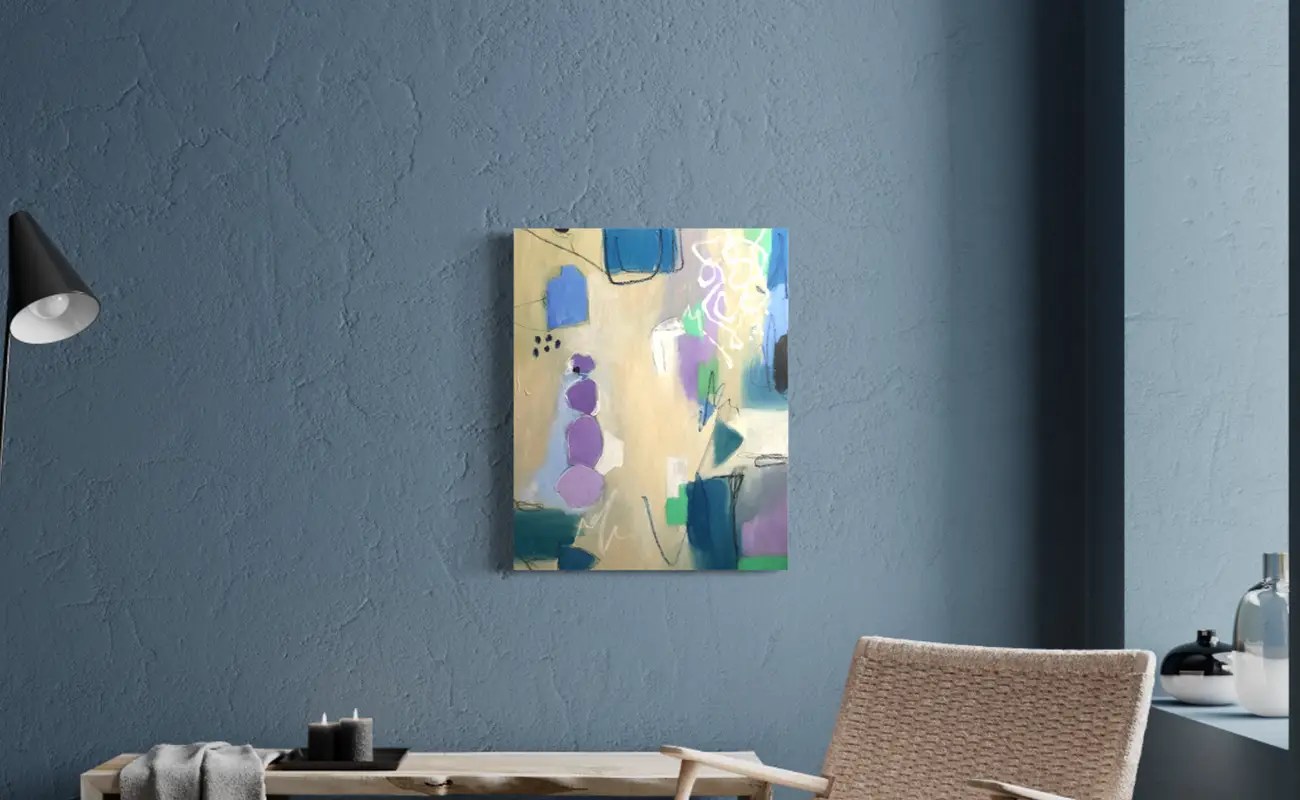
Fourie’s abstract style is characterized by a commitment to layering — visually, thematically, and emotionally. Acrylics, oils, ink, threads, torn materials, and collage elements are chosen not for aesthetics alone but for their metaphorical resonance. Materials hold stories, textures carry memory, and each layer speaks to the complexity of identity and feeling. The surface of her work is never a conclusion but a beginning, inviting the viewer to look deeper, to feel what is unresolved, to recognize the invisible threads that bind us to our histories.

The core themes Fourie explores are both personal and universally resonant. Her pieces address the emotional topography of grief, the disorientation of displacement, and the quiet strength embedded in women’s stories. As a third culture kid, her sense of home is not fixed but continually reconstructed — an identity that is neither wholly here nor there, but composed of fragments, echoes, and inherited meanings. This sensibility is reflected in how she composes each work: built from multiple perspectives, drawn from interviews, shared stories, and lived experience, and always grounded in research as much as intuition.
Poetry is not separate from her visual practice but intricately entwined. Sometimes the poem is the blueprint, establishing the emotional architecture from which a painting grows. Other times, the painting arrives first, and the poem follows like a whispered translation. This dialogic relationship between word and image defines her artistic voice. It allows her to say what can’t be fully expressed in one form alone. Each poem-painting pair becomes an act of translation — of feeling into form, of silence into speech, of interiority made visible.

Art as Witness and Companion
What shapes Fourie’s work more than technique or tradition is experience — not the polished kind, but the raw, often uncomfortable truths that life refuses to simplify. The death of her mother, the search for belonging across continents, and the subtle strength found in quiet conversations with women have all left their imprint. Her practice involves listening as much as creating. Through intimate exchanges with others, especially women navigating grief, change, and identity, she gathers the emotional materials that later take shape on her canvases and in her poems.
Influences from the art world include Joan Mitchell’s gestural abstraction, Rothko’s emotive atmospheres, and Anselm Kiefer’s textured surfaces steeped in memory and meaning. Yet Fourie draws just as deeply from everyday textures: the way thread unravels, the feel of torn paper, the shifting prairie light, or an overheard story in a café. These seemingly mundane moments accumulate, feeding her visual language with nuance and authenticity. They allow her to construct a vocabulary that is tactile and poetic, anchored in observation and infused with feeling.
One piece that encapsulates this duality of personal and collective emotion is “Relief It’s Over,” part of her Path Without a Mother series. Built from acrylic layers, gestural marks, and a blend of turbulent and tranquil color palettes, the painting visualizes the contradictory emotions of grief — particularly the unspoken relief that can accompany the end of a loved one’s suffering. Paired with a poem bearing the same title, the work offers a space where sorrow and solace coexist. The poem’s vulnerable lines, such as “These conflicting emotions… I’m relieved,” reveal the honesty Fourie strives to create in all her work. This piece became more than an artistic release; it became a point of connection for others navigating similar emotional landscapes.

Surien Fourie: Constructing Identity Through Creation
Fourie’s day-to-day creative practice is shaped by an intricate balance between spontaneous exploration and deliberate investigation. One moment she may be engaged in tearing, stitching, or mark-making guided entirely by instinct. The next, she is journaling, conducting interviews, or writing poetry, using language to clarify emotional landscapes that may eventually find visual form. This rhythm mirrors the central ethos of her work — that emotion is layered, that stories do not unfold in a straight line, and that creativity must be allowed to move in its own time.

At Beyond Creative Studio, she facilitates others in exploring these emotional undercurrents, extending her belief that art is not just for expression but for healing, witnessing, and transformation. The studio acts as both a sanctuary and a laboratory — a place where memories are translated into form, and where participants are encouraged to recognize the complexity of their own narratives. This commitment to holding space for others is not separate from her practice; it is intrinsic to her identity as an artist and educator.
The project Fourie is currently preparing brings her journey full circle: a new body of work exploring life as a third culture kid. Through cardboard, netting, natural textures, porcupine quills, and deliberate acts of tearing and mending, she is constructing visual metaphors for fragmented identity and reconstructed belonging. This series is not only autobiographical but also built from the stories of others who live between cultural boundaries. As with her previous collections, it is less about resolution than recognition — about holding the complexity of identity, memory, and place without forcing coherence. This forthcoming work promises to extend her ongoing inquiry: how we become who we are in the spaces in between.