“I treat lines as the central element of my compositions.”
A Quiet Spark: Origins of a Cross-Cultural Visualist
Yuanhao Tang’s work as an illustrator stands at the confluence of personal memory, cultural immersion, and visual narrative. Specializing in book and editorial illustration, he crafts images that traverse genre and geography, often pulling viewers into emotionally nuanced, culturally layered stories. His artistic practice began in an environment that combined seemingly disparate influences: a family deeply engaged with both technology and art. This duality shaped his approach from the beginning, giving him a visual language that is both analytical and expressive. Within this household, one figure played a particularly pivotal role—his grandfather, an avid traveler and chronicler, whose study overflowed with books, photographs, and an eclectic collection of comic art. The hours Tang spent there became foundational to his relationship with sequential imagery and visual storytelling.
This formative environment nurtured not just a technical inclination but also a narrative sensibility. His grandfather’s archives of sequential art captivated him as a child and ignited a lifelong fascination with how still images can carry motion, tone, and emotional progression. While many artists discover their visual voice later in life, Tang’s early exposure to comics and visual literature planted that seed at a young age. His ongoing commitment to visual storytelling reflects a continuity with this early inspiration. Even as his practice matured, the essence of those first encounters with storytelling through images remains at the core of his illustration work.
His evolution from a curious observer of visual narratives to a professional illustrator was neither accidental nor strictly conventional. After receiving formal training in drawing and painting during high school, Tang initially considered a path in fine art. However, he gradually recognized that illustration offered a more aligned avenue for the stories he wanted to tell. The structured training in traditional techniques gave him a strong technical backbone, but it was the fluid, purpose-driven nature of illustration that truly captured his artistic identity. Today, he continues to navigate between the technical rigor of fine art and the communicative immediacy of illustration, bringing both traditions to bear on every project he undertakes.

Yuanhao Tang: The Language of Line and the Pulse of Story
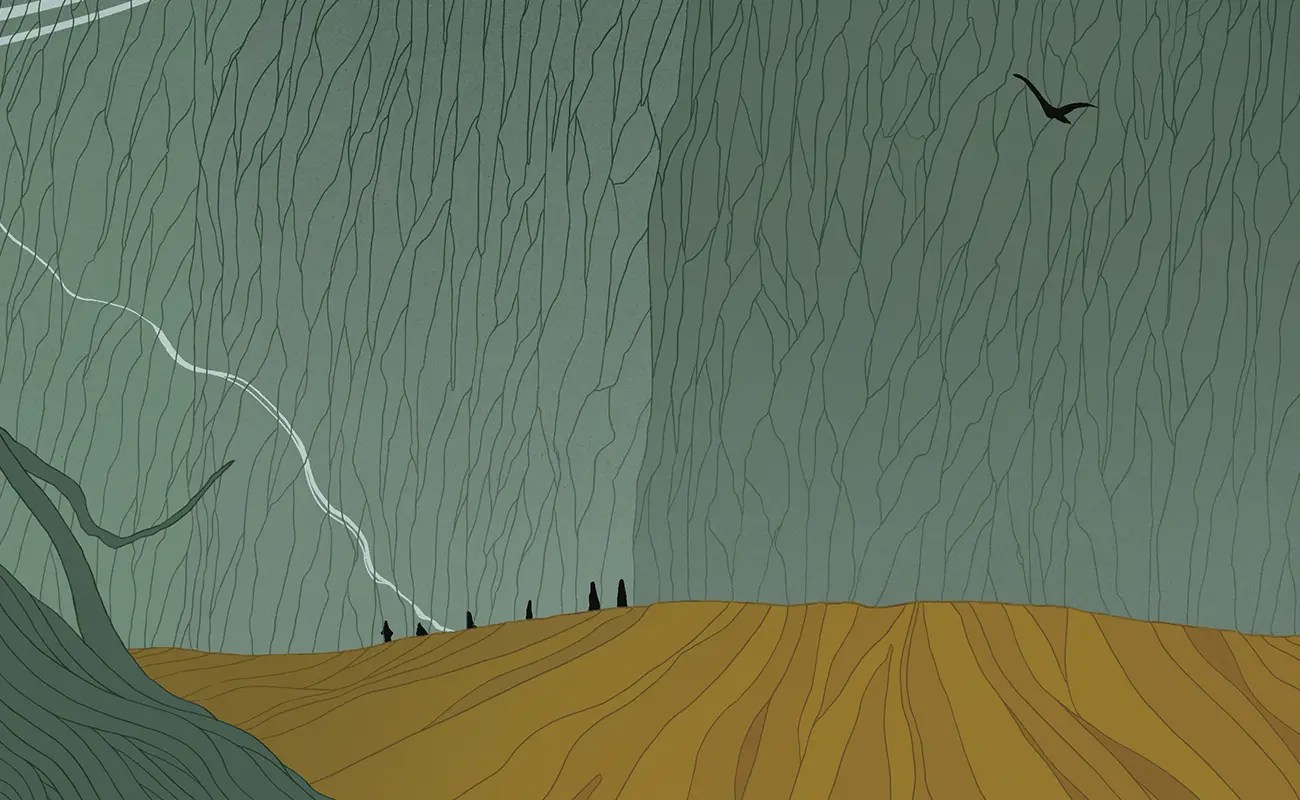
Line serves as both structure and emotion in Tang’s practice, a guiding element through which all of his compositions unfold. His visual style is unmistakably shaped by his early and ongoing love for sequential art and comics, where the rhythm of line determines pacing, tone, and atmosphere. Unlike illustrators who treat color or texture as primary, Tang builds his works from the line up. For him, each stroke is an intentional act, communicating mood and meaning through precision and cadence. This commitment to line drawing grants his illustrations a dynamic quality that balances structure with subtle emotional resonance. His style is therefore not just aesthetic but narrative in function, always serving the story being told.
Within the realm of editorial illustration, Tang demonstrates a flexibility that enables him to address a wide range of topics, from socially engaged content to more whimsical, light-hearted themes. What remains constant is his emotionally sensitive approach to each assignment. He draws not just what is seen, but what is felt—distilling complex themes into images that are accessible yet never simplistic. This sensitivity becomes a bridge between audience and subject, allowing him to tackle diverse material without losing the intimacy or emotional clarity that characterizes his work. His editorial illustrations never feel detached; rather, they invite reflection, offering visual clarity to nuanced issues.
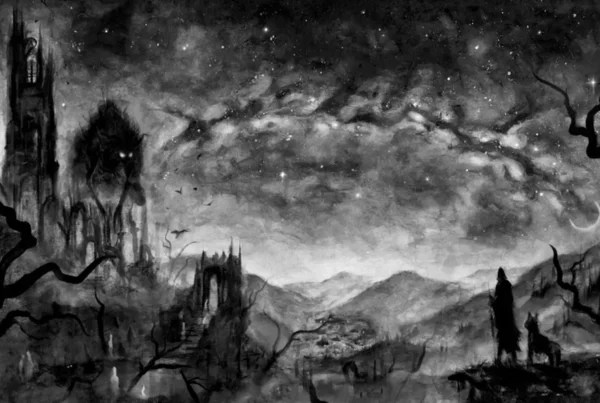
In his book illustration work, Tang’s thematic interests widen to encompass myth, fantasy, and the timeless structures of storytelling found across cultures. His passion for fantasy literature, particularly from both Eastern and Western traditions, serves as an enduring wellspring of inspiration. These stories offer more than imaginative settings—they carry the philosophies, archetypes, and emotional truths of the cultures that birthed them. Tang engages with this material not simply as an illustrator but as a cultural interpreter, finding ways to bridge aesthetic and narrative differences. His visual translations of fantasy narratives aim not just to decorate texts, but to reintroduce them to new audiences with authenticity and cross-cultural resonance.

Visual Storytelling as Translation and Transmission
The impulse to bridge cultures is central to Tang’s recent work, especially evident in his illustration series based on The Legend of the Condor Heroes, a foundational Wuxia novel in Chinese literature. Despite its iconic status in the East, the novel remains underrecognized in Western literary circles. Tang approached this project not only as an illustrator but as a mediator, using visual storytelling to navigate the unfamiliar terrain Western audiences might face with such a culturally specific narrative. Through detailed research and creative reinterpretation, he incorporated fantasy aesthetics that Western viewers might find familiar, such as stylized combat scenes or atmospheric landscapes, to offer a more accessible visual entry point into this rich literary world.
This series marks an important moment in his artistic journey, representing both a personal and professional milestone. Working digitally, Tang found the flexibility and control necessary to explore multiple stylistic strategies, allowing the illustrations to reflect both the emotional gravity and the fantastical elements of the story. He didn’t simply replicate scenes; he reimagined them in ways that honored the novel’s original ethos while making them visually legible across cultural contexts. In doing so, he brought new visibility to a literary tradition often overlooked in global fantasy circles and contributed meaningfully to its broader appreciation.
The significance of this project lies not only in the imagery itself but in the gesture it represents—a commitment to cultural translation through visual art. Tang’s decision to adapt The Legend of the Condor Heroes wasn’t purely aesthetic; it was an act of cultural outreach. His illustrations extend an invitation to audiences unfamiliar with Wuxia fiction, encouraging them to experience these narratives through a visual vocabulary that feels both inviting and authentic. By fusing Eastern narrative complexity with Western visual familiarity, Tang opens a space for shared understanding, revealing how illustration can function as both bridge and beacon between worlds.

Yuanhao Tang: Drawing Without Borders, Living Between Lines
Tang’s daily practice reflects the same balance of discipline and freedom that characterizes his finished works. Sketching remains a foundational part of his routine, not merely as preparation but as a core creative act. The sketchbook serves as his testing ground, where spontaneous lines often evolve into fully realized illustrations. This approach honors the raw, intuitive energy of the line, which he sees as central to his process. Even when he is not working toward a specific project, he continues to seek inspiration by browsing visual archives and image databases, collecting fragments that later resurface in surprising ways. This constant engagement with image-making keeps his visual vocabulary fluid and expansive.
What distinguishes Tang’s workflow is not just productivity, but the way he synthesizes seemingly unrelated ideas into cohesive illustrations. The freedom of unstructured sketching allows him to explore new concepts without the constraints of theme or commission, leading to unexpected connections. Many of his editorial and literary projects begin in these moments of experimentation. He maintains a delicate balance between structure and improvisation, where technique supports exploration rather than limiting it. This balance keeps his work evolving, yet always grounded in the same core principles of emotional clarity and visual storytelling.
Looking forward, Tang aims to deepen his exploration of cross-cultural literature through illustration, continuing the project of visual storytelling as cultural exchange. His vision includes expanding into other narratives that span East and West, finding new ways to translate them visually for broader audiences. The desire is not just to illustrate texts, but to uncover new intersections between traditions that, while historically distinct, share universal themes and archetypes. In bridging these traditions, Tang positions his work at the frontier of a truly global illustration practice—one that invites viewers to see, feel, and understand stories beyond their own cultural lexicons.