
“I’m eager about the unknown; it’s frightening not to see the path laid out before you clearly, but to trust that it’ll make sense in the end is in its own way thrilling.”
A Life Shaped by Tension and Place
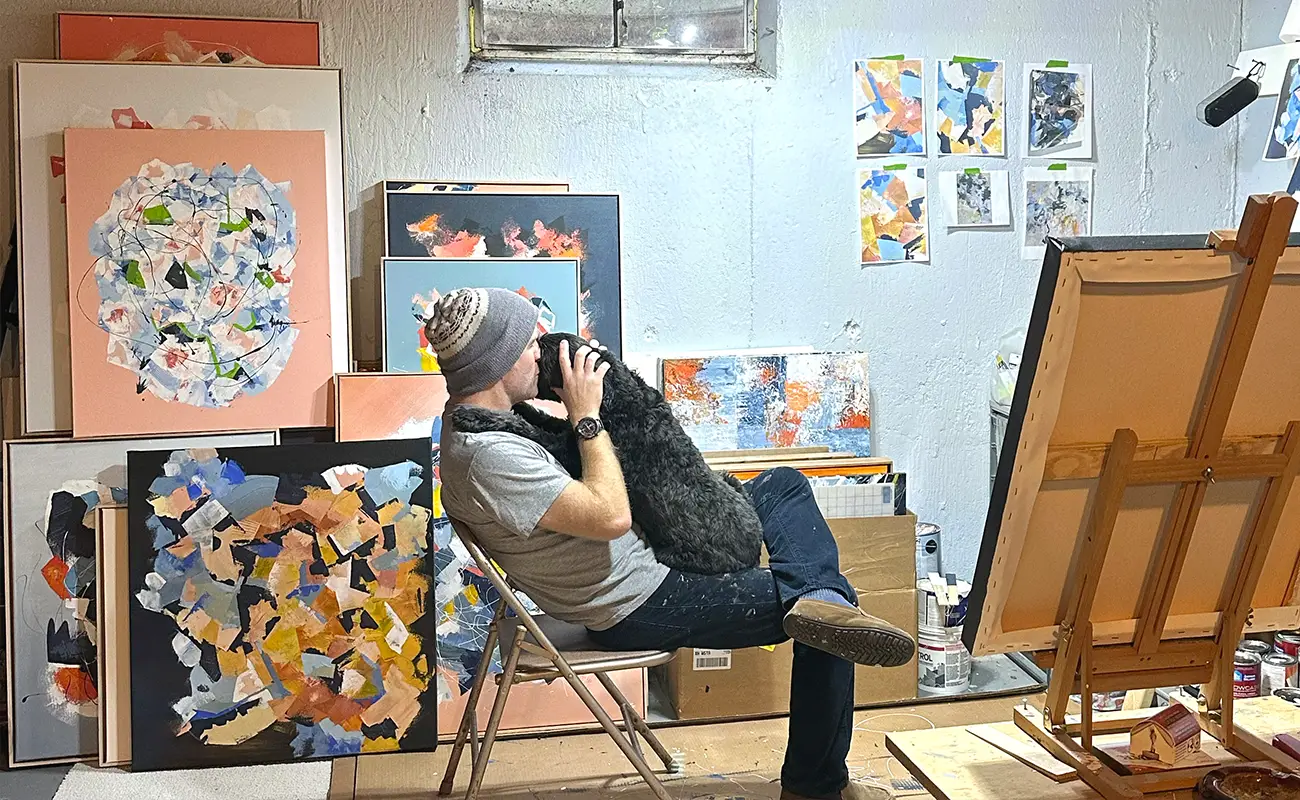
The artistic voice of Tony Gregg emerges from a life shaped by contrast, geography, and time spent in quiet observation. Based in Rhode Island, he has dedicated more than twenty years to painting, allowing curiosity and persistence to guide his development rather than rigid adherence to trends or expectations. His work occupies a space where abstraction becomes a language for lived experience, translating internal states into visual form. The significance of his practice lies not only in the finished canvases but also in the accumulation of questions, revisions, and discoveries that have informed his evolution as an artist. Through sustained engagement with painting, Gregg has cultivated a body of work that reflects both personal history and universal emotional patterns.
Gregg’s background introduces a layered psychological foundation that continues to influence his visual approach. Growing up in the American Midwest, he absorbed an environment defined by religious values and strong family structures. Those early influences emphasized order, community, and inward reflection. Later, relocating to coastal New England introduced a markedly different rhythm of life, one centered on independence, openness, and self-directed exploration. These opposing influences did not replace one another; instead, they coexist, creating friction and dialogue within his creative process. That internal negotiation between restraint and freedom becomes visible in his paintings, where structure and spontaneity interact without resolving into a single dominant force.
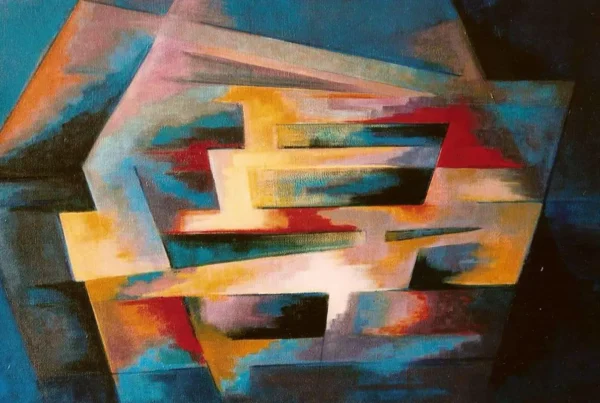
This coexistence of opposing energies results in compositions that feel both intentional and unsettled, inviting viewers into a space of interpretation rather than certainty. Gregg values this ambiguity, recognizing that subjectivity allows each observer to project their own experiences onto the work. The paintings do not dictate meaning but instead offer a visual environment where chaos and harmony operate simultaneously. This balance reflects the artist’s own navigation of identity, place, and time, making his work resonate with those who recognize similar tensions in their own lives.

Tony Gregg: Instinct, Structure, and the Language of Seeing
Becoming an artist, for Gregg, begins with attention rather than technique. He views artistic capacity as rooted in awareness of subtle interactions, such as the way light shifts across surfaces throughout the day or how unspoken emotion passes between strangers. This heightened sensitivity forms the groundwork of his practice, long before a brush touches canvas. His perspective reframes art as an extension of observation, where noticing small variations in tone, texture, and movement becomes a daily discipline. From this foundation, painting evolves into a method for processing what is sensed but difficult to articulate.
The defining characteristics of Gregg’s style emerge from an internal push and pull between instinctive action and compositional control. Each new piece begins as a negotiation between these opposing impulses, with neither fully dominating the other. This dynamic ensures that while his work remains thematically cohesive, no two paintings resolve in the same way. Variations in composition arise naturally from the tension between spontaneous gesture and structural awareness. Rather than imposing uniformity, Gregg allows this internal conflict to shape each work individually, resulting in a practice that values process over predictability.
Central to his visual language is an ongoing exploration of movement and connection. Recurring forms such as spirals, swells, smears, and drips appear not as decorative signatures but as embodiments of rhythm and flow. These elements suggest cycles of growth, release, memory, and anticipation, capturing the oscillation between inward reflection and outward expression. Through these forms, Gregg translates abstract emotional states into tangible visual experiences, offering viewers a sense of motion that mirrors the ongoing act of becoming.

Influences Rooted in Experience and Process
Rather than aligning himself with specific artistic lineages, Gregg draws inspiration from lived experience and the environments that surround him. Daily movement, emotional shifts, and the passage of time provide constant input for his work. His paintings often function as responses to states that resist clear language, including uncertainty, momentum, and internal conflict. By working through these conditions physically and visually, he transforms intangible feelings into structured yet expressive compositions. This approach positions painting as a form of active engagement with life rather than a separate aesthetic pursuit.
Although individual artists do not dominate his list of influences, Gregg finds affinity with those who treat abstraction as a process of discovery. He is drawn to painters who allow gesture to guide decision-making, embrace imperfection, and employ color to establish atmosphere instead of symbolic narratives. This shared philosophy reinforces his belief that clarity can emerge through accumulation and layering rather than premeditated design. Such influences serve less as templates and more as affirmations of an intuitive approach that values authenticity over refinement.
Life experience remains the most powerful force shaping Gregg’s work. Experimentation with materials and openness to change have taught him that the act of painting holds equal importance to the final image. Themes of motion, tension, growth, and exploration reflect ongoing personal transitions, including moments of instability and renewal. These cycles of beginning again and navigating uncertainty appear throughout his compositions, encoded in their rhythms and contrasts. In this way, his paintings function as visual records of lived time, shaped by experience rather than reference.

Tony Gregg: Process, Time, and the Pull of the Unknown
Gregg’s daily working rhythm reflects his openness to both structure and spontaneity. Morning hours often provide a sense of clarity, allowing ideas and decisions to surface with ease. Yet some of his most compelling works have emerged during sleepless nights, when he enters the studio without expectation to see what might unfold. These moments emphasize his willingness to respond to intuition rather than schedule, treating time itself as a variable within the creative process. Painting becomes a conversation between preparedness and chance, guided by attentiveness rather than routine.
Looking ahead, Gregg resists defining specific projects or predetermined outcomes. Each newly prepared canvas represents a fresh opportunity, carrying its own sense of anticipation and risk. The absence of a fixed roadmap does not create hesitation but instead fuels excitement. For him, the act of beginning remains one of the most energizing aspects of artistic practice. Every surface holds the potential for discovery, reinforcing his commitment to remaining present within the process rather than focused on distant goals.
This openness extends to his broader outlook on creative growth. Trusting that the path will reveal itself over time requires comfort with uncertainty, a quality that permeates both his life and work. Gregg embraces the tension between fear and excitement, recognizing it as a catalyst for meaningful exploration. Continuing forward without clear answers allows his practice to evolve organically, shaped by intuition and experience. This ongoing movement reflects the very rhythms that define his paintings, as he continues to spiral outward into new possibilities.