“He regards photography as an integral part of visual arts with unique formal qualities.”

A Lifelong Pursuit of Form, Light, and Meaning
Tomasz Sobecki stands among the notable figures of contemporary Polish photography, building a career that bridges artistic inquiry, intellectual reflection, and a deep engagement with cultural history. Born in 1952 and based in Toruń, he developed interests that initially extended beyond art into mathematics, physics, natural sciences, and mountaineering. Those early experiences shaped a way of seeing that would later become central to his photographic practice. Encounters with landscapes, geological formations, and the physical challenges of mountain expeditions nurtured an awareness of structure, scale, and transformation. At the same time, participation in independent educational circles associated with the Jesuit Academic Pastoral Ministry exposed him to influential thinkers who contributed to his understanding of culture, philosophy, and public life. These parallel paths helped establish a foundation that combined analytical observation with humanistic curiosity. Photography eventually became the field through which these interests merged, allowing him to investigate space, symbolism, and perception through a visual language that continued to evolve over decades of sustained artistic commitment.
His formative years were also marked by meaningful contact with leading figures from the Polish cultural landscape. Among the most important was Władysław Hasior, who introduced him more fully to the artistic world and supported his early international exhibition activity. Relationships with artists such as Tadeusz Brzozowski, Jacek Sienicki, and Stanisław Rodziński further broadened his perspective on creative expression. Rather than adopting a single stylistic formula, Sobecki cultivated an approach rooted in observation, experimentation, and long-term thematic investigation. Due to his determination to get to know world art despite the Iron Curtain between the then communist Poland and democratic Western Europe, he visited the most important museums in Paris, Barcelona and Madrid, as well as Leningrad, between 1975 and 1990. Following a serious mountaineering accident in 1980, photography became the central focus of his life while he simultaneously worked as an English teacher in Toruń. This turning point redirected his energy toward artistic creation and initiated a period of increasingly ambitious projects. Over time, his work gained recognition within photography circles through invitations to major symposiums, conferences, and discussions dedicated to the future and history of the medium, placing him within broader conversations about artistic innovation and photographic practice.
The breadth of his professional activity reveals an individual who consistently moved between artistic creation, education, design, publishing, and cultural organization. From the early 1990s until 2015, he operated a studio dedicated to photography, graphic design, and publication production, embracing emerging digital and printing technologies while maintaining his independent artistic output. His working process also became closely connected with Japanese photographic and digital equipment, including Mamiya RZ67 and Mamiya 7 II film cameras, a Nikon Coolscan 8000 film scanner, and a professional 27-inch EIZO monitor with automatic calibration. The Mamiya 7 II, portable enough for international travel, became especially important after 2002, when he used it to create many of his artistic photographs around the world. Earlier black and white photographs from 1976 to 1993, many later associated with the Gothic Sacrum collection, were mostly taken with an East German Pentacon Six camera. These technical choices reflect not only practical working methods but also his long-term commitment to photographic precision, image quality, and the discipline of both analogue and digital processes.
His involvement with the Association of Polish Artists and Designers Polish Applied Arts reflected a commitment to interdisciplinary exchange, and he played a significant role in initiatives such as the IDEA advertising publishing competition and the European Design Annual exhibition. These experiences expanded his understanding of visual communication beyond gallery settings and reinforced his interest in how images function within public culture. Throughout this period, photography remained his primary means of artistic exploration. Whether interpreting cities through the camera, investigating sacred architecture, or constructing conceptual projects, he continued refining a body of work characterized by intellectual rigor, visual experimentation, and an enduring fascination with the relationship between geography, history, culture, and human perception.

Tomasz Sobecki: From Gothic Cathedrals to Global Cultural Landscapes
The city of Toruń, renowned for its Gothic architecture, occupies a central place in Sobecki’s artistic imagination. Living among historic structures encouraged a sustained engagement with sacred spaces, architectural symbolism, and the spiritual dimensions of built environments. These concerns became especially visible in celebrated series such as Prayer in the Gothic Cathedral and Gothic – Shape and Light, projects that examined architecture not merely as physical construction but as a carrier of cultural memory and collective experience. Through black and white photography, he explored the interaction of illumination, shadow, geometry, and atmosphere, transforming familiar architectural elements into expressive visual compositions. His photographs often suggest a dialogue between permanence and change, inviting viewers to consider how historical monuments continue to shape contemporary consciousness. Rather than approaching architecture as simple documentation, he interpreted it as a living source of meaning. This perspective helped distinguish his work and contributed to exhibitions staged in significant cultural and religious venues across Europe and beyond.
While Gothic heritage remained an enduring source of inspiration, Sobecki expanded his attention to encompass a remarkable range of historical and geographical references. Ancient Egypt and its pyramids became another recurring focus, ultimately leading to The Idea of the Pyramids, a project developed over many years and later forming the basis of his doctoral dissertation in photography. The series reflects his interest in enduring symbols, monumental forms, and the ways civilizations express collective aspirations through architecture. Alongside these investigations, he turned his lens toward modern urban environments, including major cities in Poland and internationally recognized skylines such as those of Chicago and New York. These subjects allowed him to compare ancient structures with contemporary constructions, revealing continuities in humanity’s desire to shape space and communicate values through design. Across different locations and periods, his photographs demonstrate a consistent effort to uncover deeper relationships between culture, identity, and visual form.
International exhibitions significantly broadened the reach of his artistic vision. His work appeared in cathedrals in Liverpool and Coventry, museums in Spain and Switzerland, cultural institutions in Finland and Germany, and public presentations in countries including Kazakhstan, Australia, India, Venezuela, Slovakia and the United States. These exhibitions introduced diverse audiences to projects centered on cities, architecture, light, and cultural heritage. Importantly, many presentations took place in unconventional settings such as airports, monasteries, university auditoriums, and public squares, extending photography beyond traditional gallery contexts. Such venues reinforced the accessibility of his work and highlighted its capacity to engage viewers with different backgrounds and experiences. Through these international activities, Sobecki established a presence that connected local histories with global audiences. His photographs became vehicles for cultural exchange, demonstrating how visual art can communicate across linguistic and geographical boundaries while remaining deeply rooted in specific places and traditions.

Expanding the Language of Photography
One of the defining characteristics of Sobecki’s practice is his commitment to sustained thematic exploration. Rather than moving rapidly from one subject to another, he often develops a chosen idea over many years, continuing until its visual and intellectual possibilities have been thoroughly examined. This method is evident throughout his major series, which frequently evolve through multiple stages and reinterpretations. Such persistence reflects a belief that artistic understanding emerges through repetition, variation, and prolonged observation. By returning repeatedly to architecture, cities, portraits, natural phenomena, and symbolic structures, he constructs bodies of work that reveal subtle shifts in perspective over time. The result is a photography practice driven not by novelty alone but by an ongoing search for deeper insight. This approach has enabled him to create projects that remain coherent while accommodating experimentation with technique, format, and conceptual emphasis.

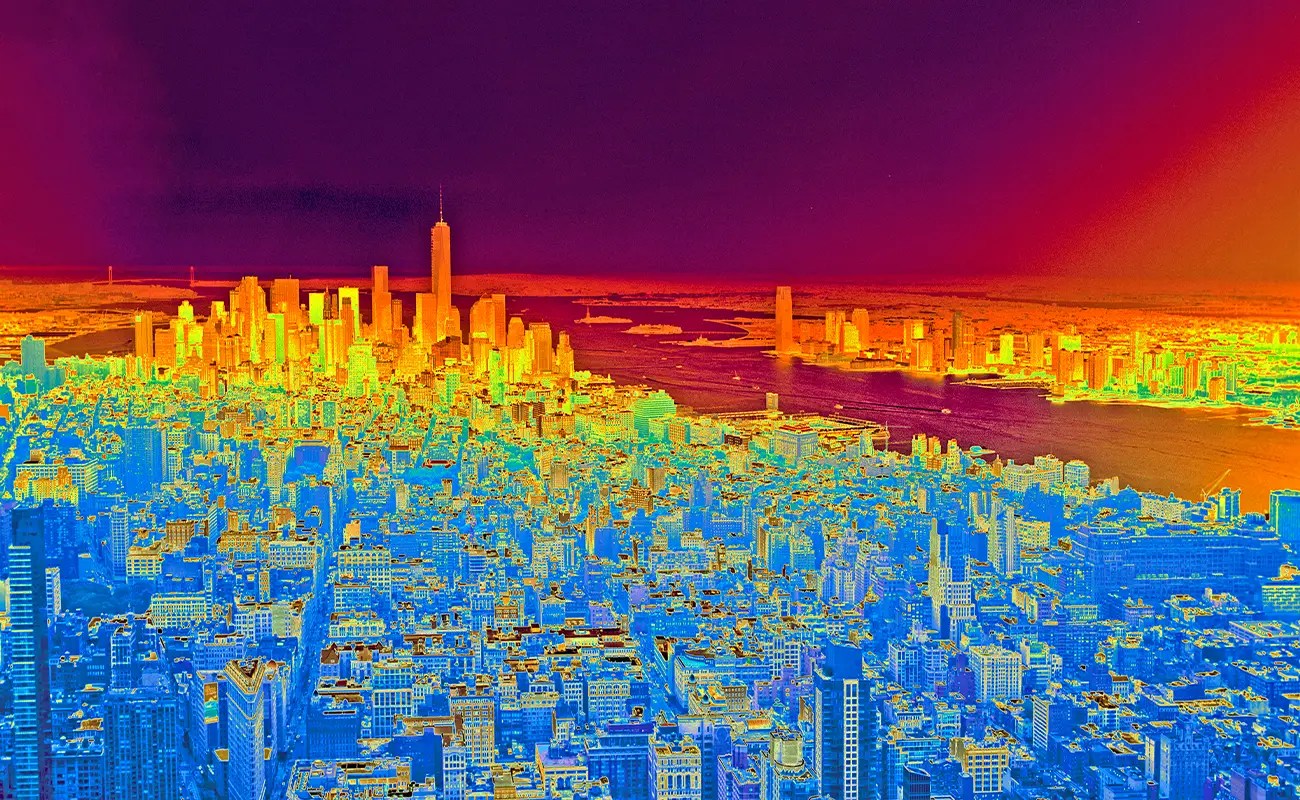
His artistic investigations extend across a broad range of photographic possibilities. Black and white imagery plays a significant role in works that emphasize atmosphere, structure, and emotional resonance. At the same time, color photography became a vital field of inquiry in projects such as Colour of the Wind and Lightness of the Earth, where chromatic relationships contribute to the expressive impact of the image. Sobecki also explored electronic color transformation, producing visually adventurous series including Sea Alchemy and Wacky Locomotives – for the Glory of Witkacy. These works reveal a willingness to challenge conventional expectations and engage with technological developments as creative tools. His interest in combining photography with installation expanded the medium even further, allowing images to function within broader spatial and conceptual frameworks. Throughout these explorations, he consistently treated photography as a dynamic artistic discipline capable of transformation and reinvention.
Another important dimension of his oeuvre involves portraiture, cultural interpretation, and interdisciplinary dialogue. Projects such as The Face – in Spite of Witkacy demonstrate his fascination with identity and artistic exchange. Created in collaboration with Franciszek Starowieyski, the series examined relationships between portrait and self-portrait while bringing together perspectives from different artistic fields. Elsewhere, Sobecki analyzed the character of cities, the energy of urban movement, and the influence of notable figures from art and science. His inspirations include creators as varied as Stanisław Ignacy Witkiewicz, Władysław Hasior, Alexander Calder, Francis Bacon, and Franciszek Starowieyski. Rather than imitating these influences, he transformed them into points of departure for his own investigations. Through this synthesis of photography, cultural history, architecture, and artistic reflection, he developed a visual language capable of addressing both personal and collective dimensions of experience.

Tomasz Sobecki: Scholarship, Lecturing, and Lasting Cultural Impact
Beyond exhibition activity, Sobecki has maintained a significant presence within academic, educational, and scientific environments. In 2012, alongside his professional work, he began doctoral studies at the Cinematography Department of the renowned Polish National Film, Television, and Theatre School in Łódź, developing The Idea of the Pyramids as the basis of his doctoral research. The degree of doctor of art was conferred in 2013, formalizing a long-standing artistic investigation into monumentality, cultural memory, and architectural symbolism. In 2018, he opened a postdoctoral dissertation process, with City Dynamics – Photography Expression serving as the artistic component of this further research. His academic activity has also included lectures on photography at universities in Toruń, Łódź, and Bydgoszcz, as well as at the Academy of Fine Arts in Gdańsk. He has been employed as an assistant professor at WSB Merito University in Toruń, and in 2015 he was invited as a visiting professor by the Design Department of the Indian Institute of Technology Hyderabad in India. These activities reveal a career in which photography functions not only as artistic practice, but also as a field of teaching, research, and intellectual exchange.

Academic achievement reached a major milestone with the completion of his doctoral studies in photography. Encouraged by respected members of the photographic community, he entered a doctoral program at the renowned Polish National Film, Television, and Theatre School in Łódź. His dissertation, The Idea of the Pyramids, culminated in the award of the degree of doctor of art in 2013. This accomplishment formalized years of artistic investigation and confirmed the intellectual depth underlying his creative practice. Participation in conferences addressing philosophy, art, memory, identity, sacred beauty, and photographic theory further reflects his engagement with critical discourse. Publications authored in both Polish and English extended these conversations into print, addressing topics such as photography, sacred architecture, Egypt, European cultural heritage, and the expressive possibilities of urban imagery. Through writing and research, he contributed to a broader understanding of photography as a medium capable of generating knowledge as well as aesthetic experience.
Recognition of Sobecki’s achievements can be seen in numerous scholarships, awards, institutional invitations, and the presence of his work in museum collections. Holdings include the Museum of Art in Łódź, the Museum of Photography in Cracow, the District Museum in Toruń, and several other respected institutions. His photographs are also represented in public and private collections across Europe, Asia, Australia, and North America. The publication of the album Crucifix (2024) and Gothic Sacrum (2026) with 203 of his black and white photos added another important chapter to his career, presenting a carefully edited body of work according to his own editorial vision including cooperation with historians of art, literary historians, theologians and philosophers.
Taken together, these accomplishments reveal a photographer whose contribution extends across artistic creation, cultural preservation, education, scholarship, and international dialogue. Over several decades, Tomasz Sobecki has built a multifaceted legacy rooted in curiosity, disciplined exploration, and a persistent effort to connect photography with the larger narratives of human culture.