
“We play the game of being one person, while the simple truth of our schizophrenic reality terrifies us.”
Origins Shaped by Place, Reading, and Early Obsession
The artistic trajectory of Tomas Jetela unfolds through a convergence of geography, education, and an intense youthful absorption in cultural history. Born in Moravia, a region in the Czech Republic, and now based in Prague, he situates his practice within a landscape shaped by centuries of artistic memory and intellectual tension. His formal education began at the High School of Art and Design, where his focus on graphic disciplines sharpened his sense of structure and composition, before continuing at the Academy of Fine Arts in Prague with a concentration on painting. This academic path did not simply provide technical grounding. It formed a framework through which his later transformations in style could occur, allowing him to move fluidly between representational clarity and complex visual construction while remaining anchored in painterly tradition.
Equally formative was an almost obsessive engagement with books during adolescence. Biographies, autobiographies, and novels centered on artists and writers became catalysts that fueled his desire to pursue art seriously. These texts, spanning periods from the Renaissance through the twentieth century, carried narratives of struggle, isolation, and creative intensity that resonated deeply. Stories surrounding figures like Vincent van Gogh and the mythology of Montmartre embedded romantic ideals about artistic life, sacrifice, and purpose. This immersion did not offer a realistic picture of professional artistic labor in the contemporary world, yet it ignited a powerful internal drive. That early fascination continues to echo in Jetela’s commitment to painting as a lifelong pursuit rather than a stylistic exercise.
Despite the idealized nature of these literary influences, they also nurtured a lasting interest in depicting reality through the human figure. Even at this early stage, a concern with the individual and with figurative presence began to surface. The desire to understand what it means to exist as a singular being, and perhaps to become exceptional through art, took hold. This ambition was not merely about recognition but about aligning one’s life with the intensity and depth he encountered in the lives of historical creators. The seeds planted during these formative years continue to inform Jetela’s artistic focus, grounding his evolving practice in questions of identity, reality, and the enduring pull of human experience.
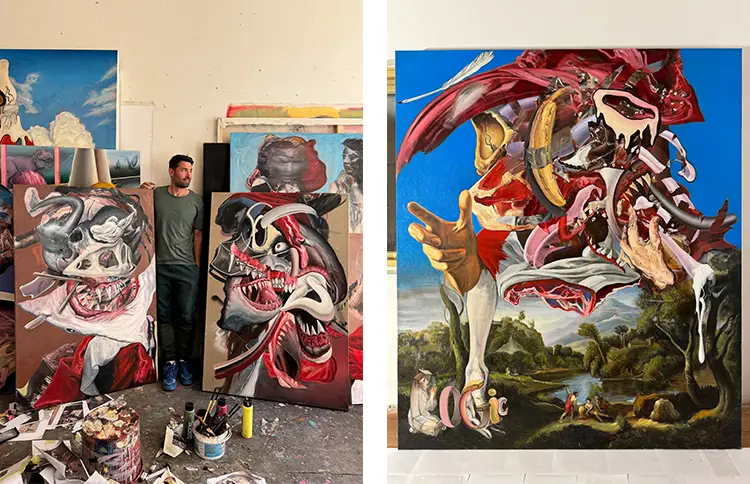
Tomas Jetela: From Figuration to Fragmented Identity
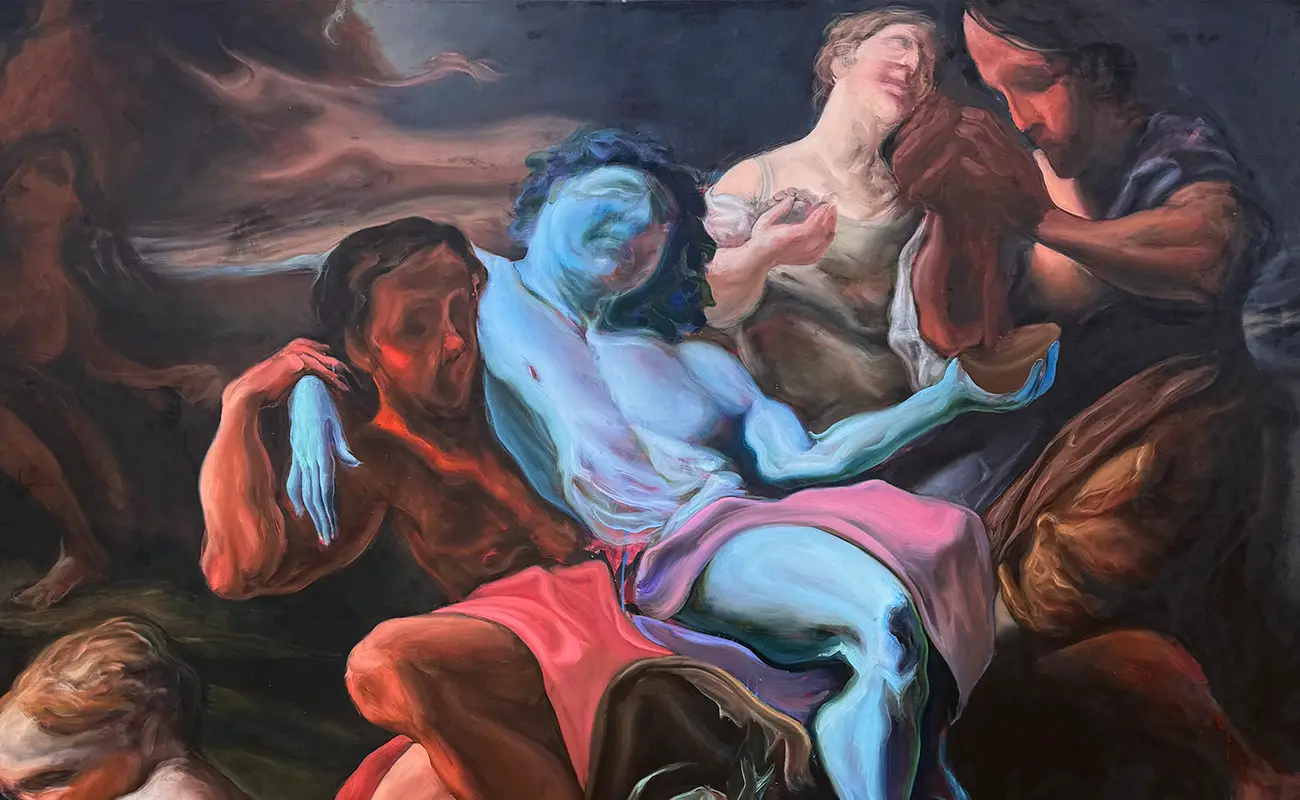
Jetela’s visual language has undergone significant transformation, moving through phases that reflect both technical exploration and conceptual expansion. His earlier works centered on direct figuration, where faces, hands, and bodily gestures carried psychological weight. Expression was often heightened, sometimes approaching caricature, yet never without existential tension. Solitary figures emerged against undefined or sparse settings, emphasizing isolation and internal states rather than narrative context. This period demonstrated a fascination with the human condition, rendered through expressive brushwork and painterly urgency, recalling historical precedents while asserting a personal intensity rooted in observation and emotion.
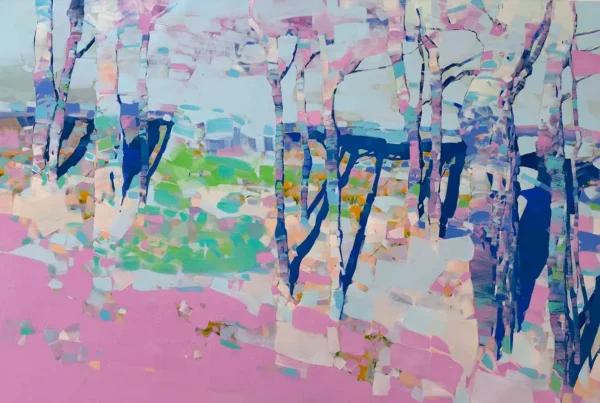
Over time, this focus broadened into a more layered approach that combined realism with abstraction. Figurative elements began to coexist with fragmented forms, painterly quotations, and visual references drawn from art history and contemporary culture. Landscapes gradually assumed a more prominent role, not as backgrounds but as active components within the composition. This shift did not signal a departure from psychological inquiry. Instead, it marked a transition toward examining the complexity of identity itself. Individual psychology gave way to questions of duality, multiplicity, and internal division, suggesting that the self is not singular but composed of competing or overlapping forces.
The theme of split or multiple personality became an organizing concept, connecting Jetela’s work to broader cultural and historical motifs. Literary figures like Dr. Jekyll and Mr. Hyde, mythological symbols such as Janus, and modern popular culture references like the Hulk illustrate a persistent human preoccupation with inner contradiction. These references serve not as direct illustrations but as conceptual parallels. Jetela’s paintings propose that fragmentation is not an anomaly but a shared condition. By visualizing divided selves within shared pictorial spaces, he challenges the illusion of a unified identity and invites viewers to confront the unsettling yet familiar complexity that resides within every individual.

Mannerist Echoes, Movement, and Ambiguous Fields of Meaning
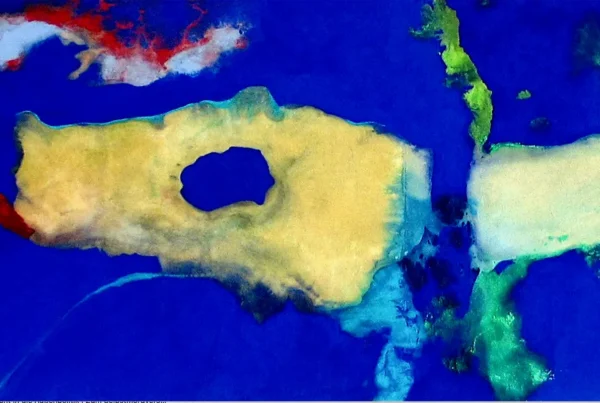
A defining characteristic of Jetela’s mature work lies in its resistance to fixed interpretation. Figuration and abstraction intertwine to create pictorial environments rich with ambiguity, where meaning shifts depending on the viewer’s focus and emotional state. Rather than presenting a single narrative, the paintings function as open fields of stimuli, allowing elements to interact in unpredictable ways. Allegorical suggestion, visual enigma, and subtle references encourage repeated viewing, each encounter revealing new relationships between forms. This approach aligns his work with aspects of Mannerism, particularly in its embrace of complexity, tension, and interpretative openness.
Among historical influences, Giuseppe Arcimboldo occupies a notable position, though not through conscious imitation. Jetela recognized this connection only after the paintings themselves emerged, suggesting a subconscious resonance with Arcimboldo’s inventive combinations and symbolic density. This retrospective awareness underscores an intuitive working process that absorbs cultural memory without direct quotation. The broader affinity with Mannerism also reflects Jetela’s interest in transitional states, both historical and personal. Mannerism, situated between defined periods, mirrors his own position within an evolving practice that resists stabilization and thrives on uncertainty.
Movement represents another crucial thread within this body of work. Jetela’s experiments seek to introduce dynamism through repetition, deformation, and structural disruption. These strategies echo long-standing artistic efforts to convey motion, from early visual art to Futurism and Cubism. In his paintings, movement becomes both physical and psychological, suggesting internal turbulence rather than external action. This sense of instability extends into symbolic territory, where erupting forms and fractured imagery allude to suppressed instincts, aggression, and collective anxiety. The paintings thus resonate as reflections of a volatile era, capturing a world marked by tension, conflict, and an uneasy awareness of mortality and ecological fragility.

Tomas Jetela: Process, Mortality, and a Defining Work
Jetela’s influences extend across centuries, encompassing figures such as Egon Schiele, Francis Bacon, Caspar David Friedrich, Pablo Picasso, Rembrandt, and Lucian Freud, alongside numerous contemporary artists including George Condo and Jenny Saville. Some influences operate beneath the surface, shaping sensibility rather than form, while others engage directly with his current concerns. Beyond art history, his practice absorbs stimuli from daily life, dreams, digital environments, literature, film, and chance encounters. These inputs are translated into drawings, collages, photographs, and digital modifications, forming a reservoir of visual material that feeds the painting process in layered and sometimes complex ways.
Among the most profound influences on his work is personal confrontation with mortality. Experiences situated near the boundary between life and death altered not only his artistic outlook but his perception of existence itself. Such moments stripped away superficial fears and recalibrated his sense of value, replacing assumed confidence with a deeper, more resilient belief in self. This awareness permeates his paintings, infusing them with urgency and existential gravity. The themes of fragmentation, inner monsters, and psychological unrest gain additional depth when understood through this lens, becoming not abstract concepts but lived realities translated into visual form.
A pivotal example of this evolution appears in the painting A Virgin Unicorn Crawling in the Dark Corners of the Aphrodisiac Universe from 2022, created with oil and acrylic on canvas at a monumental scale of 190 by 140 centimeters. Emerging from the Magic Monsters series, this work crystallized several new directions. Massive deformation, abstraction, painterly quotation, and multiperspectival structure converge to articulate ideas of split identity and perceptual instability. This painting marked a turning point, leading to more systematic exploration of these attributes in subsequent cycles. Each new series builds upon discoveries from the previous one, balancing analytical structure with intuition and controlled chance. Through this evolving process, Jetela continues to expand a body of work that remains open, adaptive, and deeply engaged with the complexities of contemporary existence.