
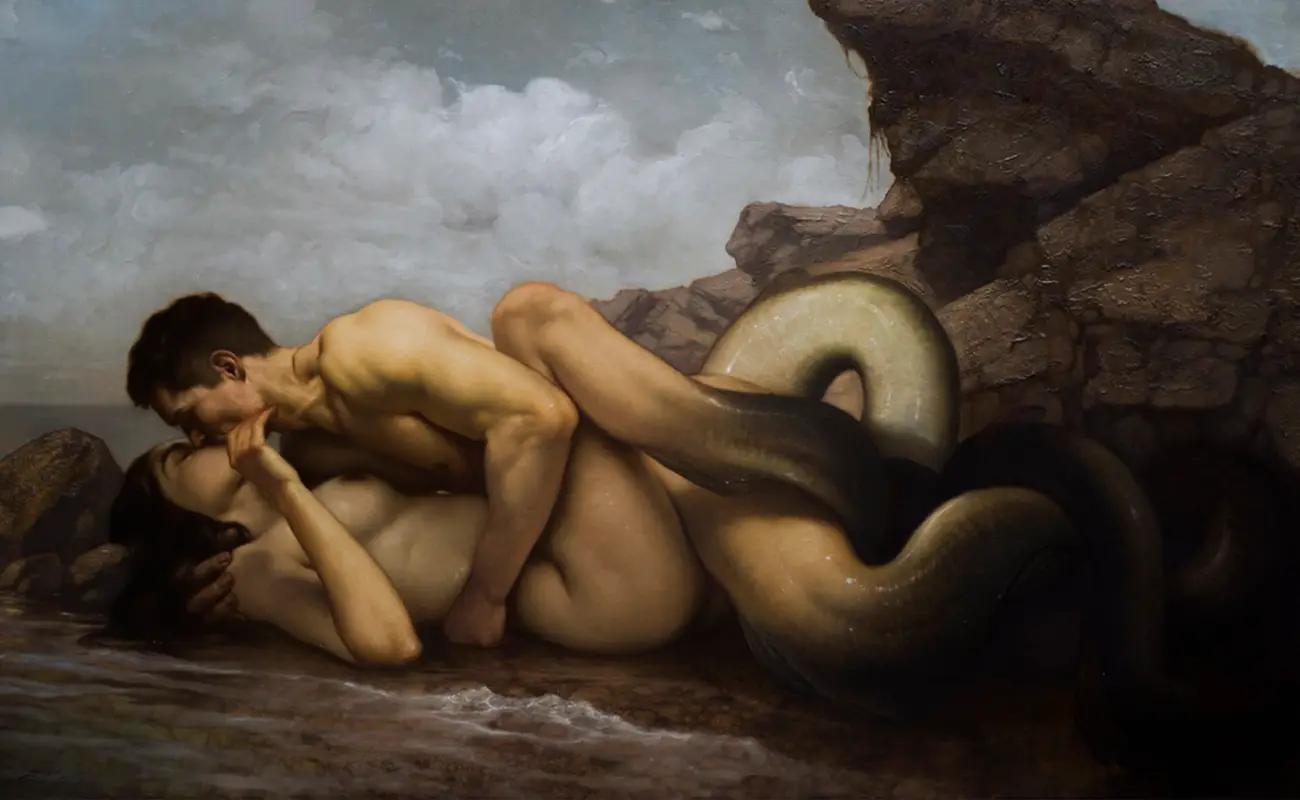
A Timeless Vision Forged in Shadow and Light
Roberto Ferri stands among the most compelling voices in contemporary figurative painting, an artist whose canvases radiate with the intensity of another century while remaining firmly anchored in the present. Born in Taranto, Italy, in 1978, he cultivated his artistic identity through rigorous study and a profound admiration for the masters of the past. After graduating from the “Lisippo” Art High School in 1996, he pursued painting independently before relocating to Rome in 1999, where his investigation of sixteenth to nineteenth century art history deepened. The influence of Caravaggio and leading academic painters such as Jacques Louis David, Jean Auguste Dominique Ingres, Anne Louis Girodet, Théodore Géricault, Charles Gleyre, and William Adolphe Bouguereau became foundational pillars in his development. Ferri later earned highest honors in Scenography from the Academy of Fine Arts in Rome in 2006, further refining his structural understanding of composition and theatrical presence.
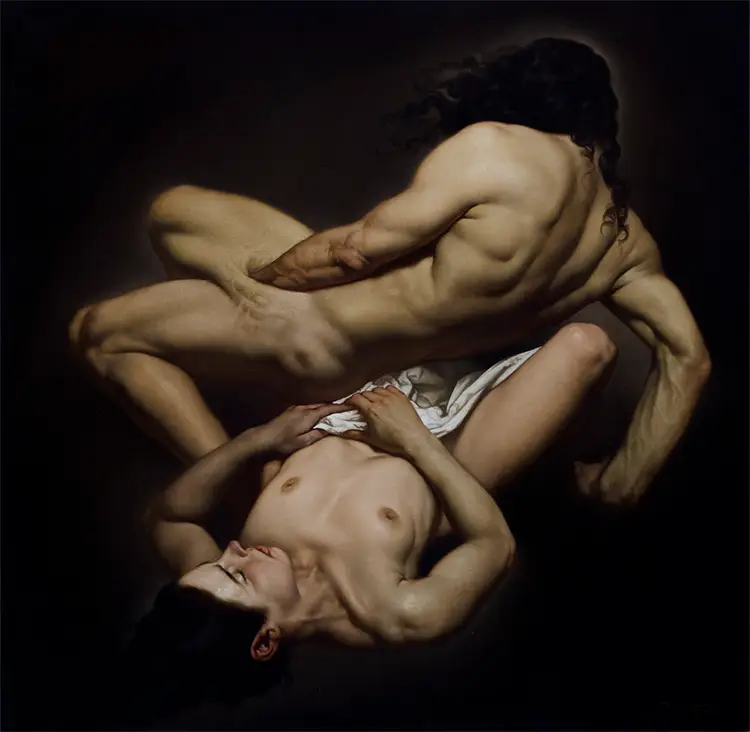
His paintings command attention through dramatic chiaroscuro, anatomical authority, and emotionally charged symbolism. Light in Ferri’s compositions functions not only as illumination but as revelation, pulling muscular figures from velvety darkness into stark confrontation with the viewer. Bodies appear luminous and sculptural, animated by tension and spiritual urgency. Though rooted in classical technique, his imagery resists nostalgia. Instead, it proposes an atemporal language that bridges sacred iconography and contemporary psychological awareness. Ferri frequently describes his art as existing parallel to modern trends rather than conforming to them, allowing him to absorb present experiences through the visual grammar of historical painting. This fusion produces works that feel both ancient and immediate, inviting audiences to reconsider the boundaries between tradition and innovation.
International exhibitions have solidified Ferri’s standing on the global stage. His work has appeared in solo and group presentations across Europe, the United States, and the Middle East, including significant appearances at the Venice Biennale, Art Miami, and Contemporary Istanbul. Prestigious venues in Rome, Florence, London, Brussels, and New York have showcased his paintings, while collaborations with filmmakers and cultural institutions have extended his reach beyond gallery walls. His imagery has entered cinema productions and graced international book covers, including the Japanese edition of Yuval Noah Harari’s Sapiens: A Brief History of Humankind. Through these varied platforms, Ferri demonstrates that traditional oil painting retains extraordinary vitality in a digital age saturated with fleeting images.
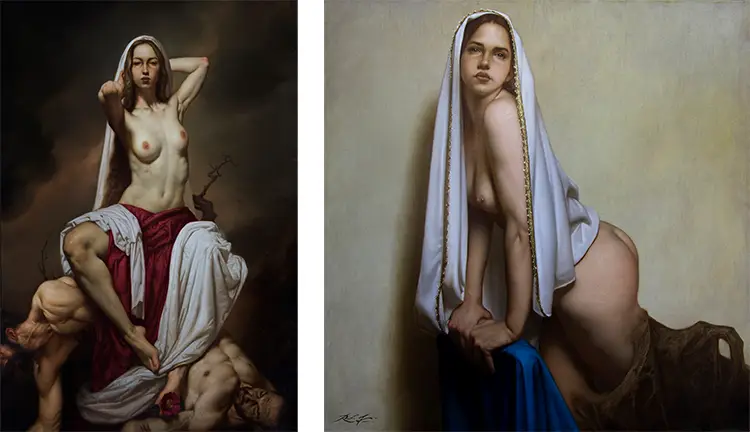
Roberto Ferri: Anatomy of the Sacred and the Profane
At the heart of Ferri’s artistic philosophy lies a profound meditation on the human body as a vessel of spiritual and moral tension. In his Symbolist vocabulary, the body becomes synonymous with the soul, perfect in its purity yet distorted when corrupted or lost. Demonic figures in his paintings are not literal embodiments of evil but visual translations of daily anxieties, fears, and internal conflicts. According to the artist, these shapes emerge from lived experiences filtered through imagination and transformed into allegorical forms. Deformation of the body therefore signifies deformation of the spirit, binding the surreal quality of his work directly to psychological struggle. This interplay between beauty and disturbance animates his canvases with unsettling vitality, prompting viewers to confront their own inner contradictions.
Recurring elements such as wrought iron structures and astrolabes introduce a symbolic counterpoint to the flesh. These measuring instruments, traditionally associated with science and navigation, assume a different meaning within Ferri’s compositions. They suggest rational control attempting to restrain spiritual turbulence, often pressing against bodies in gestures that feel both protective and oppressive. The tension between reason and instinct unfolds visually through intertwined limbs, twisted torsos, and suspended figures that appear caught between ascent and collapse. Ferri’s paintings frequently originate from sudden inspirations or nocturnal visions, giving them an oneiric quality that intensifies their emotional resonance. The mysterious atmosphere, reminiscent of Caravaggesque drama, envelops each scene in sacred gravity while maintaining a distinctly personal narrative voice.
“My works are almost like prayers to God,” Ferri has stated, a declaration that clarifies the devotional undercurrent running through his oeuvre. This spiritual dimension does not eliminate sensuality; instead, it reframes it. Ecstasy in his art draws inspiration from the sculptural intensity of Gian Lorenzo Bernini, yet it transcends erotic spectacle to express longing, torment, and redemption. Figures oscillate between martyrdom and desire, their physical perfection coexisting with moral vulnerability. Through this duality, Ferri articulates a vision in which the sacred and the profane are inseparable aspects of human existence. The viewer encounters not a simple narrative of good versus evil, but a complex emotional landscape where salvation and temptation coexist within the same luminous flesh.
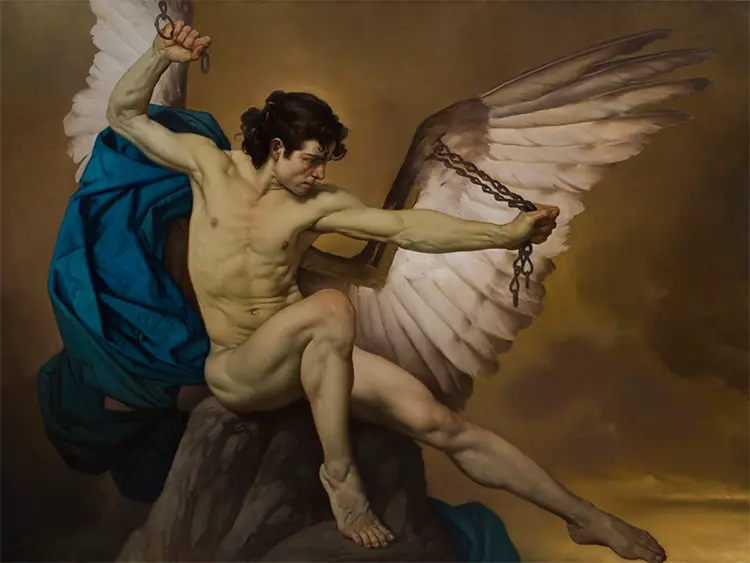
Commissions, Collections, and Cultural Legacy
Beyond the gallery circuit, Ferri has undertaken significant public and private commissions that affirm his relevance within both ecclesiastical and secular contexts. Among the most notable are the official portraits of Pope Francis housed in the Vatican, works that required both technical mastery and profound sensitivity to spiritual representation. He also completed a fourteen panel Via Crucis for the Cathedral of Noto, alongside large scale sacred paintings for churches and cathedrals throughout Italy. These commissions demonstrate his ability to translate deeply personal symbolism into imagery suitable for communal worship spaces. Through such projects, Ferri contributes to a living tradition of religious art, revitalizing it with contemporary psychological nuance.
His paintings reside in prominent collections spanning Rome, Milan, London, Paris, New York, Miami, Qatar, and the Picasso Dora Maar Castle in Provence. Institutional recognition extends to art historical publications and museum catalogues produced by respected publishers such as Giunti and Skira. Catalogues featuring his work are archived in the library of the Metropolitan Museum of Art in New York, positioning him within an international scholarly context. These acknowledgments reflect sustained critical engagement rather than fleeting popularity. Ferri’s collaboration with Liquid Art System since 2009 has further expanded his global presence, reinforcing his role as a central figure in the resurgence of neo classical figurative painting.
Such achievements do not confine Ferri within institutional boundaries. He maintains independence from passing fashions, describing his art as existing alongside contemporary movements rather than being absorbed by them. Collectors drawn to his work often share an appreciation for technical discipline and enduring beauty, yet patronage does not dictate his creative direction. Social media serves primarily as a channel for sharing process and philosophy rather than spectacle. This balanced approach allows him to sustain both visibility and artistic integrity. The result is a career that bridges devotional commissions, international exhibitions, and scholarly recognition without sacrificing the intimate psychological intensity that defines his canvases.
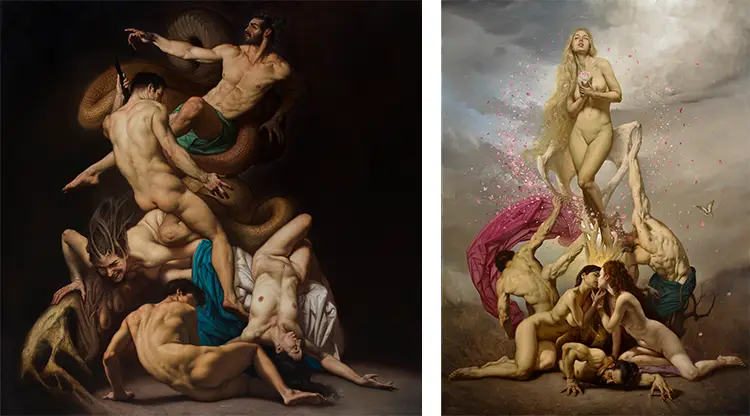
Roberto Ferri: Reviving the Baroque for the Present Moment
Ferri’s relationship with historical painting is neither imitation nor rebellion but transformation. Deep study of Romanticism, Academicism, and Symbolism informs his structural precision and compositional clarity. Influences extend beyond Caravaggio to include artists such as Gustave Moreau, Odilon Redon, and Félicien Rops, enriching his iconographic vocabulary. Literature, poetry, cinema, and music further nourish his imagination, allowing mythological and religious references to coexist with contemporary emotion. This synthesis generates scenes that feel suspended outside chronological boundaries. Although viewers often describe him as the Caravaggio of today, Ferri positions himself within an ongoing dialogue rather than a revivalist movement. The past becomes a living language through which present experience is articulated.
His commitment to traditional oil painting reinforces this philosophy. Despite the dominance of photography and digital media, Ferri values the tactile substance of pigment, its density and transparency that give painting a physical presence he describes as flesh and blood. Photographic references may assist in certain stages, yet he refuses to subordinate the painter’s eye to mechanical reproduction. Discipline and structural understanding guide his technique, which achieves remarkable fidelity to human anatomy while preserving emotional volatility. Figures often assume heroic yet contorted poses, harmoniously composed even in their apparent instability. Through this fusion of rigorous draftsmanship and psychological charge, Roberto Ferri reanimates Baroque intensity for a contemporary audience, proving that classical language remains capable of expressing modern inner conflict.