
“I paint with a passion from my heart and try to communicate these feelings and emotions through colour and texture.”
Chromatic Dialogues: The Art of Emotion Without Form
Rick Smith’s journey into the world of visual art is marked by a striking pivot from science to expression. Originally trained in Electronics Engineering and the founder of a medical imaging company, Smith eventually followed a long-held creative instinct, shifting the course of his life toward full-time artistic practice. Now based in Avalon, a coastal suburb of Sydney, he works from his own studio and gallery, creating abstract works that speak less to the eye and more to the intuitive spaces of the mind. His pieces are vivid, emotionally resonant, and deliberately open-ended—encouraging interpretation through feeling rather than reason. With exhibitions across Australia, Europe, and the UK, Smith’s work has found homes in both private and corporate collections, testament to its wide-reaching emotional pull.
What distinguishes Smith’s approach is his dedication to painting as a direct communication of inner experience. Influenced by visionaries like Wassily Kandinsky, Henri Matisse, and William Turner, he seeks not to depict the world as it appears, but as it is sensed internally. For Smith, color and texture are not just tools—they are languages. His compositions offer viewers entry into moods rather than scenes, enabling a kind of emotional translation that bypasses intellect. Viewers are invited to feel rather than analyze, to experience rather than decode. This connection between the observer and the artwork is, for Smith, the ultimate measure of success: whether a piece stirs a quiet reflection or an ecstatic thrill, it must evoke something real within the subconscious.
Texture, movement, and energetic layering form the core of his technique. Smith works exclusively with high-quality acrylics on gallery-stretched canvas, often extending the visual field by painting around the edges. Each piece is accompanied by a Certificate of Authenticity and certified through AKOUN (Paris), underscoring both the professionalism of his practice and his connection to the broader art market. But beyond the canvas and certificate lies a deeper intention—to offer the observer a moment of joy, introspection, or reverie. His paintings aren’t just visual artifacts; they are experiences, shaped by an emotional architecture that aims to resonate beneath the surface.

Rick Smith: Structure Beneath the Chaos
Smith’s artistic process may appear spontaneous, but a closer examination reveals an underlying order shaped by his previous career in engineering. While his paintings burst with gestural intensity and chromatic complexity, they are often grounded in compositional balance and thoughtful spatial arrangements. This duality—the collision of unrestrained expression with subtle structure—creates a dynamic tension that gives his work both energy and coherence. His canvases may feel impulsive, but their impact comes from this deliberate interplay between chaos and control. In many ways, his background in technology informs his aesthetic decisions, lending a precision to the layering of color and texture that enhances rather than restricts his expressive goals.
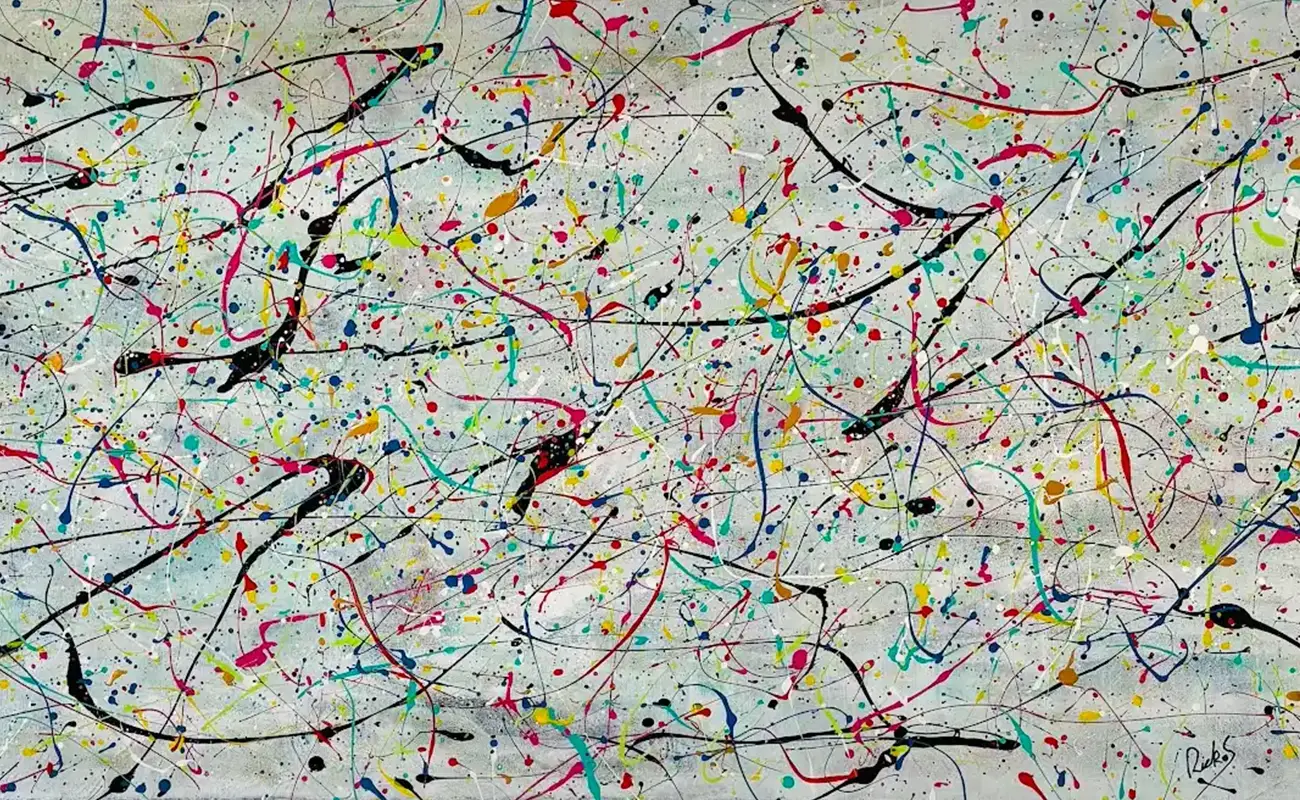
Color plays a central role in Smith’s visual language. Drawing inspiration from Kandinsky’s theories on spiritual abstraction and Matisse’s joyful chromatic boldness, he employs palettes that are both vibrant and emotionally suggestive. In some works, luminous tones swirl and collide with vibrant force, echoing Pollock’s action painting but executed with a more refined chromatic sensibility. Neon-bright bursts of orange, electric blue, and acid green are offset by quieter zones of misty whites and grounding neutrals. This strategic contrast amplifies the emotive force of each canvas, allowing color to function as both a narrative device and an emotional catalyst. The viewer is not simply looking at color—they are absorbing it, physiologically and psychologically.
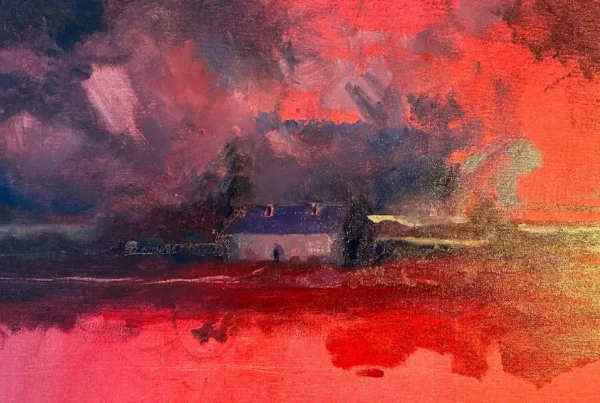
Smith’s use of texture further deepens the viewer’s engagement. Through layered applications of acrylic and occasional use of impasto, he builds surfaces that invite both visual and tactile exploration. These layers are not just decorative; they hold emotional weight, reflecting the accumulation of thought, gesture, and feeling that occurs during the painting process. His textured abstractions often blur the lines between landscape and dreamscape, evoking sensations of water, atmosphere, or light without ever depicting them directly. This ambiguity opens space for personal interpretation, allowing each viewer to find their own narrative within the paint. Smith’s work is less about the final image and more about the psychological response it provokes.

Inner Motion: The Emotional Physics of Painting
At the center of Smith’s practice lies a pursuit of emotional truth, rendered not through literal storytelling but through abstract sensation. His paintings operate on a kind of visual instinct, where brushstrokes carry more weight than representation and mood overrides message. The process is both expressive and intuitive, shaped by an internal dialogue that unfolds across the surface of the canvas. This approach aligns closely with the tenets of Abstract Expressionism, a movement that values the spontaneous gesture and the raw trace of the artist’s hand. Smith continues this legacy with his own voice, applying contemporary techniques and sensibilities to produce work that feels both timeless and current.
There is a wide range of emotional tone across his body of work. Some paintings are expansive and ethereal, with soft transitions of color that suggest fog, memory, or breath. These pieces often carry a meditative quietness, achieved through gentle layering and restrained brushwork. In contrast, his more energetic compositions explode with rhythm and motion, echoing dance or music in their visual cadence. These works invite viewers into a visceral, almost kinetic engagement, where the eye follows the drip or stroke in real time. This emotional variety reflects Smith’s broader belief that art should mirror the spectrum of human feeling, from serenity to chaos, from introspection to exuberance.
A signature aspect of his practice is the way he crafts a relationship between the viewer and the subconscious. In his own words, Smith emphasizes that his aim is to “communicate feelings and emotions by utilizing color and texture as the defining feature.” The goal is not to explain, but to awaken. Viewers are encouraged to interpret the work through their own emotional lens, to let the image act as a kind of psychological trigger. Whether it recalls a forgotten memory, a fleeting sensation, or an unspoken truth, each painting becomes an invitation to access deeper layers of awareness. In this way, Smith’s work is not only about what is seen, but about what is felt—and remembered—through the act of seeing.

Rick Smith: From Vision to Vibration
What sets Rick Smith’s portfolio apart is its ability to bridge the personal with the universal. His paintings are undeniably shaped by his own experiences, yet they manage to transcend autobiography. In one particular piece—though unnamed in the materials provided—Smith channels his inner world through swirling pale tones and ephemeral forms, creating an image that feels like the visual equivalent of a dream remembered at dawn. This work, characterized by soft gradients and translucent overlays, holds special meaning for the artist, reflecting a deeply personal moment of introspection. It exemplifies how Smith uses abstraction not to obscure, but to reveal emotional states that resist verbal expression.
His exhibitions across major cities such as Sydney, London, Madrid, and Leipzig have brought this unique visual language to diverse audiences. Shows at spaces like The Brick Lane Gallery and the Gaudi Galleria have exposed his work to collectors and critics drawn to abstraction’s emotive power. In Australia, his pieces are installed in both public and corporate venues, including prominent locations like the Neutron Pty Ltd boardroom and The Exchange Building in Sydney. This blend of local grounding and international exposure demonstrates the versatility and accessibility of his art. Despite its abstract nature, Smith’s work resonates across cultures, offering something universally human in its sensory appeal.
Publications and features in outlets such as The World of Interiors and MMAG Modern Art Museum further establish his presence within the contemporary art conversation. These recognitions validate not just the aesthetic quality of his work, but its ability to connect across mediums and platforms. Yet for Smith, the truest reward remains the emotional response of the individual viewer. His philosophy is rooted in the belief that color and texture can bypass the rational mind and reach something deeper, something more fundamental. In every brushstroke lies the possibility of recognition, of connection, of silent dialogue. Rick Smith’s work does not ask to be understood. It asks to be felt.