
Stillness in Clay and Bronze: Theakston’s Profound Sculptural Language
Nichola Theakston has emerged as a significant force in contemporary British sculpture, known for her evocative explorations of the animal form. Her work stands apart not for its technical precision alone, but for its ability to bridge material and meaning, awakening the viewer to the emotional and spiritual presence of non-human life. Working primarily in ceramic and bronze, Theakston creates pieces that resonate with quiet intensity. Animals, in her hands, are neither exotic nor overly sentimental—they are contemplative beings, often presented in moments of pause, interiority, and reverence. Her sculptural style, while formally grounded, leans heavily into expression, evoking deeper questions about consciousness, kinship, and the mystery of other species.
Rather than simply depict animals as physical specimens, Theakston ventures into capturing something far less tangible. Many of her sculptures convey a poignant stillness: heads bowed, eyes partially closed, limbs positioned in ways that suggest not movement, but meditation. These gestures are not coincidental but deeply intentional. Her animals are not frozen in time—they are suspended within it. Theakston’s work hints at the possibility that these beings might experience a dimension of life that mirrors, or even transcends, our own. This spiritual undertone sets her apart from others working in the same genre, inviting viewers to reflect on the emotional depth and interiority of animals rather than just their outward beauty.
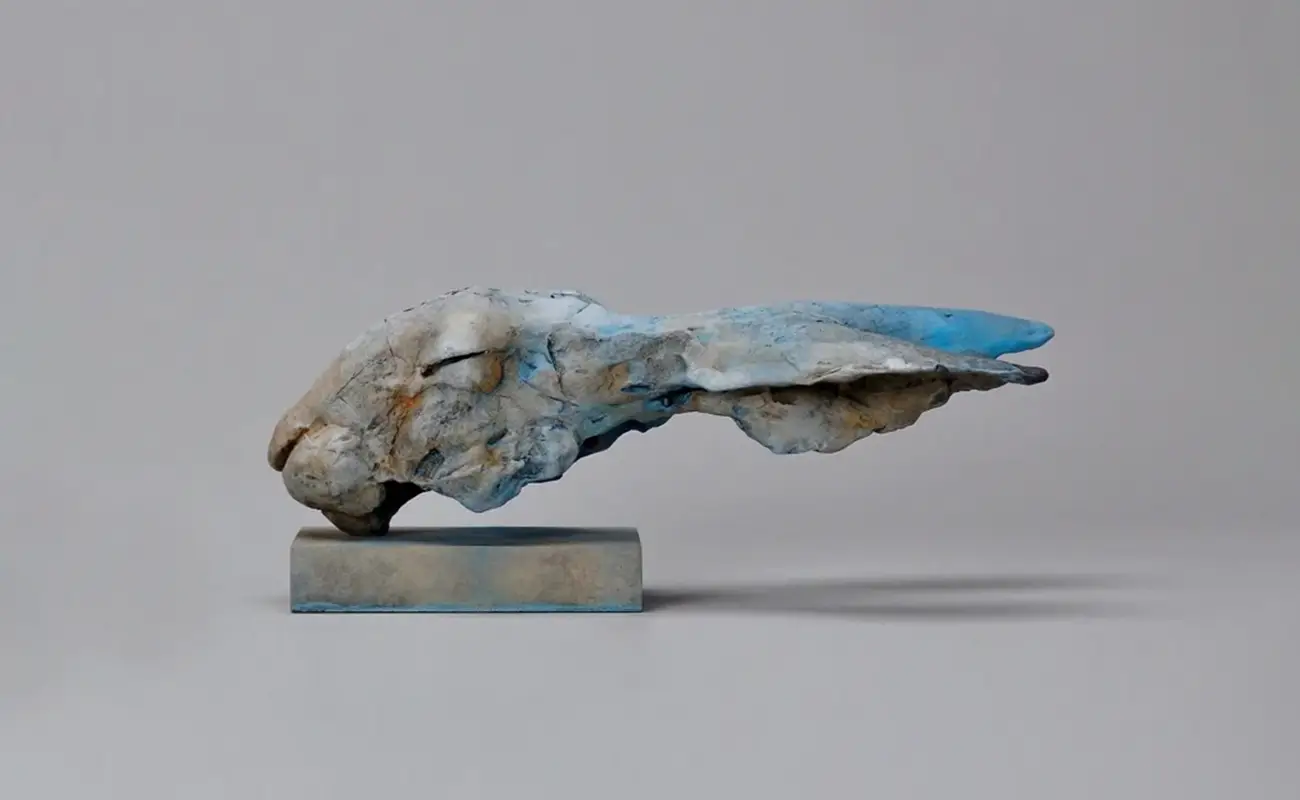
The surfaces of Theakston’s sculptures reinforce this psychological and emotional resonance. She often works with fractured, pitted, or eroded textures that appear worn by time and memory. This gives her pieces an almost archaeological quality, as if they have been unearthed from sacred ground rather than cast in a contemporary studio. Yet, despite this antiquated appearance, her work is remarkably current in its empathy and immediacy. It is this fusion of ancient form with contemporary feeling that has helped secure Theakston’s place as one of the UK’s most respected artists working with animal subjects today. Her sculptures are exhibited extensively throughout Britain and Europe and are held in numerous international collections, testifying to the universal relevance of her artistic vision.

Nichola Theakston: Sculpting to Sense, Not to Describe
Theakston’s artistic voice is anchored in a compelling belief: that animals possess an emotional and spiritual presence that exists beyond instinct, something quietly profound and often overlooked. Her commitment to exploring this notion is at the heart of her practice. Rather than anthropomorphize her subjects, she seeks to reveal what is already present in their gaze and bearing—a stillness that suggests depth, intelligence, and perhaps a shared inner world. Primates often appear in her work, not because they mimic human expression, but because their closeness to us genetically underscores the subtle bridges between species. Yet, she handles all of her subjects with the same degree of empathy, whether she is sculpting a contemplative ox or a leaping hare.
Her process begins with clay—coil or slab-built forms that emerge slowly through intuitive shaping. Each sculpture starts as a response to a fleeting idea, a gesture, or an emotion. Many pieces develop into series, giving her space to explore nuances that a single piece might not fully capture. Theakston’s interest in working in series also reflects her openness to imperfection and discovery. Accidents and risks in construction are not avoided but embraced, with fragility becoming a key part of both the conceptual framework and aesthetic form. This embrace of vulnerability—both in the subject and the medium—mirrors the thematic focus of her work. Animals in her sculptures are not symbols of power or pride; they are figures of introspection, beings of stillness and grace, quietly bearing witness.
In translating clay into bronze, Theakston deepens her engagement with material. Her collaboration with Castle Fine Arts Foundry in Wales is integral to her creative journey. The original clay forms are transformed using the traditional lost wax method, a process she remains intimately involved with. She personally patinates each bronze sculpture, applying chemical solutions with a torch in a process she likens to painting—chaotic yet controlled, layered and intuitive. For Theakston, the surface is not just a finish; it’s an extension of meaning. The play between fire, metal, and chemical results in unique tonalities that evoke ancient statuary while remaining rooted in a contemporary sensibility. Her bronze sculptures retain the emotive subtlety of their clay counterparts while gaining new resonance through material density and chromatic depth.

A Portrait of Empathy: Expressive Gesture and Thoughtful Form
Theakston’s fascination with expression is most clearly articulated in her sculptural portraiture. These are not portraits in the conventional sense, but distilled reflections of sentience. Each piece acts as a meditation on character rather than likeness. One of her most significant works, Jousting Hares (2016), exemplifies this approach. The terracotta sculpture features two hares in mid-collision, their elongated bodies arched in a dynamic exchange that feels more like a ritual than a fight. Painted in soft whites and pale blues, the piece conveys not only movement but meaning—tension, vitality, and emotional charge. This work highlights Theakston’s gift for capturing moments that are both physical and metaphorical, elevating the natural behavior of animals into poetic form.
There is a classical undertone running through her compositions, evident in her anatomical precision and formal restraint. However, this is counterbalanced by a painterly approach to texture and finish, whether in clay or bronze. In clay, she employs slips and oxides to layer color in a way that echoes ancient ceramic traditions while remaining unmistakably modern. In bronze, the patina becomes the arena for expression, a surface alive with oxidized greens, burnt umbers, and muted golds. Through these finishes, her sculptures take on a contemplative aura, drawing the viewer into a state of quiet engagement. Her animals are not observers of the human world—they are participants in a shared spiritual ecology.
Theakston’s reverence for animals extends into cultural and symbolic dimensions. She often references the sacred roles animals have played across time and civilization, such as the Egyptian goddess Bastet, who symbolized protection and healing. These references are never literal but serve to remind us of how deeply animals are interwoven into human consciousness, not just as companions or resources, but as spiritual interlocutors. Whether she is sculpting a familiar countryside companion or a distant, endangered species, Theakston urges viewers to see animals not as others, but as mirrors. Her sculptures are not monuments to animal life; they are invitations to empathy, respect, and reflection on the delicate balance that sustains all life.

Nichola Theakston: Honoring Fragility Through Form
Throughout her career, Theakston has consistently returned to the theme of vulnerability—not only in the creatures she sculpts but in the very act of making. Each work is a balance between control and surrender, between structural stability and aesthetic risk. Her ceramic pieces, in particular, are susceptible to collapse during construction, yet this fragility is essential to their meaning. Theakston does not aim for permanence; rather, she celebrates the transient, the delicate, and the introspective. This is especially evident in her more abstracted forms, where she intentionally distorts anatomy or omits detail to emphasize emotional resonance over physical accuracy. It is in these subtle gestures that her sculptures find their greatest power.
Her academic training laid a strong foundation for this exploration. Having studied at Jacob Kramer College of Art, followed by a degree in Fine Art from Exeter, and culminating with a Master’s in Ceramics from Cardiff, Theakston brings both intellectual rigor and tactile skill to her work. This background allows her to navigate the interplay between naturalism and abstraction with confidence. While her forms are grounded in close observation, she resists the urge to replicate. Instead, she filters her understanding of anatomy through an expressive lens, producing work that is deeply felt rather than clinically precise. It is this blend of discipline and emotion that gives her sculptures their distinctive presence.
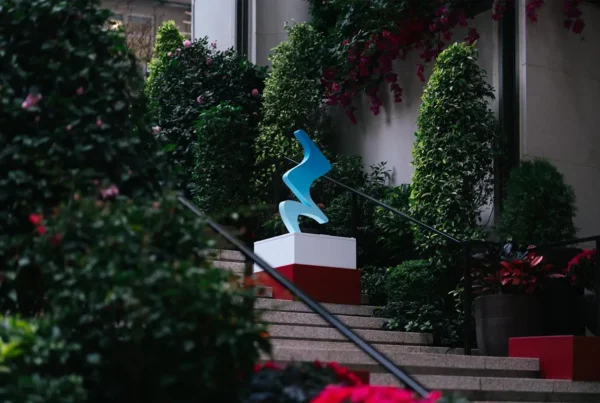
Her work has garnered international recognition and is represented by galleries including De Kunst Salon in Utrecht, Sladmore Gallery in London, The Stratford Gallery in Worcestershire, and Beaux Arts Bath. Theakston has also participated in numerous exhibitions and art fairs, including London’s prestigious Wildlife Artist of the Year show, where her work contributes to conservation efforts for endangered species. One notable commission includes her collaboration with Lush Cosmetics, for whom she created sculptural trophies recognizing achievements in science and activism against animal testing. These initiatives reflect the ethical dimension of her practice, reinforcing her belief that art can serve as both aesthetic and moral commentary. In her sculptures, fragility becomes not a flaw, but a profound expression of the precarious and beautiful experience of life itself.