

“I try to create compositions where arched bodies seem to float within pastel, borderless spaces, suspended between what we consider real and the imagined.”

Marco Grassi in his studio
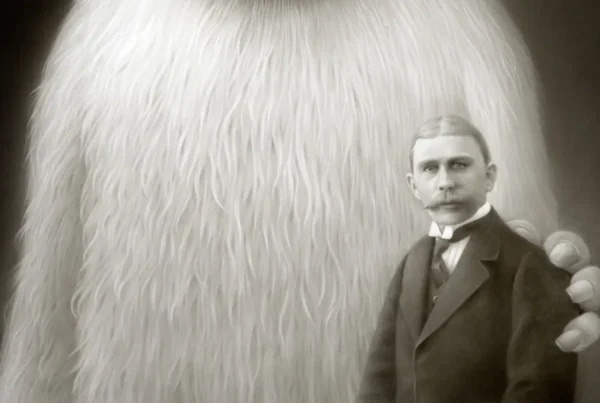
The secret room
180x180cm
2020
Tradition and Defiance: Where Origins Meet Intention
Emerging from the cultural heart of Northern Italy, Marco Grassi is a painter whose practice draws heavily from the artistic richness that surrounded him from an early age. Trained and rooted in a region saturated with Renaissance architecture and centuries-old visual traditions, Grassi’s path into the arts was shaped not by trend but by an intimate relationship with his surroundings. His choice to pursue figurative painting stands in stark contrast to the conceptual tendencies dominating contemporary markets and museum walls. Yet rather than conforming to the preferences of a fluctuating art world, he chose to stay grounded in his personal truth, allowing his intuition to guide him through a creative path less traveled.
Grassi’s commitment to realism does not stem from nostalgia but from an instinctual need to communicate through precision. His works explore a space where human forms are rendered with anatomical clarity yet subtly distorted through surreal transformation. Limbs turn to porcelain, faces emerge from sculptural stillness, and entire compositions float within diffuse, pastel voids that blur the lines between the tangible and the imagined. Despite often being associated with hyperrealism, Grassi’s visual language veers into symbolic territory, prioritizing interpretation over replication. He does not aim to simply mirror the world, but to reconfigure it through a lens that filters reality into metaphor.
By resisting the tides of commercial favor and embracing a technique-heavy approach rooted in historical painting methods, Grassi asserts the enduring relevance of classical craftsmanship. His stylistic choices do not operate in isolation; they serve a larger purpose. Behind each precisely constructed surface lies a deeper exploration of the ecological and spiritual crises of modern life. Through his visual narratives, he critiques the fractured relationship between humanity and the environment, urging viewers to consider not only what they see, but what has been lost in the process of modern transformation.

Paradox of Evolution – detail
Marco Grassi: Between Precision and Philosophy
Grassi often speaks of his artistic journey as something that chose him rather than the reverse. His fascination with art history, especially with the works of Renaissance and Baroque painters, persisted throughout his youth despite initial attempts to pursue a more conventional career. Attending a vocational school for accounting seemed a sensible path in a society that discourages unstable artistic ambitions, but it quickly became apparent that he was moving against the grain of his own nature. When university arrived, he enrolled in the Academy of Fine Arts in Bologna—not for painting, but for art restoration. Yet even here, the road curved back toward creation. In copying the works of old masters to understand their techniques, he found a compelling urge to produce original compositions.
His training as a restorer laid the technical foundation for the painter he would become. Restoration demanded a careful eye, a steady hand, and an intuitive grasp of color and form—all of which seamlessly translated into his own practice. Glazing techniques and the use of sfumato became central to his method, echoing the painterly traditions of artists like Leonardo da Vinci while adapting them to suit his own conceptual goals. Unlike hyperrealists who pursue an almost photographic detachment, Grassi’s works retain a lyrical quality, often blurring the boundary between animate and inanimate. In his paintings, marble-smooth skin can belong to a living figure or a sculpted statue; both states coexist, merging the human and the symbolic.
Underlying this technical mastery is a philosophical inquiry into humanity’s disconnection from nature. Grassi does not simply render beauty for its own sake; his figures, often enveloped in unnatural materials or suspended in void-like settings, question the consequences of anthropocentrism. His paintings engage in a silent dialogue with the natural world, or more precisely, with its absence. The visual beauty of his work is always tempered by a melancholic sense of what has been lost, displaced, or corrupted. It’s an aesthetic built not only from pigments and form, but from concern, memory, and a haunting awareness of ecological fragility.

Adrift
Oil on canvas
2025
180 x 190 cm
Mother of Pearl
Oil on canvas
2019
90x100cm
Anatomy of a World Unmade
Nowhere is Grassi’s symbolic depth more apparent than in his painting Breathe, an oil on canvas work that captures a hypothetical future distorted by human intervention. In this imagined world, nature has been replaced by sleek, artificial vegetation—flowers molded from plastic, leaves glossed with synthetic sheen. Dominating the scene is a solitary female figure, almost submerged in this manufactured garden, her struggle for air both literal and metaphorical. The artwork serves not only as a visual spectacle but as an unsettling commentary on the long-term cost of environmental neglect and the relentless reshaping of ecosystems for human convenience.
The central figure’s presence highlights a crucial theme in Grassi’s work: the blurred lines between the human and the unnatural. The woman’s partial engulfment in plastic flora serves as a chilling metaphor for how artificial environments reshape and suffocate their inhabitants. She is not merely a subject within the composition but a symbol of vulnerability, encapsulating the broader suffering inflicted upon both people and planet by unchecked anthropization. The glossy vegetation, with its unnatural shine, represents the seductive appeal of synthetic progress, even as it underscores the suffocating consequences of severing ties with the natural world.
Breathe exemplifies Grassi’s ability to transform technical precision into emotional resonance. The painting is neither didactic nor preachy, but it provokes reflection through its careful construction and symbolic weight. Rather than shouting warnings, it whispers them through color, texture, and composition. In doing so, it aligns with Grassi’s broader ambition: to create art that captures not only the eye, but the conscience. This piece, like much of his oeuvre, invites the viewer into a future that is both eerily familiar and unsettlingly alien, asking not only where we are going, but what we are willing to leave behind.

Breathe
Oil on canvas
2023
180 x 180 cm
Marco Grassi: Practice as Persistence
Within the quiet discipline of daily routine, Grassi’s process unfolds. Each morning begins with brush in hand, a session that extends into the late afternoon, driven not by inspiration alone but by an unwavering commitment to craft. Contrary to romanticized depictions of the artist’s life, his practice is structured, repetitive, and rigorous. Creativity, in his world, is built on patience and repetition, and his paintings demand long months—sometimes over a year—of sustained focus. Every detail must be constructed with care, every layer of glaze applied with precision, and every decision revisited with fresh eyes and steady hands.
Currently, Grassi is immersed in the creation of two large-scale works, each nearing two meters in height and width. These new pieces demand both physical endurance and mental resilience, pushing him further into the meditative solitude of studio life. Yet for Grassi, this solitude is not a burden but a necessity. The process of creation is deeply immersive, often requiring the painter to distance himself from distractions in order to maintain the clarity and concentration that his complex compositions demand. Even as progress slows, the practice continues—a rhythm that reinforces both his technical growth and his personal dedication to the act of making.
Looking forward, Grassi remains grounded in the present work, with no desire to rush or overextend his vision. His ambitions are not shaped by deadlines or external pressures but by a continuous desire to evolve artistically and conceptually. What excites him most is not a specific project but the unfolding possibilities that emerge with each new canvas. Whether refining a technique or exploring a fresh idea, the act of painting itself is the reward. It’s a commitment to longevity over novelty, depth over spectacle. Grassi’s artistic journey is not one of meteoric rise but of steady, deliberate movement—a path built not just with brushstrokes, but with conviction.