
Intimate Stillness in Contemporary Figurative Art
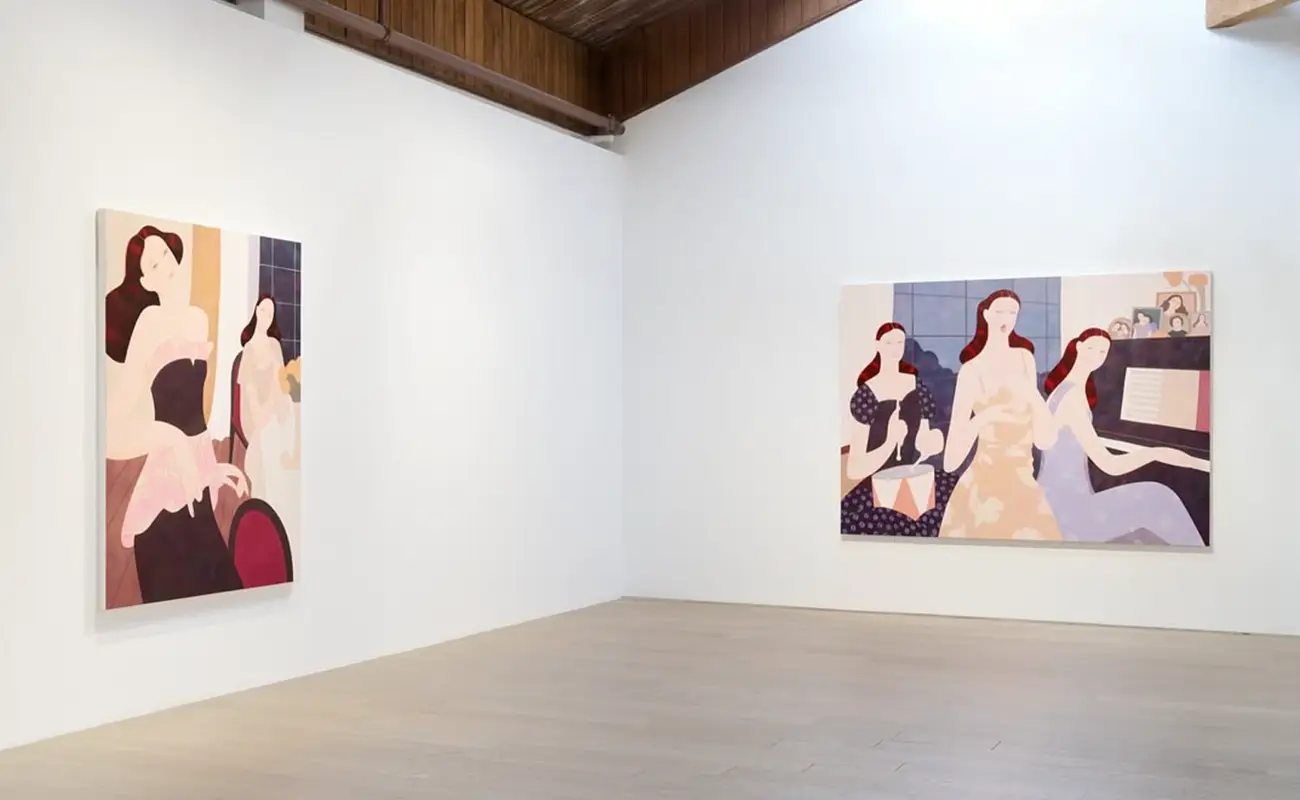
Kelly Beeman has emerged as a distinctive voice in contemporary figurative painting through her ability to translate everyday life into scenes charged with emotional resonance. Known for bold yet restrained portraiture and atmospheric depictions of women, her work occupies a space where fashion, memory, and interior life intersect. Rather than relying on overt drama, Beeman builds meaning through stillness, allowing subtle gestures and carefully staged environments to speak with quiet authority. Her paintings often appear cinematic, not because they depict action, but because they suggest moments suspended in time, inviting the viewer to imagine what has just occurred or what might follow. This approach has positioned her as a leading figure within contemporary fashion art, while also grounding her practice firmly in the traditions of figurative painting.
Domestic environments play a crucial role in shaping the emotional tone of Beeman’s work. Interiors, suburban spaces, and familiar household settings recur throughout her imagery, functioning less as specific locations and more as psychological landscapes. These scenes reflect the small dramas and private rituals that define daily existence, capturing states of longing, reflection, closeness, and isolation. The familiarity of these settings allows viewers to project their own experiences onto the work, while the artist’s compositional restraint keeps the narratives open rather than prescriptive. Through this balance, Beeman transforms ordinary moments into symbolic encounters that feel both deeply personal and broadly relatable.
The emotional relevance of her work became especially apparent during the global disruptions of 2020, when themes of domestic confinement and introspection entered collective consciousness. Although these subjects had long been present in her practice, they suddenly resonated with renewed intensity. Her paintings, which often depict individuals alone or in close-knit groups within contained spaces, seemed to mirror a shared psychological state. This unintentional alignment reinforced the enduring strength of her vision and underscored how attentiveness to everyday life can yield imagery that feels quietly prophetic without relying on spectacle or commentary.
Kelly Beeman: An Independent Path Shaped by Observation
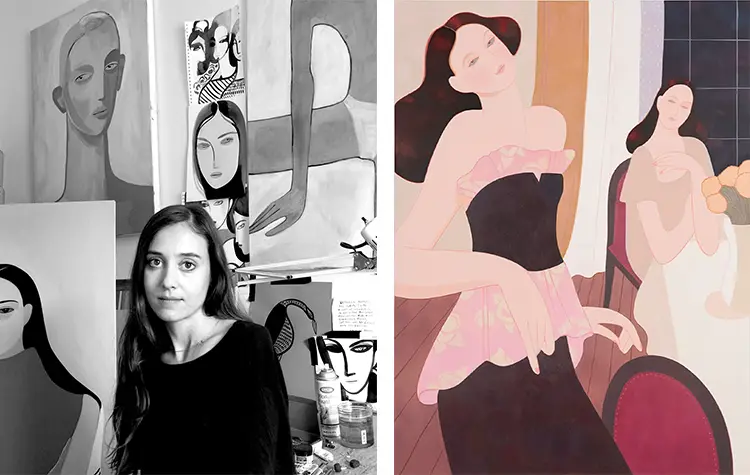
Kelly Beeman’s artistic development reflects a self-directed path shaped by persistence, observation, and an early commitment to creative expression. Raised in Oklahoma within a family that supported artistic exploration, she began drawing and painting from a young age without following a conventional academic route. This independence allowed her to cultivate a visual language free from rigid institutional expectations, guided instead by intuition and sustained practice. When she relocated to New York City in her early twenties, she balanced restaurant work with making art, producing paintings primarily for personal fulfillment rather than professional ambition. This period of quiet dedication laid the foundation for a body of work rooted in authenticity rather than trend.
Her transition into wider recognition occurred gradually, shaped by consistent output and the organic visibility provided by social media. As her images circulated, viewers responded to the clarity of her style and the emotional accessibility of her scenes. Despite growing attention, Beeman maintained a studio practice centered on introspection and mood, resisting the pressure to dramatically alter her subject matter. This continuity has been essential to her credibility, allowing her work to evolve naturally while retaining its core concerns. The absence of a traditional academic background did not limit her development; instead, it fostered a sensitivity to lived experience that remains central to her imagery.
Observation remains one of the defining forces in Beeman’s practice. Daily routines, fleeting interactions, and internal reflections provide the raw material for her compositions. Even when external circumstances shifted dramatically, her approach to art making remained steady. Working from her Brooklyn apartment and studio, she continued to explore familiar themes, occasionally adjusting the density of figures or the nature of relationships depicted. These subtle shifts reflect responsiveness rather than rupture, reinforcing the idea that her work grows through accumulation and reflection rather than abrupt transformation.

Stylization, Fashion, and the Language of the Figure
At the heart of Kelly Beeman’s work is a refined approach to stylization that balances simplicity with emotional depth. Her figures, most often women, are rendered with elongated forms, fluid contours, and composed postures that convey calm while hinting at internal complexity. Facial features are pared down, yet expression emerges through stance, gaze, and proximity to others. This reduction does not diminish individuality; instead, it allows her characters to function as archetypes, standing in for shared emotional states rather than specific identities. Through repetition and variation, these figures create a sense of continuity across her body of work.
Color and line play a critical role in establishing mood. Beeman favors muted yet sensual palettes, organizing flat areas of color with careful balance and restraint. Spatial depth is often compressed, lending her scenes a theatrical quality that emphasizes arrangement over realism. Interiors and landscapes become stages upon which subtle interactions unfold, reinforcing the sense that these moments exist outside of linear time. Her use of watercolor on paper alongside larger painted works demonstrates a consistent sensitivity to surface and texture, producing images that feel quiet, controlled, and deliberate.
Fashion operates as both a visual and symbolic element within her compositions. Early interests in clothing design informed her attention to garments, which are stylized and patterned to distinguish figures and suggest personality without explicit narrative. Rather than signaling status or trend, clothing in her work communicates mood and inner life. This focus on fashion as emotional language eventually led to collaborations with major fashion houses, expanding her audience while remaining aligned with her artistic priorities. Even within these collaborations, her imagery retains its introspective quality, reinforcing modern femininity as poised, reflective, and self-contained.

Kelly Beeman: Narrative Restraint and Emotional Resonance
Narrative in Kelly Beeman’s paintings unfolds through implication rather than exposition. Scenes suggest relationships, histories, and unspoken tensions, yet refuse to provide definitive answers. A hand placed gently on a shoulder, figures sharing a room without engaging directly, or bodies arranged in quiet proximity all contribute to an atmosphere of contained emotion. These moments echo domestic rituals and familial bonds, capturing intimacy without sentimentality. The resulting stillness feels cinematic, not because it mimics film, but because it relies on the viewer’s imagination to complete the story.
This restraint extends to the emotional register of her work. Beeman avoids overt displays of feeling, choosing instead to let emotion surface through composition and spacing. Distance between figures can feel as significant as closeness, and silence becomes an active presence within the frame. Such choices create a tension between intimacy and detachment, allowing viewers to sense vulnerability without intrusion. The universality of these moments lies in their familiarity; they mirror the private experiences that often go unarticulated, giving form to states of mind that are shared yet deeply personal.
Across her evolving practice, Beeman has maintained a commitment to harmony, curiosity, and emotional control. Her work draws subtle influence from modernist figuration and illustration traditions while remaining grounded in contemporary life. By focusing on everyday settings and internal narratives, she captures the spirit of modern femininity with clarity and sensitivity. Each painting contributes to an ongoing exploration of how people inhabit space, relate to one another, and negotiate their inner worlds, resulting in a body of work that feels cohesive, resonant, and enduring.