
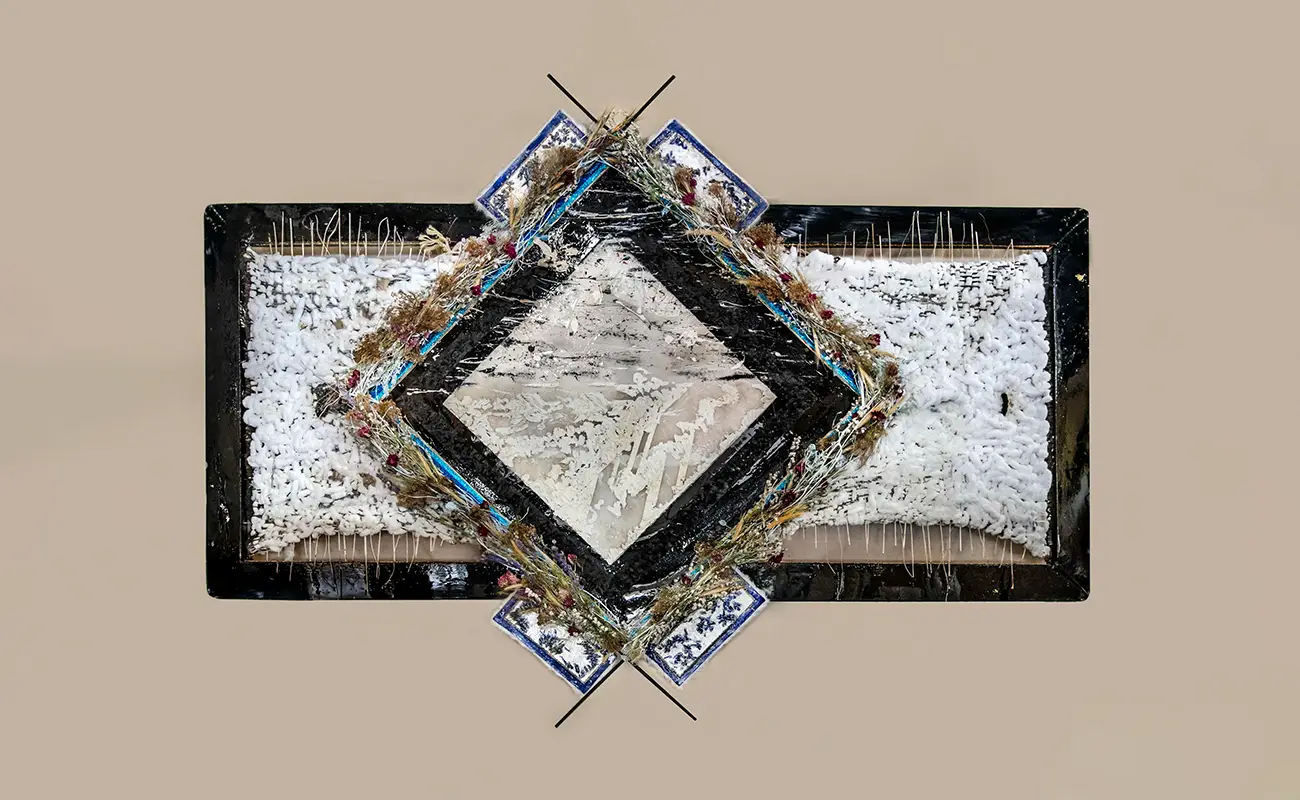
“I don’t create from the division of mind at all, but the sentience of soul.”
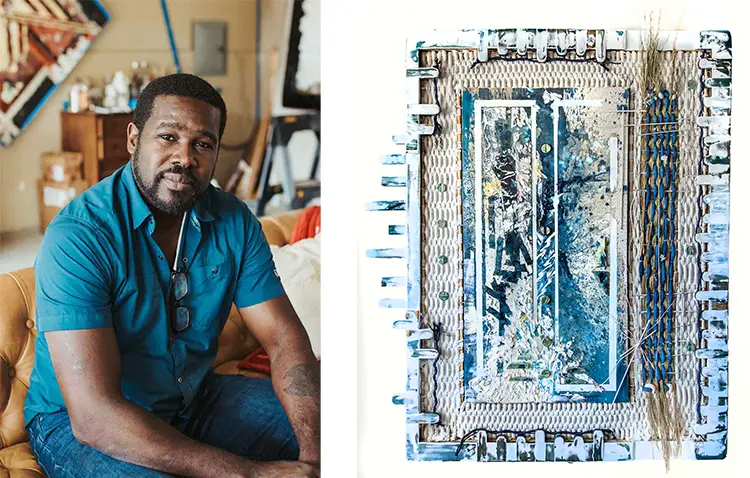
Awakening in the Shadows: A Childhood Rooted in Vision and Resistance
Dwjuan F. Fox’s creative foundation began not in a classroom or a studio, but within the enigmatic corridors of a haunted house, where the unseen and unexplained became as present as the tangible. Born into a household led by a minister father whose words often contradicted the deeper truths young Fox sensed, his early life was charged with questions that extended far beyond religious doctrine or surface-level understanding. Art, from the outset, became a personal act of translation—a means of expressing the invisible threads he perceived weaving through the human experience. While other children were sleeping, Fox stayed awake drawing, listening, and creating, forming a private dialogue between himself and the mysteries that stirred his imagination.
Growing up in the harsh realities of inner-city Detroit during the 1980s, Fox’s youth was shaped by a backdrop of drugs, gang violence, and political upheaval. Yet, amidst the chaos, his talent in visual art became both a sanctuary and a passport. His work earned him a scholarship to the Interlochen Arts Academy in northern Michigan, where he studied painting, drawing, ceramics, and woodcut. Thrust into an unfamiliar environment surrounded by students from affluent backgrounds, Fox learned to adapt, to appear “normal,” but beneath the surface he was brimming with ideas, observations, and a pressing sense of injustice. Despite fitting in, he never stopped questioning why society seemed blind to its own self-inflicted wounds.
His trajectory took a sharp turn at The School of the Art Institute of Chicago, where the weight of personal loss and disillusionment pushed him to set aside his paintbrushes. Moving from still image to motion picture, he immersed himself in filmmaking, drawn to the narrative power of cinema as a more expansive way to confront the human condition. His enlistment as a tank commander during the Bosnian/Kosovo conflict marked another pivotal moment, driven by a moral imperative to take action where words felt insufficient. After serving, he pursued a master’s degree at the American Film Institute and launched Decipher Entertainment, merging military discipline with cinematic production. But no matter how far he traveled or how many stories he told on film, the call of fine art eventually grew louder, demanding his return with renewed purpose.
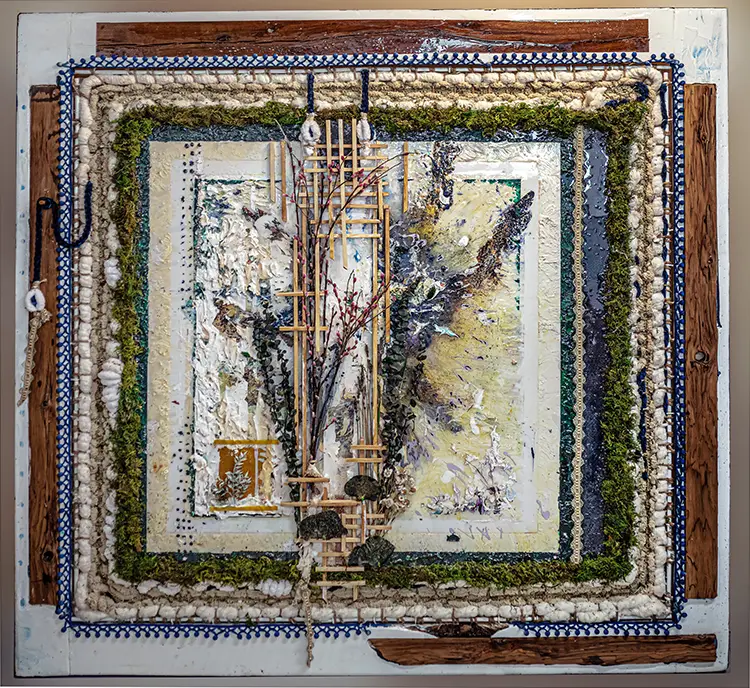
Dwjuan F. Fox: Painting the Inner Psyche
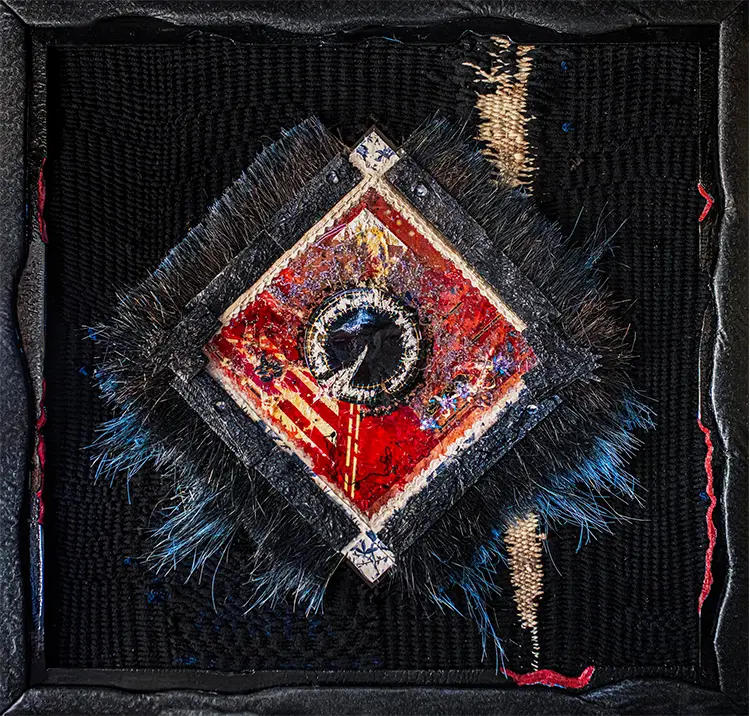
Fox’s artistic language today is rooted in the belief that true meaning transcends the physical. Rather than constructing images that can be easily decoded or categorized by the conscious mind, he creates from the seat of soul-awareness. His compositions resist linear interpretation, inviting instead a raw, unfiltered engagement from the viewer. For Fox, each piece is a mirror—a visual Gohonzon—that reflects the vast landscape of human emotion, internal struggle, and existential transformation. His approach is not guided by aesthetic conventions, but by the energies and impulses that course through the human spirit, often shaped by contradiction, vulnerability, and resilience.
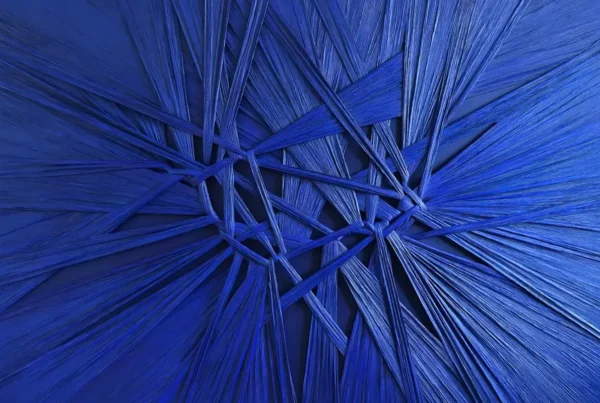
A central theme in his work is the interplay between chaos and order, nature and structure. Fox blends unpredictable organic forms with intentional constructs, allowing flat surfaces to evolve into perceptual volumes. These visual shifts challenge viewers to confront their own boundaries between certainty and ambiguity. His process examines what it means to be human in an era increasingly dominated by artificial intelligence and digital exactness. Through gesture, color, and form, he draws attention to the beauty found in imperfections, the poetry in irregularity, and the deeper truths revealed when we allow ourselves to feel rather than analyze.
His artworks reflect a conscious resistance to the seduction of binaries. Fox believes that elevating human consciousness requires moving beyond dualities such as good and evil, light and dark, right and wrong. He views the dualistic framework as limiting, a distraction from a more expansive truth. Drawing from experiences across cultures, philosophies, and belief systems, his art embodies the full spectrum of human nature, holding space for fear, joy, sacrifice, loss, and renewal. It is in this nuanced layering that Fox challenges audiences not just to look, but to awaken.
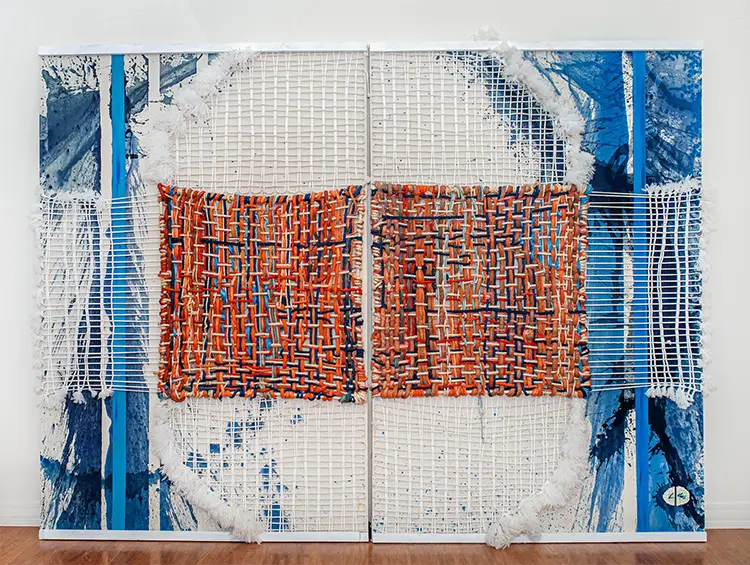
Shadows of History, Colors of Memory
Fox’s influences are both artistic and experiential, woven from time spent among masterpieces and moments of human tragedy. As a child, his weekly pilgrimages to the Detroit Institute of Art introduced him to Diego Rivera’s “Detroit Industry Murals,” which instilled an early sense of art’s capacity to speak to collective struggle. Rivera’s bold depiction of labor and transformation resonated with the blue-collar heartbeat of Detroit, offering Fox a sense of purpose in the visual arts. Later, the abstract intensity of Mark Rothko would captivate him in entirely new ways. Rothko’s stripped-down, emotive color fields became proof that a single brushstroke could bypass logic and communicate directly with the soul.
Yet Fox’s most profound inspirations often emerged far from museum walls. While filming a documentary on genocide in Rwanda, he visited a site where victims of mass violence had been left untouched in a communal grave. The visceral horror of seeing preserved skeletons still locked in final embraces with loved ones was an experience he could never verbalize. The lingering scent, the silence, and the raw emotional impact would become an indelible part of his creative core. Unlike historical sites in Europe, these graves forced him to confront the immediacy of death and the human capacity for brutality. Out of this confrontation, however, emerged not just pain, but a fierce dedication to create art that insists on life.
The synthesis of these experiences formed a visual language grounded in rebirth. Instead of dwelling in sorrow, Fox channels trauma into color, into texture, into compositions that celebrate resilience. He seeks to transmute the darkness he has witnessed into something illuminating. His art becomes a living response to atrocity, a call to feel deeply rather than numb out, and a testament to the idea that beauty can still bloom from devastation. Whether on canvas or in clay, Fox insists on honoring both the light and the shadow within the human journey.
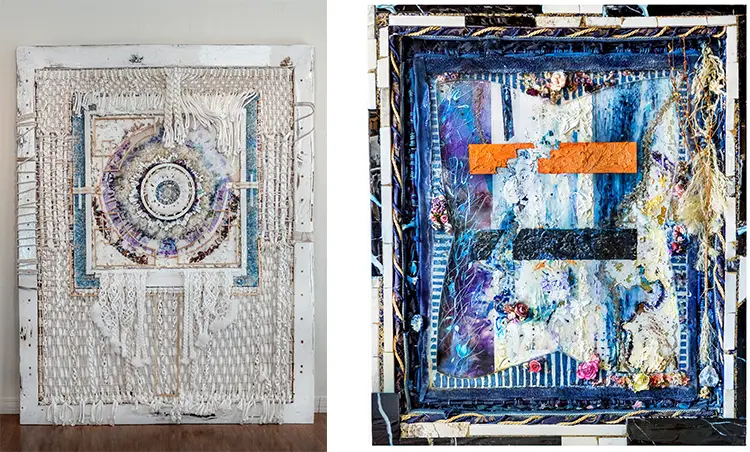
Dwjuan F. Fox: Memory in Bloom
Among Fox’s most personally significant works is Shango In Big Daddy’s Garden, a piece steeped in memory, legacy, and spiritual symbolism. Inspired by his grandfather’s backyard filled with roses, the artwork serves as both tribute and meditation. His grandfather, a World War II veteran and respected community figure, embodied a blend of strength, complexity, and quiet resilience that stayed with Fox long after his death. The garden, lovingly cultivated over decades, became a metaphor for the man himself—layered, rich with contrasts, and unexpectedly tender. Years later, while restoring his grandfather’s long-abandoned home, Fox experienced a striking event. After a week of storms, both literal and emotional, the contractor called with unexpected news: the roses had bloomed again for the first time in years.
That moment became the catalyst for the creation of Shango In Big Daddy’s Garden, a work that fused personal ancestry with cultural mythology. Shango, the Yoruba deity of thunder and justice, stands as a powerful emblem of transformation and righteous strength. By placing Shango in his grandfather’s garden, Fox layered the spiritual and familial into a shared visual narrative. Executed using a mix of media, the piece bridges past and present, loss and regeneration. It is not just a portrait of remembrance, but a declaration that the roots we come from continue to bloom through us, especially during moments of upheaval and rebirth.
Fox’s current practice reflects the same sense of intimate connection to land, memory, and nature. Recently returned from filming in the wild terrains of Montana and Oregon, he has gathered a new body of textures, impressions, and inspiration. Captivated by how water shapes stone and how forests reclaim space, he is incorporating these observations into a new collection titled Series Six. Building a kiln on his own property, he is extending his work into ceramics and textiles, giving physical form to themes of pressure, transformation, and organic resilience. With each project, Fox continues to explore not only what it means to create, but what it means to live with full awareness of the world’s beauty, pain, and infinite potential.