

“Shooting abstract images of nature is a spiritual experience for me. When I’m behind the lens, I feel deeply connected to something greater—a sense of awe and presence as I discover beauty and patterns in the natural world.”
The Alchemy of Reflection
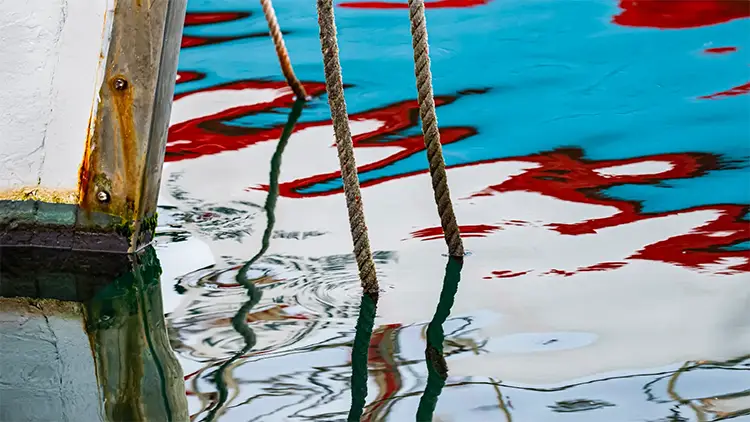
Photographer Debbie O Lucas captures more than just images—she reveals quiet truths hidden in ordinary elements. Rooted in a lifelong connection to nature and shaped by a background in biology, her photography transforms water, rust, and landscape into abstract visual symphonies. Born in Northeastern Ohio and based in North Carolina since the 1980s, Lucas brings an intuitive sensibility to her work that blurs the boundary between observation and imagination. Her photographs invite the viewer to pause and reconsider the familiar, to see not just the object, but the sensations and stories it evokes. This is especially evident in her focus on water, where light, reflection, and surface distortion become a playground for emotion and texture.
Lucas’s path into photography wasn’t traditionally academic but instinctively curious. A single college photography course—coupled with inspiration from a biology professor—ignited her exploration into black-and-white microscopy and the fundamentals of darkroom development. Despite the constraints of time and finances after graduation, her early photographic curiosity simmered quietly until she reconnected with the medium during her professional travels. A Santa Fe Photographic Workshop in the 1990s marked a turning point, guiding her toward macro landscapes and helping her develop a personal aesthetic rooted in patience and discovery. These experiences not only refined her technical skills but also opened her perspective to abstraction as a language for emotion and spirituality.
What defines Lucas’s visual language today is a desire to communicate what cannot be directly spoken—a translation of internal experience into form. Through abstraction, Lucas expresses a unique sense of presence, using the camera to create spaces of quietude and strength. Her style is deeply atmospheric, often feeling more like a visual meditation than a straightforward photograph. The interplay of light, color, and motion within natural elements allows her to convey stillness, resilience, and transcendence. Each image becomes a form of healing, not just for the artist but for those who engage with her work.
Debbie O Lucas
Cozumel Water Abstract 886
Debbie O Lucas: From Biology to Beauty
The origins of Lucas’s visual philosophy can be traced to a college photography assignment that asked students to find beauty in something typically seen as unattractive. Her photograph of a rusted grill grate redefined how she viewed the world through the lens, prompting her to seek out visual poetry in unlikely places. This assignment proved pivotal, teaching her to regard every subject—no matter how mundane or worn—as a potential site of wonder. A later trip to Scotland intensified this sensibility, as the mirrored surfaces of the lochs revealed themselves as visual portals. These experiences were not just formative; they created the framework for a lifelong pursuit of abstraction within the natural world.
Lucas’s exploration of water reflections evolved gradually but gained clarity through repetition and attention. After years of photographing water in various forms, she began isolating smaller sections—macro landscapes—that captured intense visual interest within a limited frame. One significant moment in this journey occurred during a conference in Baltimore. After a day of sessions, she wandered to the harbor and noticed how the Baltimore Trade Center’s glass façade was casting vivid reflections into the still water. The image that would become part of her Inner Harbor Series and was taken with her camera angled downward, attracting curious stares from passersby. This encounter not only reaffirmed her instinct to follow intuition over convention but also marked a new chapter in her creative path, one deeply immersed in abstraction through reflection.
Lucas’s work often walks a line between photography and painting. This hybrid sensibility is not an intentional mimicry of other mediums but a result of her focus on texture, pattern, and movement. The photograph becomes less a document and more a felt experience. She describes the act of shooting as immersive and at times synesthetic—so intense that she can almost taste what she sees through the viewfinder. This deep engagement with her subjects, especially water, grants her work a spiritual dimension. Lucas doesn’t seek control over her subjects; instead, she collaborates with natural elements, letting light, shadow, and momentary distortion guide her compositions. In doing so, she turns photography into a sensory conversation.
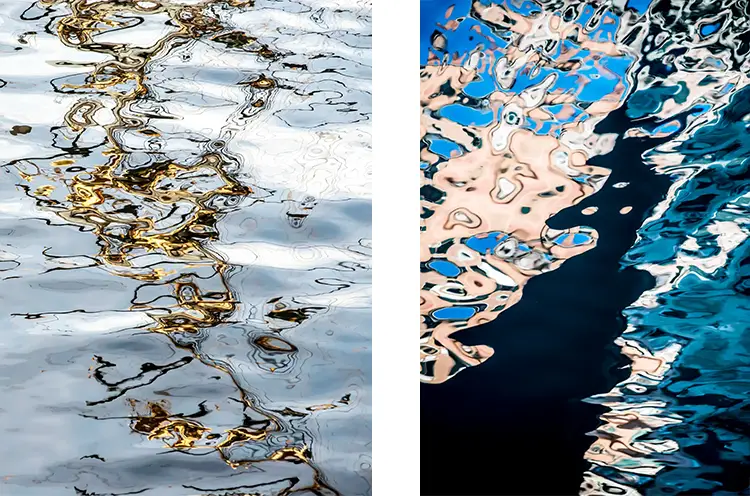
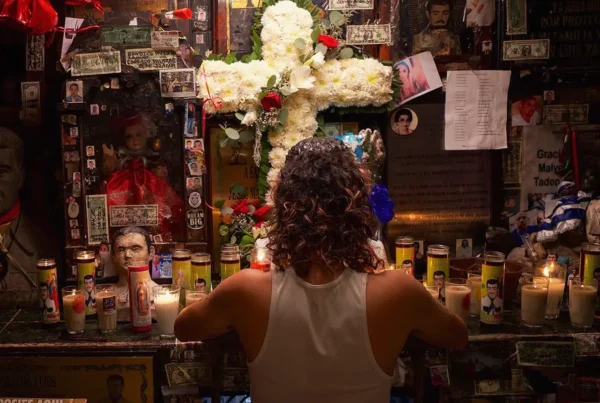
Inner Harbor Series 54
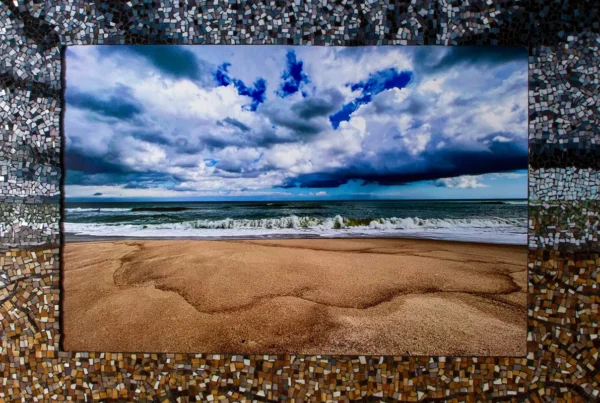
Venice Water Abstract 36
Where Stillness Hides
Lucas does not maintain a rigid studio practice. Instead, her photographic process is fluid, guided by travel, mood, and the spontaneity of discovery. She prefers to work on location, letting unfamiliar environments surprise her into creativity. Whether wandering along a coastal harbor or standing beneath aging urban architecture, she follows instinct more than a shot list. This serendipitous approach brings freshness to her images and ensures that each photograph remains rooted in genuine curiosity rather than preconceived outcome. The unpredictable interplay of light, weather, and setting keeps her eye sharp and her creative process dynamic.
Despite the intuitive nature of her practice, Lucas is increasingly interested in intentional projects that require planning and experimentation. She has begun exploring aerial photography, drawn to the potential for capturing abstract perspectives of land and water from above. This emerging interest mirrors her longstanding fascination with natural forms and patterns, but from a more expansive vantage point. She is also delving into new technical approaches such as motion blur and tonal manipulation through high and low key photography. These methods allow her to push abstraction further, continuing her dialogue with nature while inviting new ways of seeing.
In addition to her signature water imagery, Lucas has started applying her abstract lens to subjects beyond liquid surfaces. Coral reefs, with their intricate textures and complex ecosystems, are an area she hopes to photograph in greater depth. Beyond water, her abstract photography invites viewers to discover the quiet poetry of sand, the intricate forms of flora and fauna, and the silent stories etched into weathered buildings, revealing hidden beauty in both natural and human-made environments. Regardless of subject matter, Lucas’s images ask viewers to pause, reflect, and reconnect with a quieter layer of perception that often goes unnoticed amid daily noise.

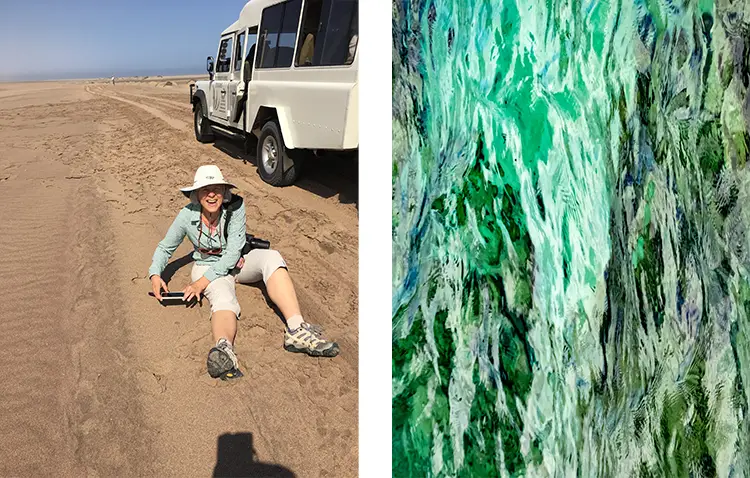
Namibia Dunes 70
Debbie O Lucas: Abstraction as a Way of Seeing
Lucas’s ability to find transcendence in the everyday sets her apart in contemporary photography. Her work challenges the viewer to rethink what constitutes a subject, encouraging a reconsideration of how meaning is formed through visual detail. Abstract photography, for Lucas, is not an escape from reality but a deeper engagement with it. By stripping away literal context, she invites the audience to experience light, texture, and pattern in a purer, more intuitive way. This method becomes especially potent in healthcare and residential spaces where her work is displayed, offering a visual balm through its quietude and immersive presence.
The subtle emotional power of her work has not gone unnoticed. Lucas’s photographs have been juried into numerous art exhibits and awarded top honors in both photography and visual arts competitions. Her images are held in private collections as well as corporate and healthcare settings, where their ability to evoke calm and introspection makes them especially resonant. The visual ambiguity in her pieces encourages personal interpretation, allowing viewers to project their own narratives onto the image. This open-ended quality reflects her philosophy as an artist: to create space for stillness, to highlight beauty in unlikely corners, and to allow the camera to become a bridge between inner experience and external form.
Ultimately, Lucas’s work speaks to the potential of photography not just to record but to transform. Her lens captures more than appearances—it records moods, intuitions, and fleeting harmonies. With each image, she redefines the possibilities of abstraction, using photography as a tool for both personal healing and collective reflection. Whether capturing the flicker of light on a harbor’s surface or the worn surface of a rusted grate, she reveals a world that is at once intricate, fleeting, and full of quiet power. Through her eyes, the mundane becomes profound, and the overlooked becomes essential.