

A Vocabulary of Stillness and Shape
In the quiet, sunlit city of Marseille, David Vanadia has crafted a body of work that speaks volumes without shouting. As a French illustrator and visual artist, his creative voice is marked by restraint and introspection, developed through a visual language that is minimalist yet rich in symbolism. What distinguishes Vanadia is not merely his aesthetic, but his commitment to making meaning through image. Rather than overwhelm the viewer with complexity, he reduces forms to their essence, creating artworks that encourage reflection rather than spectacle. His style, both poetic and graphically assertive, is a synthesis of philosophical inquiry and visual clarity—a rare and compelling combination in the contemporary art landscape.
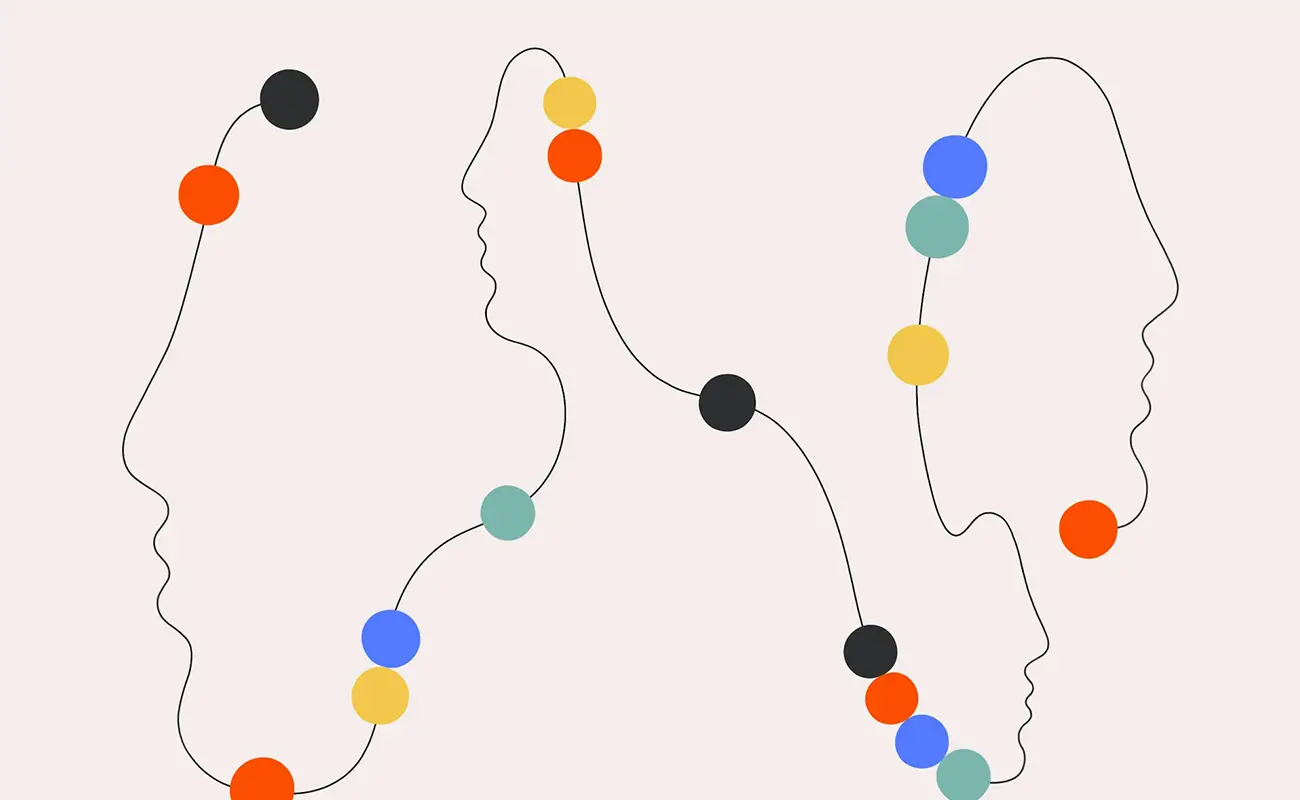
With a foundation in applied arts and years spent in graphic design and artistic direction, Vanadia approaches illustration with a precision honed by discipline. This training is visible in the economy of his lines and the thoughtful placement of every shape. However, beyond technical prowess, his illustrations carry a metaphysical charge. Heads, hands, eyes, and fragmented bodies are reimagined not as anatomical studies but as conceptual vessels—sites of emotion, perception, and spiritual inquiry. There’s an architectural quality to his compositions, where the human figure is deconstructed and rebuilt through clean contours, balanced color fields, and a deliberate use of negative space. These choices invite viewers to pause and look inward, transforming the act of observation into a personal meditation.
Vanadia’s themes range from human consciousness to nature’s quiet order, all navigated through symbolic representation. The natural world holds a special place in his visual thinking. It is not just a motif but a philosophical anchor, serving as a counterbalance to the modern condition of noise, speed, and fragmentation. In this contrast, his art provides a retreat—a space where stillness becomes powerful and minimalism serves as a bridge to something much larger. His work doesn’t seek to instruct but to stir a dormant awareness, encouraging us to reconnect with the primitive, almost sacred dimensions of our own existence.

David Vanadia: The Metaphor as Medium
At the heart of Vanadia’s practice lies a fascination with the visual metaphor. For him, illustration is not simply image-making; it is a way of thinking aloud in shapes and symbols. This conceptual rigor translates into what he describes as “graphic games”—a playful yet deeply intentional method of staging ideas, concepts, and feelings through visual elements. The resulting works often walk the line between clarity and enigma, where simplicity never equates to superficiality. Instead, they open interpretative space, prompting the viewer to project meaning rather than passively consume it. In this way, Vanadia elevates the role of the image, positioning it as a philosophical tool rather than decorative matter.
His symbolic vocabulary borrows influence from both historical and contemporary sources. Henri Matisse’s paper cut-outs serve as a touchstone for his exploration of form through reduction, while the conceptual clarity of Geoff McFetridge informs his own pursuit of visual economy. From these inspirations, Vanadia has developed a language that is unmistakably his own—where silhouettes, mirrored profiles, and void-like shapes suggest duality, self-exploration, and the porous boundary between the inner world and its surroundings. The head, in particular, recurs across many works, often abstracted or bisected, signaling thought, fragmentation, and spiritual ambiguity.
Color in Vanadia’s work acts not as decoration but as tone. His palette tends toward earthy reds, serene blues, matte blacks, and subdued neutrals—hues that ground the work in a timeless atmosphere. These colors function as emotional cues, supporting the thematic weight of the composition without overwhelming it. Through subtle shifts in form and shade, he evokes balance, tension, and a sense of philosophical quietude. Every visual decision becomes part of a larger, meditative structure, allowing the work to resonate not just visually but emotionally and intellectually as well.

Between Mind and Matter
Vanadia’s work exists in a space where the cerebral and the sensory merge. His commitment to exploring human consciousness through art is neither decorative nor didactic, but instead presents an invitation to slow down and inhabit the symbolic. His subjects—often rendered in stark, minimal gestures—are universally human yet stripped of individual identity, enabling a broader emotional accessibility. The anonymity of his figures suggests a shared psychological and spiritual experience, one that transcends cultural boundaries and language. It is in this way that Vanadia’s belief in visual art as a universal language becomes apparent: each piece acts as a conduit for connection, both with the self and with others.
Working across digital formats as well as analog techniques like engraving and collage, Vanadia brings a multidisciplinary approach to his minimalist ethos. Regardless of medium, his images retain their clarity and focus, speaking to the coherence of his vision. This adaptability also reflects his refusal to see graphic design and visual art as separate disciplines. For Vanadia, the intersection of the two forms the foundation of his practice. He embraces the freedom to navigate between them, seeing no need to choose sides. This openness allows him to harness the communicative power of design while imbuing it with the poetic and philosophical gravitas typically associated with fine art.
Nature remains a consistent thread running through Vanadia’s visual investigations. Far from serving as mere background or motif, it functions as a mirror for human introspection. Trees, waves, and organic shapes frequently appear in his compositions, often in dialogue with the human form. These elements serve as reminders of our connection to something greater, offering a quiet resistance to the hyper-rational and hyper-technological pace of modern life. The natural world, for Vanadia, is not a retreat but a return—a sacred source that restores a sense of balance, perspective, and awe within the viewer.

David Vanadia: Lines That Speak the Unspeakable
What makes David Vanadia’s work resonate so deeply is his ability to articulate the inexpressible through a visual vocabulary of silence, suggestion, and form. His illustrations are not about telling stories in the traditional sense but about expressing states of being. Through abstracted heads, contemplative gazes, and balanced compositions, he addresses questions that resist verbal answers: What is the self? How do we connect with others? What does it mean to be present in a chaotic world? These inquiries are not resolved in his pieces but suspended within them, encouraging a quiet engagement with their philosophical underpinnings.
Vanadia’s commitment to creating work that transcends the aesthetic is evident in both his process and output. Each image feels like a visual haiku: minimal, meditative, and layered with intent. His attention to form is matched by a deep investment in meaning, as he carefully crafts compositions that are at once precise and open-ended. This duality—between control and ambiguity, structure and interpretation—forms the core of his creative identity. Rather than dictate a message, his art makes space for multiple readings, operating more as a mirror than a manifesto. The viewer becomes an active participant, completing the work through their own emotional and intellectual engagement.
Collaboration is another dimension of Vanadia’s practice, reflecting his interest in communication across disciplines and cultures. His illustrations have appeared in a range of international publications, including The New York Times and The New Yorker, as well as within more intimate partnerships with agencies like People of Print or publishers such as Hachette and Penguin Random House. These collaborations demonstrate the universality of his aesthetic and thematic concerns. Whether placed within a magazine layout or exhibited as standalone works, his images retain their contemplative weight and graphic clarity. Ultimately, David Vanadia’s illustrations are not merely things to look at—they are experiences, shaped to be felt, pondered, and remembered.