
“Truth is more important than perfection.”
A Language of Paper and Light
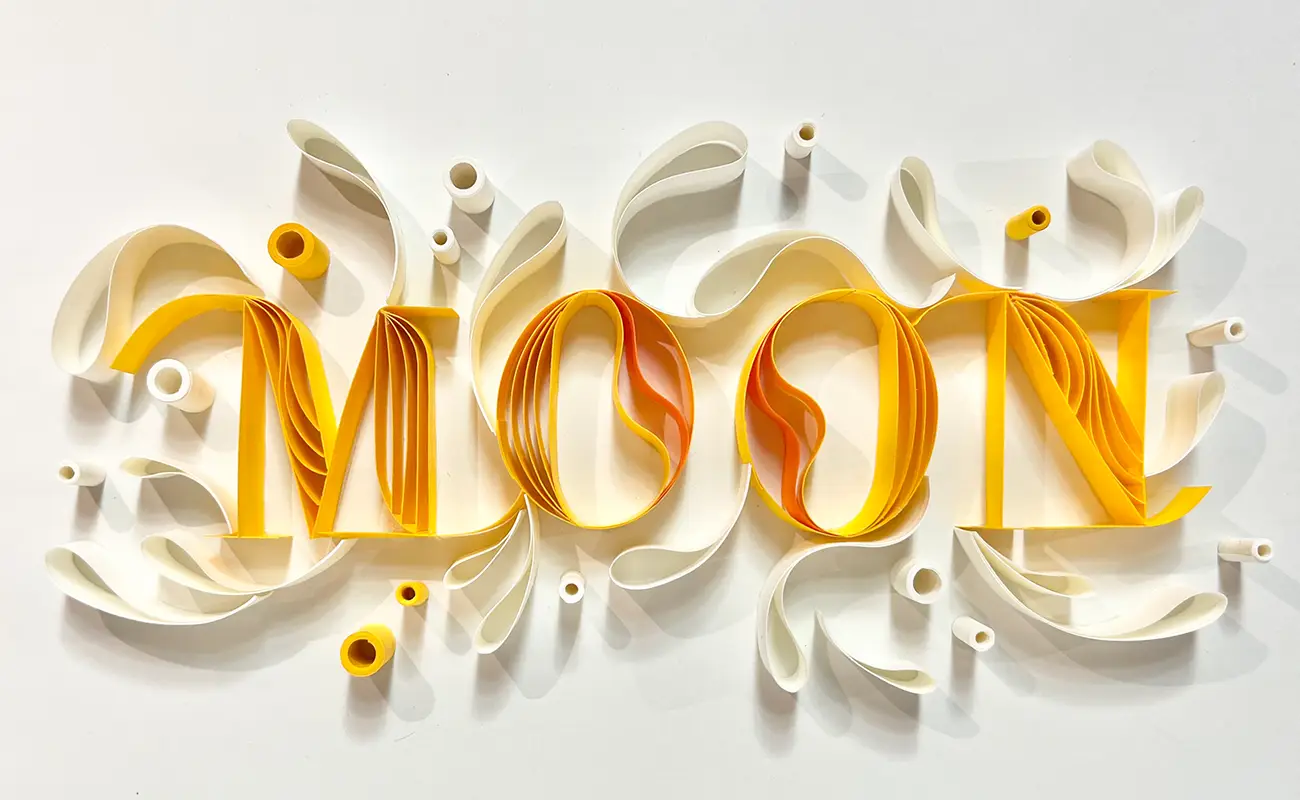
Celine Chan stands at the forefront of contemporary paper quilling, transforming a delicate craft into a powerful vehicle for historical reflection and emotional expression. Based in Hong Kong, she has distinguished herself as one of the few Asian artists devoted to elevating paper quilling into the sphere of fine art. Her compositions shimmer with intricate detail, luminous color, and sculptural depth, offering viewers an experience that moves beyond ornamentation into storytelling. With collectors that include local and international celebrities, her work has achieved broad recognition while maintaining a deeply personal core. Each piece carries a distinctive personality, infused with a sense of vitality and refined elegance that reflects both her cultural heritage and her inner world.
Her educational journey played a formative role in shaping her artistic direction. After studying in Canada, she continued her academic path in design at the Chinese University of Hong Kong, where she strengthened her conceptual thinking and visual discipline. Exposure to diverse cultural environments expanded her perspective and encouraged her to merge Eastern symbolism with contemporary aesthetics. Inspired by the celebrated Russian paper quilling artist Yulia Brodskaya, she committed herself wholeheartedly to mastering the possibilities of paper. Through sustained practice and unwavering focus, she refined a visual language that integrates ornamental richness with conceptual depth.
Beyond technique, Celine Chan’s art radiates a profound sense of empathy. She describes herself as someone who absorbs and transforms the emotions of others, carrying their pain and translating it into visual form. For her, artistic creation is not merely decorative expression but a spiritual conduit that bridges different eras and inner landscapes. Art becomes a channel that connects past and present, self and society. This philosophical approach imbues her works with emotional resonance, allowing her to communicate universal experiences through intricately coiled strips of paper arranged into sculptural compositions that seem to breathe with life.
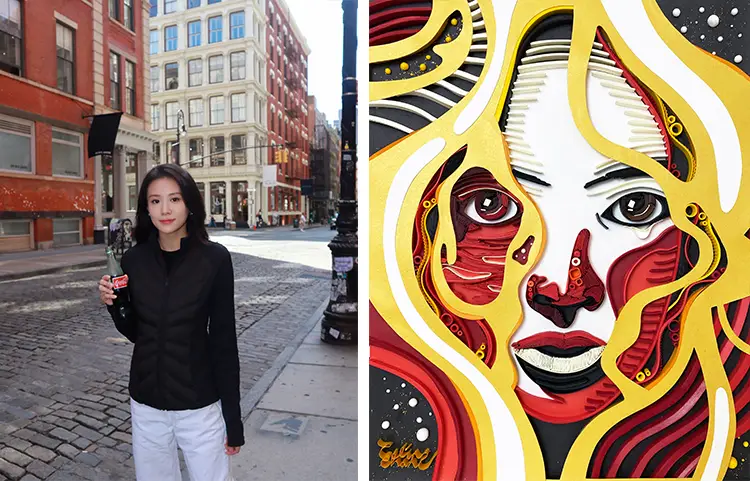
Celine Chan: Awakening Through Education and Self-Discovery
The seeds of her artistic awakening were planted during her studies abroad in Canada. Under the guidance of her art teacher, Ms. Jeri Canderan, she encountered a liberating approach to creativity that left a lasting impression. Students were encouraged to experiment freely, without restrictions on materials or conventional expectations. Supplies could be taken back to dormitories, enabling continued exploration beyond classroom hours. This environment of openness fostered immersion and introspection. In an unfamiliar country, art became her sanctuary, offering solace and emotional release. The freedom she experienced during those formative years awakened a genuine passion that would later define her professional path.
Returning to China with renewed conviction, she resolved to pursue her vocation with seriousness and clarity. Her aspiration to participate in a major exhibition materialized in 2021 when her paper quilling work was presented publicly for the first time at the WWART Expo in Shanghai. This milestone marked a turning point, affirming that her chosen medium possessed both conceptual strength and public resonance. She came to understand that art could serve as a medium for investigating historical truth, illuminating the lives of significant figures, and revealing the emotional undercurrents that shape human history. Creation became an intellectual pursuit as much as a visual one.
Her early works reveal a steady evolution in thematic focus. The piece “Tai Chi Circle” centered on the pursuit of formal beauty, emphasizing harmony, balance, and the visual possibilities of quilled paper arranged into circular motion. Subsequently, her Greek Goddess series shifted toward feminist concerns, advocating for women who confront adversity. This thematic expansion reflected a growing desire to connect individual expression with collective experience. Through these transitions, she began moving beyond aesthetic exploration toward social reflection, allowing her art to address both personal introspection and broader cultural narratives.

Truth, Three-Dimensionality, and the Echo of History
A defining principle in Celine Chan’s practice is her relentless pursuit of three-dimensionality. This ambition extends far beyond physical depth. She seeks intellectual and emotional dimensionality, striving to comprehend her subjects in their historical and psychological complexity. Achieving this form of depth requires extensive research and thoughtful reflection. Only by understanding the circumstances, motivations, and cultural frameworks surrounding a historical figure can she translate them convincingly into sculptural form. Paper, in her hands, becomes a medium capable of conveying not only likeness but presence, layered with nuance and insight.
The creation of “Shine together with the sun and moon,” inspired by Empress Wu Zetian, marked a profound transformation in her artistic philosophy. While working on this piece, she experienced what she describes as a spiritual dialogue across time. Wu Zetian, the only female emperor in Chinese history, ruled within a deeply patriarchal society and navigated immense political and personal challenges. Through careful study and emotional immersion, Celine Chan sought to understand both the loneliness and the resolve that defined the empress’s life. The process led her to a powerful realization that truth holds greater significance than perfection. Imperfections and unfulfilled ambitions are inseparable from authentic human experience.
The artwork itself embodies this philosophy through layered symbolism and technical sophistication. Gold tones signify imperial authority, while vivid red conveys majesty and strength. Soaring carp reference the Chinese idiom about leaping over the dragon gate, symbolizing opportunity and social mobility, an allusion to Wu Zetian’s reforms of the imperial examination system. The varied colors of the carp evoke the cultural diversity of the Tang Dynasty. The background incorporates the character Zhao, Wu Zetian’s original name, representing the radiant union of sun and moon. Paper techniques recreate ancient hair buns and crowns, honoring traditional craftsmanship. Through these intricate elements, Celine Chan reconstructs not only an image but a historical atmosphere infused with authenticity and emotional gravity.

Celine Chan: From Feminine Power to Contemporary Reflection
International recognition has accompanied the evolution of her artistic vision. “Shine Together with the Sun and Moon” was exhibited at the ARTIFACT PROJECT Gallery in New York as part of the group exhibition “Figural & Figurative: From Rembrandt to the 21st Century.” Presenting her work within this global context affirmed the relevance of her medium and themes. Following the exhibition, she intends to continue refining the piece, underscoring her belief that artistic growth is an ongoing process. Earlier explorations of Greek goddesses advocating women’s empowerment directly informed her portrayal of Wu Zetian, reinforcing her commitment to restoring historical truth and highlighting women’s contributions.
Her influences extend beyond cultural history to the emotional intensity of artists such as Vincent van Gogh. His unwavering dedication to authentic expression, despite personal hardship, resonates deeply with her own commitment to creation. His belief that art demands the full measure of one’s life strengthens her resolve to pursue sincerity above all else. Edgar Degas also inspires her through his experimental approach during a period of technological transformation. His question of how painting could respond to photography encourages her to consider how paper quilling might evolve in response to contemporary sensibilities while remaining grounded in its essence.
Looking forward, Celine Chan is developing a new project centered on the theme of war, symbolized through the image of a tree hole. In this concept, children or individuals trapped in difficult circumstances peer from a place of fragile safety into a fractured world. The tree hole represents both refuge and the timid corner within each person that longs for protection. Yet the work aims to move beyond despair. By confronting fear and vulnerability, she seeks to inspire courage and transformation. Through this forthcoming piece, she continues her exploration of resilience, urging viewers to reflect on their own inner conflicts and to emerge with renewed strength and compassion.