
“Is being raw and exposed an act of strength, or a form of vulnerability that invites harm?”
Between Science and Sensitivity
Biljana Petreska occupies a singular position within contemporary art, shaped by a life lived between analytical rigor and emotional attentiveness. Trained as both a doctor of pharmacy and a fine artist, she brings together disciplines often perceived as opposites, allowing each to inform and challenge the other. Her practice is rooted in observation, transformation, and care, qualities essential to both scientific inquiry and artistic creation. Rather than separating these pursuits, she treats them as parallel ways of understanding the world, each offering tools to examine what cannot always be articulated directly. This dual foundation gives her work a quiet authority, where conceptual clarity supports emotional openness. Viewers encountering her work often sense this balance immediately, recognizing an underlying structure that holds space for vulnerability. Through photography and mixed media, she creates environments where precision does not diminish feeling but instead sharpens it, allowing subtle emotional states to surface with clarity and restraint.
Petreska’s scientific background influences not only her choice of materials but also her approach to process. Years spent studying healing, chemical interaction, and structure have cultivated an awareness of how substances respond under specific conditions. This sensitivity carries into her art, where glass, resin, organic matter, and photographic imagery interact through controlled yet intuitive methods. Her understanding of transformation is both intellectual and embodied, shaped by knowledge of how matter shifts through pressure, heat, and time. These changes are never purely technical, since they mirror emotional states such as endurance, exposure, and adaptation. The discipline required in pharmacy fosters patience and attentiveness in her studio practice, encouraging her to listen to materials rather than impose outcomes. In this way, science becomes less a contrast to her art and more a quiet partner, offering structure while allowing space for uncertainty, intuition, and emotional resonance to guide the final work.
Equally important is how Petreska’s lived experience informs the conceptual core of her creations. Moving between professional identities has heightened her awareness of fragility and resilience as shared human conditions. Her work reflects this sensitivity, often focusing on moments that feel suspended between holding together and coming apart. Transparency, both literal and emotional, becomes a recurring concern, expressed through materials that reveal while protecting. The invisible processes studied in science find echoes in her artistic interest in what lingers beneath the surface of experience. Each piece suggests that understanding is layered and that truth emerges gradually rather than all at once. This perspective allows her work to speak quietly yet persistently, inviting viewers to slow down and notice what usually escapes attention. Through this synthesis of knowledge and feeling, Petreska establishes a practice that feels grounded, reflective, and deeply attentive to the complexity of being human.
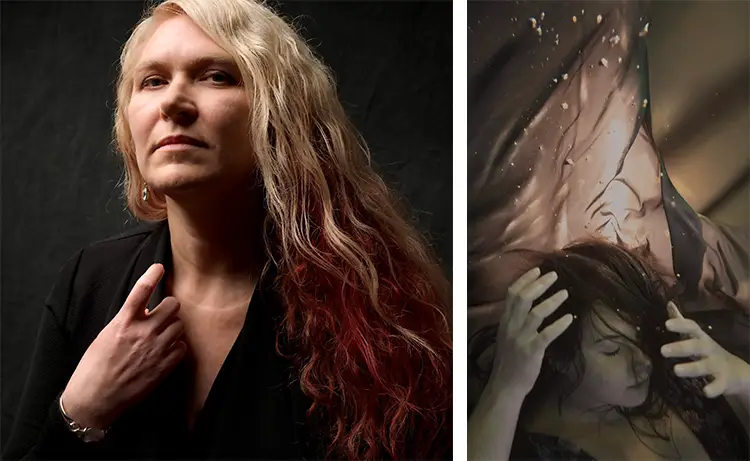
Biljana Petreska: An Intuitive Path Toward Expression
Petreska’s journey toward art did not follow a decisive turning point or a clearly defined beginning. Instead, it unfolded gradually, shaped by a sustained sensitivity to moments of stillness, gesture, and light. Even while immersed in scientific study and professional responsibilities, she found herself drawn to subtle visual experiences that carried emotional weight. Photography, drawing, and material exploration became ways of paying attention, offering methods to register what words could not fully contain. This slow emergence of artistic practice reflects her belief that art is not always chosen but sometimes recognized over time. Creativity, for her, functioned as a form of listening, a means of staying present with internal and external landscapes. This intuitive development allowed her work to grow organically, free from rigid expectations, and rooted instead in curiosity and necessity.
Her early engagement with photography provided a foundation for examining presence and reflection. The camera became a tool not only for documentation but for introspection, especially through self-portraiture. By placing herself within the frame, Petreska explored the relationship between observer and observed, visibility and concealment. These images often incorporate natural or constructed elements, creating layered compositions that suggest immersion rather than display. Over time, her practice expanded to include mixed media, where physical materials could carry emotional traces alongside photographic imagery. This expansion was guided less by trend than by responsiveness to ideas, allowing form to follow feeling. Each shift in medium marked a deepening of her inquiry rather than a departure from it, reinforcing the sense that her career evolved through attentiveness rather than strategy.
This intuitive path continues to shape how Petreska defines success and progress. Instead of measuring achievement through external milestones alone, she values alignment between intention, material, and emotional truth. Her work resists urgency, favoring a pace that allows meaning to surface gradually. This approach has cultivated a body of work that feels cohesive despite its multidisciplinary nature. Viewers often describe a sense of quiet recognition when encountering her pieces, suggesting that her intuitive process resonates beyond personal experience. By trusting subtle impulses and allowing curiosity to guide decisions, Petreska has built a practice that feels both personal and accessible. Her artistic path demonstrates that sustained attention and openness can lead to depth, even when the direction is not immediately clear.

Materials of Transparency and Emotional Trace
The visual language of Petreska’s work is defined by transparency, layering, and emotional residue. Photography serves as a starting point, often combined with materials such as glass, resin, leaves, and feathers. These elements are chosen not for decorative effect but for their capacity to hold and reveal traces of presence. Transparency becomes a conceptual bridge, linking physical properties to emotional states. What can be seen clearly, what remains partially obscured, and what is preserved against disappearance all carry symbolic weight. Her frequent use of self-portraiture introduces intimacy, inviting viewers into moments of reflection rather than performance. These images are rarely static; they suggest immersion, suspension, or quiet tension. Through careful layering, Petreska creates works that reward close looking, where meaning emerges through subtle shifts in light, texture, and material interaction.
Water has become an increasingly significant element in her practice, particularly through underwater photography. This technique allows the body to appear transformed, softened, or momentarily unmoored from gravity. Water reflects, distorts, and conceals, making it an ideal medium for exploring presence and emotion. Gestures captured beneath the surface feel both vulnerable and resilient, shaped by resistance and flow. This environment introduces unpredictability, requiring attentiveness and adaptability during the creative process. The resulting images carry a sense of suspension, where time feels slowed and emotions surface gently. Water functions as both collaborator and filter, shaping how the body is seen and felt. Its presence reinforces Petreska’s ongoing interest in balance, especially between tenderness and strength, and between control and release.
Across all materials, her focus remains on emotional trace rather than formal perfection. Glass and resin preserve delicate elements, suggesting care and containment, while organic materials introduce fragility and impermanence. These choices reflect an understanding that emotions, like materials, respond to conditions and handling. Petreska allows this responsiveness to guide the work, embracing outcomes that feel honest rather than polished. Music often accompanies her process, particularly singer-songwriters whose intimacy and storytelling influence the rhythm and atmosphere of her studio practice. This auditory presence shapes pacing and mood, creating a supportive environment for reflection. Together, these influences form a cohesive approach where material, sound, and emotion interact quietly. The result is work that feels grounded and attentive, inviting viewers to sense what remains after moments pass.

Biljana Petreska: Containment, Exposure, and Quiet Risk
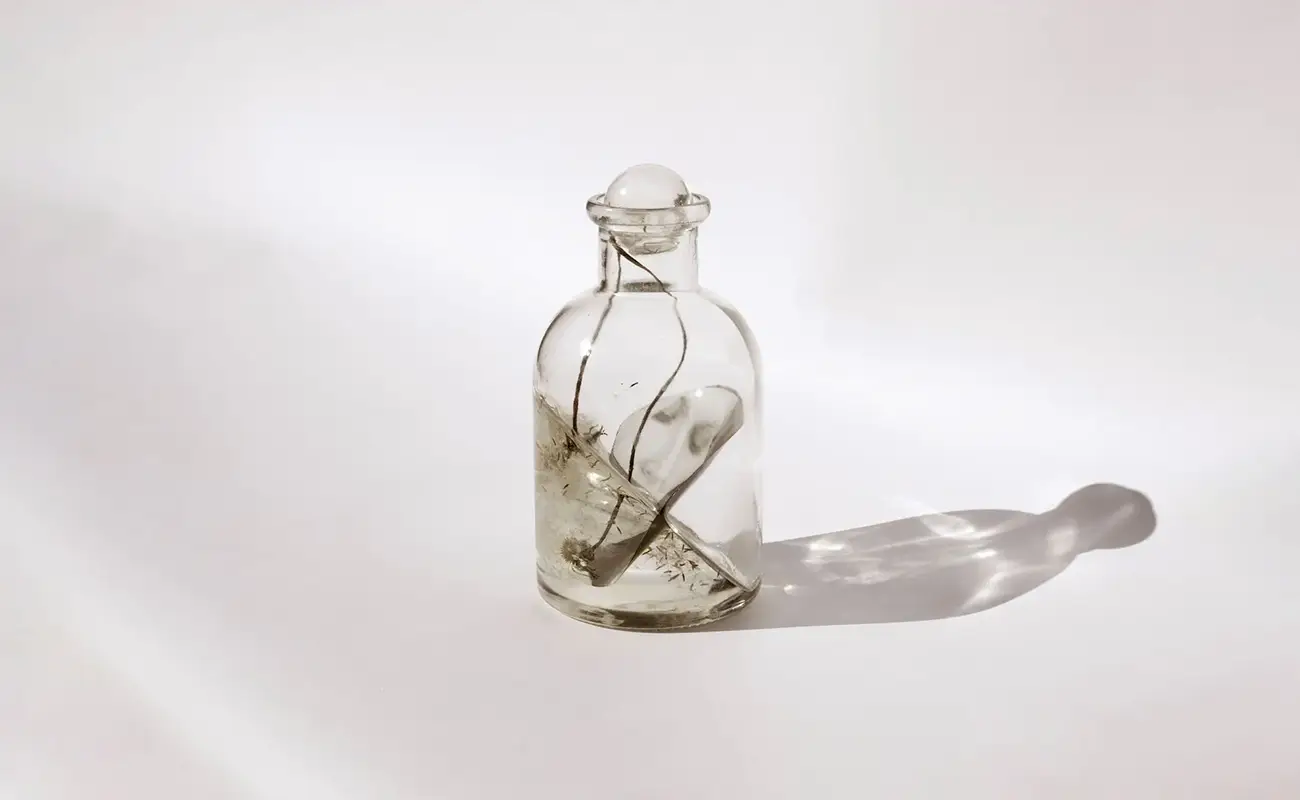
Among Petreska’s most meaningful works is Bare (Am I inviting harm?) (2023), a self-portrait from her ongoing Bottled Up series. This small-scale yet emotionally concentrated piece encapsulates many of her central concerns. The photograph is printed directly onto a chemically processed leaf, which has been altered through heat and controlled treatment. The leaf, fragile and responsive, becomes both surface and subject, carrying the image while bearing visible signs of transformation. Encased within a transparent bottle rather than framed, the work emphasizes visibility alongside containment. This presentation choice invites viewers to consider the tension between exposure and protection. Despite its modest size, the piece commands attention through its density of meaning, standing as one of the artist’s most personally resonant creations.
The process behind Bare (Am I inviting harm?) reflects Petreska’s sensitivity to collaboration with materials. She describes the transformation of the leaf as a dialogue, where intention and response shaped the outcome together. Printing her self-portrait onto this altered organic surface intensified the sense of vulnerability and fragmentation. The clear bottle functions as more than a vessel; it becomes a metaphor for invisible boundaries and selective access. The stopper suggests choice, highlighting what is shared and what remains sealed. Within the broader Bottled Up series, emotions are treated as messages, placed onto leaves or feathers and enclosed rather than displayed openly. This approach creates an intimate exchange, where viewers encounter the work quietly, almost privately, rather than through overt declaration.
At the heart of this piece lies a question that continues to inform Petreska’s practice. The title asks whether openness constitutes strength or whether it invites harm, acknowledging the complexity of exposure. The work does not offer resolution but holds the tension between liberation and risk. This ambiguity mirrors lived experience, where honesty can heal while also leaving one unguarded. By refusing to provide clear answers, Petreska allows space for viewers to reflect on their own boundaries and forms of self-protection. This thematic focus extends beyond a single artwork, shaping her broader vision for future projects, including a traveling exhibition that integrates photography, mixed media, water, and light. Through such endeavors, she continues to explore how fragility and resilience coexist, inviting connection without insisting upon certainty.
Portrait of the artist by David R. Moog (@david_r_moog).
All other images by Biljana Petreska (@biljanartist).