
“People see the detail and call it skill, but the real intention is to pull you past the surface and into the emotional landscape of the subject.”
The Weight of Paper and Purpose
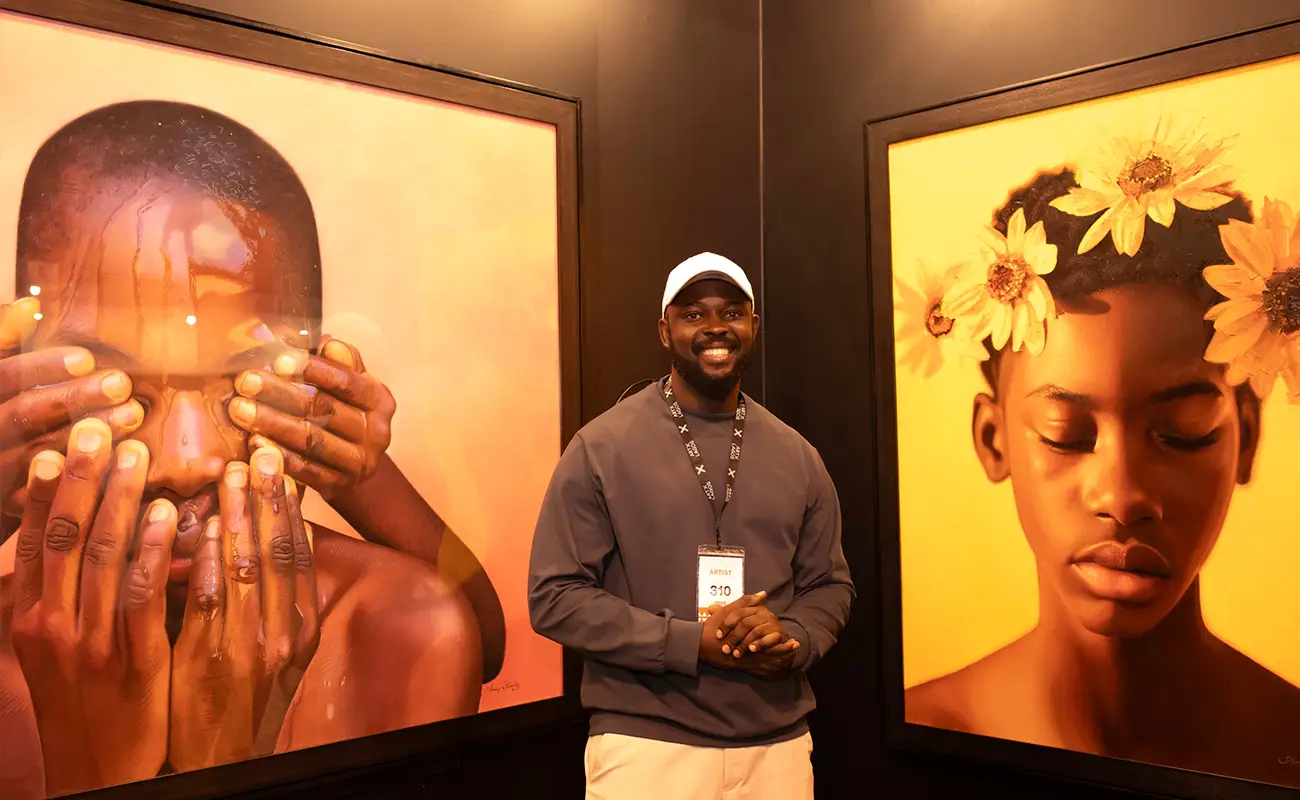
Emerging from the vibrant cultural landscape of Lagos, Nigeria, Arinze Stanley has carved a singular path through the global art world with an intensity that speaks louder than words. His work doesn’t merely depict; it confronts, it mourns, it celebrates. Trained not by formal institutions but by personal obsession, Stanley’s artistry stems from a life deeply entangled with both his physical environment and emotional experiences. Raised among the reams and textures of his family’s paper business, his relationship with the medium began long before he understood its potential as a tool of resistance and revelation.
This early exposure to paper was not just a backdrop but a catalyst. Surrounded by materials that would later serve as the very platform for his hyperrealistic expressions, Stanley learned to draw before he could fully articulate why. His development was not framed by structured lessons but rather by three values he now holds sacred: Patience, Practice, and Persistence. These principles are not abstract philosophies to him. Instead, he treats them as fundamental as charcoal or graphite, central to both his creative process and the emotional endurance his artworks demand.
Over time, Stanley’s style evolved into a precision-based, hyperrealistic form that has become his signature. Yet, beneath the polished detail lies a drive to capture something raw and often overlooked—the vulnerability and resilience of the human condition. His portraits are more than representations; they are narratives etched in monochrome, challenging viewers to engage beyond aesthetics. He draws not to replicate reality, but to intensify it, to turn the inner lives of his subjects outward with such clarity that the emotional weight becomes impossible to ignore.
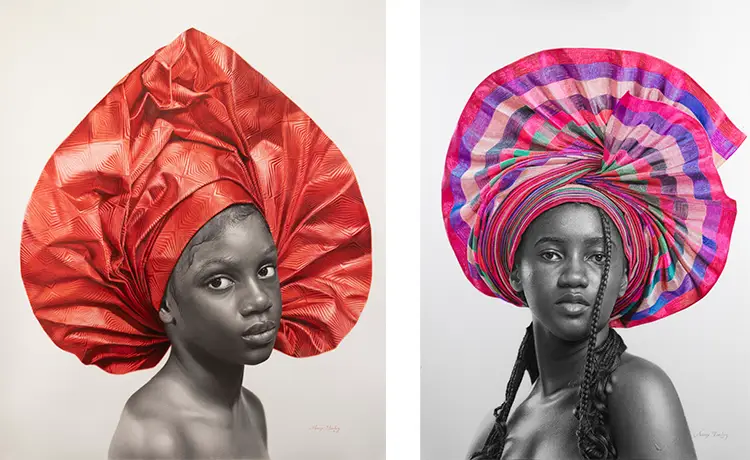
Arinze Stanley: Art as Resistance and Reflection
Stanley’s journey into artistry was less a decision and more a gradual surrender to an identity he had carried since childhood. Drawing became his primary means of communication long before he was recognized as a professional. What began as a silent practice grew into a powerful visual language, honed through countless hours of anatomical studies and the pursuit of capturing light, emotion, and psychological nuance. Every piece reflects his self-taught rigor, shaped by a devotion to the expressive potential of portraiture.
His influences are deeply rooted in lived experience, particularly the sociopolitical landscape of Nigeria. One of the most pivotal moments in his life occurred during a harrowing encounter with military brutality—a moment that left him stripped of security and justice. That incident transformed his purpose as an artist. It pushed him to depict not just faces but truths, especially those that risk erasure. The pain and survival instincts embedded in his community became his canvas. For Stanley, every portrait is an act of testimony, amplifying the voices and realities of those often silenced or ignored.
The work of British-Nigerian hyperrealist Kelvin Okafor also played a significant role in shaping Stanley’s direction. Encountering Okafor’s discipline and precision after university offered a mirror through which he could see his potential path. However, Stanley’s goal diverged beyond technique. His ultimate drive has always been to use his talent as a form of contribution—an offering to humanity, where art becomes both mirror and bridge, inviting reflection, empathy, and change.

Messages That Smear the Surface
Conceptual clarity is the lifeblood of Stanley’s practice. For him, drawing begins long before pencil meets paper. He dedicates entire days to considering the message behind each piece, constructing compositions with an intentionality that resists superficial interpretation. Meaning, for Stanley, is non-negotiable; every mark must echo the story he intends to tell. This deep preparatory work ensures that each drawing serves as a precise vehicle for social commentary, emotional catharsis, or both.
Among the many pieces that make up his evolving body of work, one in particular from his Machine Man series carries a unique emotional and political gravity. Created using graphite and charcoal, the piece confronts the exploitation of Nigeria’s oil resources, a topic that remains both urgent and contentious. Stanley uses human figures drenched in black, oil-like substance to symbolize a broader truth: the coexistence of national wealth and pervasive poverty. The image is stark and unforgiving, a visual indictment of systems that strip people of both dignity and livelihood while cloaking injustice in economic promise.
In this work, Stanley fuses artistry with activism. The figures are not just victims; they are symbols of systemic decay and silent resilience. The piece does not rely on exaggeration or abstraction to make its point; instead, it leverages the realism of human features and body language to reflect environmental and economic devastation. It demands the viewer reckon with a reality many would prefer to overlook, and it does so through a medium that appears delicate but carries the weight of a national crisis.

Arinze Stanley: Discipline as a Daily Ritual
Stanley’s artistic process is defined by consistency and solitude. He approaches each day with a disciplined rhythm, devoting five to ten hours to the act of drawing. His studio isn’t just a workspace; it’s a sanctuary where focus and flow converge. Music plays a constant role in this environment, not merely as background noise but as an emotional scaffold that guides his mood and concentration. This blend of routine and atmosphere allows him to sustain the mental intensity his work requires without burning out.
Though his studio routine is highly structured, Stanley balances it with an active commitment to personal well-being and relationships. He places great importance on time spent with family and friends, recognizing that creativity cannot flourish in isolation. This balance between solitude and connection reinforces the emotional depth in his work. It allows him to remain in touch with the very human themes he continues to explore—love, struggle, dignity, and loss—ensuring they are not distant concepts but living truths within his experience.
Looking ahead, Stanley is preparing to venture beyond the confines of traditional drawing. His next creative chapter involves experimentation with new materials and the exploration of sculpture. This pivot represents not a departure but an expansion—another way to translate his stories into form. The decision to incorporate three-dimensional mediums signals a bold step toward further immersion in the narratives he so carefully constructs. As he enters this new phase, Stanley remains anchored by the same principles that shaped his beginnings: a deep commitment to meaning, an unrelenting work ethic, and a belief in the transformative power of visual storytelling.