
“Art has an Independent Dimension Universal Originated in the Cognitive Imagination of Each Artist.”
A Foundation Built from Earth and Imagination
From the quiet coastal town of Sabana de la Mar in the Dominican Republic, often called “Bay’s Bride” and known for its proximity to the striking landscapes of Los Haitises National Park, Arides R. Pichardo emerged as a rare talent marked by self-directed creativity from early childhood. Long before formal training or academic structure entered his life, he was building miniature houses from cardboard, sculpting animals from mud, and filling his notebooks with intricate drawings. By the time he was 13, his skill had already matured into a refined visual language, visible in hand-painted storefronts, panoramic illustrations, murals, and t-shirt designs that mirrored the visual vernacular of Dominican street culture. His artistic journey began without instruction, shaped instead by his relentless observation and interpretation of the world around him.
Pichardo’s commitment to art deepened with a move to the Dominican capital in 1991, where he enrolled at the Universidad Autónoma de Santo Domingo. There, he pursued a Bachelor’s degree in Publicity with a concentration in Graphic Design and Illustration, graduating with high honors. His academic years were formative not only for the technical knowledge gained but also for the mentorship he received from esteemed Dominican artists including Gabino Constanza Rosario, Francisco Mata Lima, and Amable Sterling. These interactions refined his skills and widened his conceptual reach. While developing his visual lexicon, he remained grounded in the techniques he had cultivated during his formative years—methods rooted in resourcefulness and creative autonomy.
By the early 2000s, Pichardo had amassed extensive professional experience as a graphic designer and illustrator within the commercial art industry. Yet in 2003, driven by aspirations for broader opportunity, he made the pivotal decision to relocate to the United States. Settling in Providence, Rhode Island, he immersed himself in the local art scene and contributed to the launch of Vision Moderna Magazine. Beyond publishing, he began reconstructing old photographs and simultaneously turned more intently toward his own studio practice. Since 2005, his work has gained considerable recognition, resulting in numerous exhibitions, awards, and invitations to speak about his process. His relocation marked not just a geographical shift, but the beginning of a prolific phase defined by experimental approaches and deepening conceptual inquiry.

Arides R. Pichardo: The Independent Pulse of Modernity
Pichardo’s artistic style resists confinement to a single category. At its core lies an avant-garde ethos—one that defends the autonomy of artistic language and its capacity for continual reinvention. He often navigates the boundaries between figuration and abstraction, drawing upon inner vision rather than external reference to guide his compositions. His visual system revolves around symbolic color, segmented forms, indirect analogy, and a profound sensitivity to light and shadow. Through this structure, Pichardo constructs a layered language of meaning, where movement, graphic elements, and texture are not mere formal devices but carriers of emotive and intellectual resonance.
He approaches each work as a site of transformation, allowing daily perceptions to evolve into expressive modern art that maintains both personal and universal consistency. The presence of “the Concept” is vital in his creations—not as a rigid premise but as an evolving idea open to reconfiguration and reinterpretation. This flexible conceptual core gives rise to visual environments that oscillate between the real and the unfamiliar. Rather than illustrate ideas in a direct fashion, Pichardo prefers to allude and imply, guiding viewers through visual metaphors and evocative contrasts. It is through this ambiguity that his pieces invite extended contemplation.
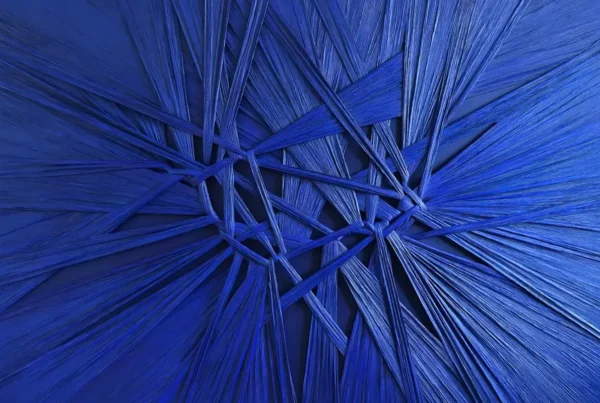
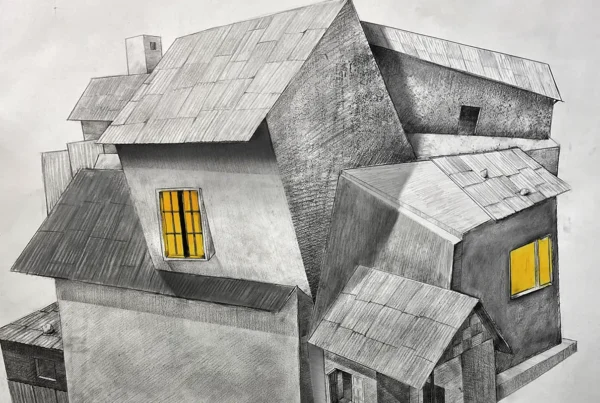
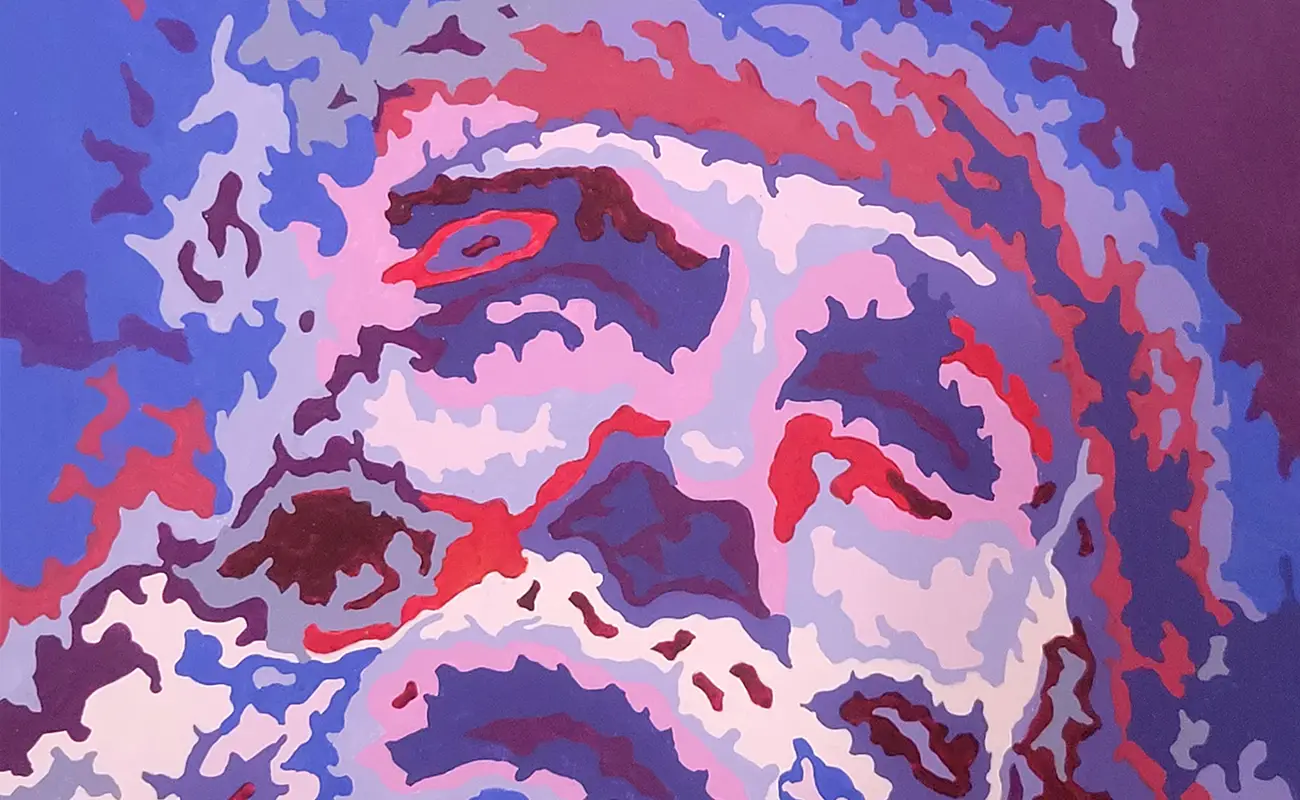
One of his most profound contributions to contemporary visual discourse is the Concepts series. These works stand out for their unusual contrasts and minimal iconography, evoking a visual language that is at once refined and symbolically charged. Equally significant is his Taínos series, which pays homage to the indigenous peoples of the Caribbean. In these pieces, he restores visibility to a nearly erased ancestry through graphite drawings, diluted acrylics, and ink on watercolor paper. Rather than replicate historical imagery, Pichardo reimagines it, using contemporary methods to reassert the vitality of cultural memory. The pieces are not nostalgic reproductions but active engagements with a past that continues to shape the Caribbean present.

A Language of Juxtaposition and Symbolic Tension
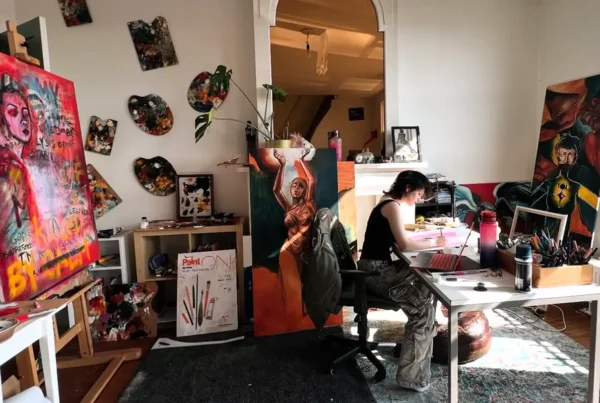
Pichardo’s compositions often begin as explorations of the absurd and gradually unfold into meditations on contrast, contradiction, and transformation. His daily practice is immersive—he paints, sketches, and draws continuously, regarding each moment as a chance to generate new visual interpretations. This constant engagement with materials and ideas keeps his work in a state of evolution, allowing for unexpected connections and fresh conceptual alignments to emerge. He frequently works in series, returning to central motifs and expanding upon them through subtle shifts in palette, form, and spatial dynamics.
One recurring motif in his more fantastical works is the hybridization of organic and mechanical forms. In one piece, abstract windmills hover beside a robotic terrarium, merging technological imagery with ecological elements. These dreamlike environments function as allegories, merging surrealism with visual storytelling. His use of warm, saturated tones—burnt oranges, ochres, and deep crimsons—suggest not only physical heat but internal states of transformation. Meanwhile, ghost-like figures occasionally surface within these abstracted spaces, introducing a psychological undercurrent that speaks to themes of memory, estrangement, and hidden identity.
Even when his work leans toward chaos, it does so with an internal logic. In action painting-style pieces featuring spontaneous drips and splatters, the energetic mark-making conveys emotional immediacy, yet it remains grounded by an intuitive sense of composition. Pichardo manipulates the unpredictability of liquid media to create balance within disorder, echoing the unpredictability of life while preserving aesthetic control. These works stand in deliberate contrast to his photorealistic still lifes, such as his rendering of glass jars and reflective surfaces, where technical precision dominates. This duality across his body of work affirms his versatility and conceptual depth, showcasing a talent not limited to a single methodology, but fueled by a dynamic relationship between control and surrender.

Arides R. Pichardo: A Vision in Process, Rooted and Expanding
At the center of Pichardo’s artistic practice is an unceasing drive to expand his expressive vocabulary, both in concept and material. Currently, he is developing a series of large-scale collage works measuring 36 by 48 inches. These pieces incorporate cut-out images and found three-dimensional objects, assembled alongside deep, brooding color fields. The project reflects his ongoing interest in repurposing everyday materials to generate new symbolic configurations, while exploring the emotional resonance of darkness as a visual theme. Through these efforts, he continues to challenge his own boundaries and investigate the potential of hybrid forms.
His work has earned widespread recognition within the international art community. Featured in publications such as Art Anthology V: Madrid Edition, The Best Contemporary Masters (Italy), and Contemporary Celebrity Masters Vol. 5, Pichardo’s name has become increasingly associated with innovation and conceptual rigor. His contributions to the 5th Barcelona Art Biennial and participation in prestigious competitions like the International Prizes Velazquez & Goya further underscore the global relevance of his work. These accomplishments serve not only as validations of his technical excellence but also as reflections of the unique voice he brings to contemporary art.
Despite such accolades, Pichardo remains grounded in his origins. His fascination with the spatial dimensions of perception, and his belief in the cognitive imagination as a universal artistic source, continue to guide his journey. His pieces function as visual theories—propositions about how light, shadow, symbol, and absence might intersect to create new understandings. On platforms such as Instagram and Facebook, and through his evolving website, he shares glimpses of this ongoing process. For Arides R. Pichardo, art is not a finished product but a continuous dialogue between what is known and what remains to be revealed.