“I work in abstraction to capture the feeling of a moment, its tension, quiet, or energy, without prescribing exactly what the viewer should see.”
The Surface as a Place of Discovery
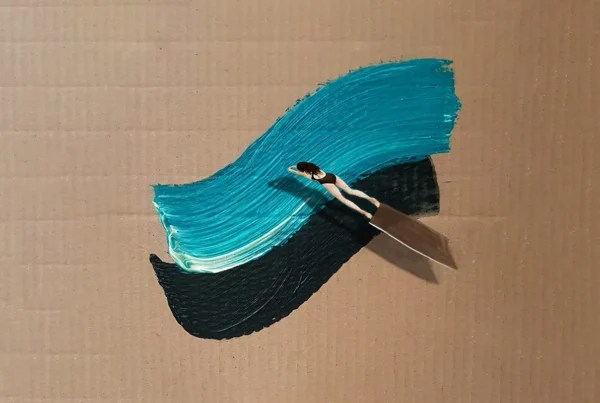
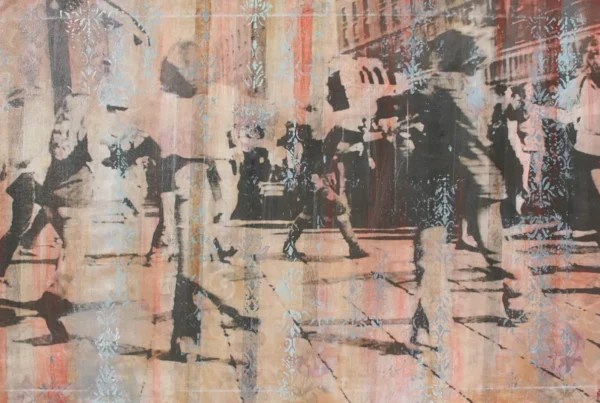
Juan Francko approaches abstraction as a way of registering states that are difficult to name directly. His paintings are built through color, texture, and restrained gestures, with each mark carrying the trace of an instinctive decision, a pause, or a moment of discovery. Rather than directing the viewer toward a fixed subject, he allows the surface itself to become the subject. Smooth passages can sit beside coarse relief, muted space can be interrupted by concentrated color, and a composition can move between stillness and pressure without resolving into a single image. His work occupies a tactile form of contemporary abstraction in which physical material and emotional suggestion are closely connected.
That openness is central to Francko’s thinking. He is less interested in depicting a recognizable scene than in capturing what a moment feels like: its quiet, tension, movement, or charge. Abstraction gives him the freedom to leave those sensations unresolved. A viewer may encounter a landscape, a memory, a fragment of weather, or something entirely personal, but none of those readings is prescribed. The paintings are intended to remain receptive, creating enough structure to hold attention while leaving enough ambiguity for individual associations to enter.
This balance between suggestion and restraint also explains Francko’s attraction to contrasting surfaces. Soft fields of blended color provide breathing room, while rough, raised areas create resistance and ask the eye to slow down. The encounter becomes physical as well as visual, especially when light catches an uneven passage and reveals changes that are not immediately visible from a distance. Francko describes his work as an invitation rather than a statement of fact. What matters is not that viewers identify the same subject he had in mind, but that the painting creates a pause in which they can recognize a feeling, memory, or sensation of their own.

Juan Francko: From Resin Floors to Painted Relief
Francko’s route into painting developed alongside his main occupation as a resin floor layer. Long before resin became a material in his studio work, he was using it to create artistic flooring, where surface, finish, depth, and the behavior of the material were already essential concerns. He later began incorporating resin directly into artworks and eventually combined it with acrylic paint. That progression connected a practical knowledge of constructed surfaces with an increasingly personal interest in abstraction.
The relationship is visible in the way he treats structure. Minimalist compositions are often paired with textured areas that give the painting a stronger physical presence. Rather than relying on image alone, Francko uses relief to activate the surface and to introduce irregularity into otherwise controlled arrangements. His paintings can therefore appear spare from a distance yet become increasingly active when viewed closely. Raised areas, ridges, and accumulated material create small shifts in shadow and reflection, giving the work a changing appearance as the viewer moves around it.
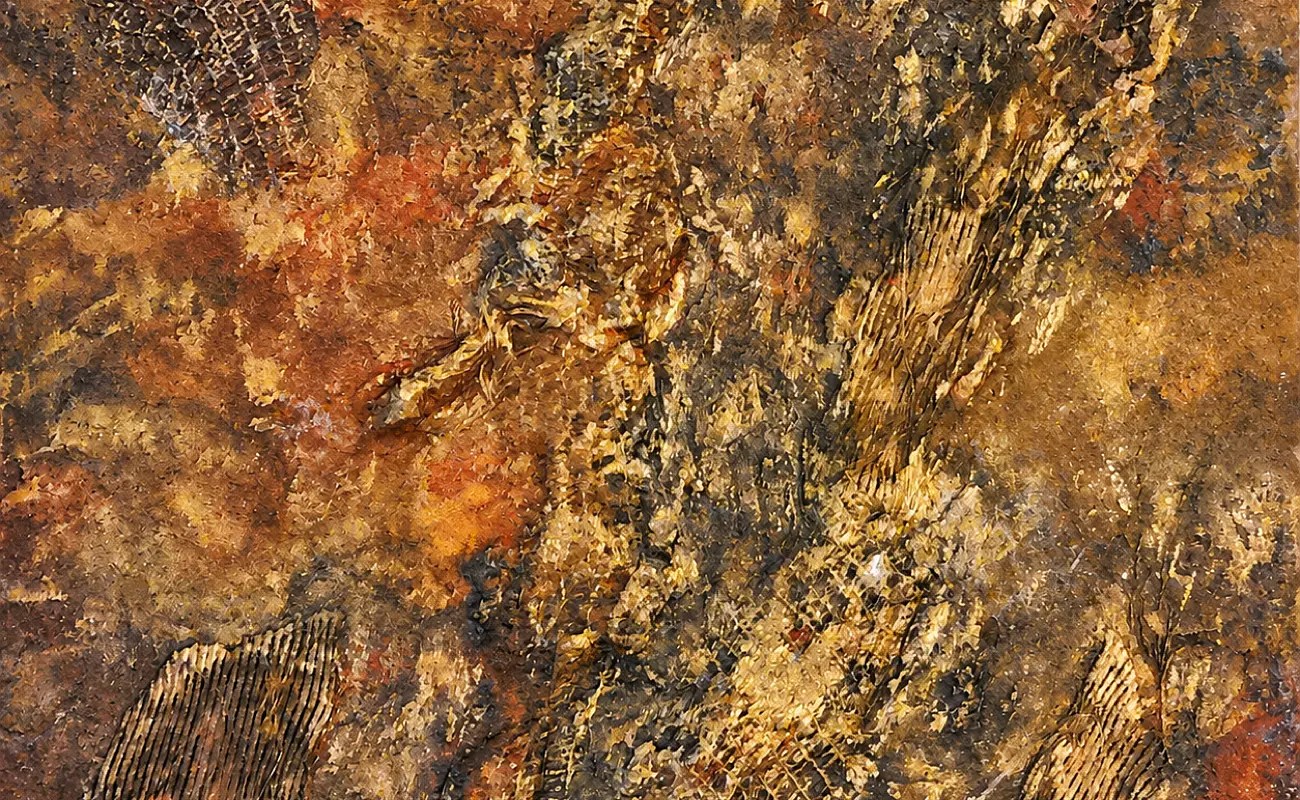
Golden Vertical Texture is a clear example of this approach. Francko uses raised, uneven surfaces to catch light and slow the act of looking, making texture more than decoration. The physical layers become evidence of process, revision, and time. They suggest the repeated human actions of building, covering, exposing, and beginning again. Against smoother backgrounds and softer transitions, these tactile passages gain even greater intensity. The contrast allows calm and disruption to exist within the same painting, not as opposing effects that cancel each other out, but as different energies held together on one surface.

The Beauty of Ordinary Ground
Nature enters Francko’s work through observation rather than direct representation. He is influenced by what the planet offers at every scale, from broad landscapes to simple structures in soil. The modesty of those sources is important. A patch of ground that might normally be ignored can become a starting point because of its cracks, colors, erosion, or layered surface. Francko translates such impressions into abstraction, preserving their visual energy without turning them into literal studies of place.
Cracked Earth grew from precisely this kind of attention. Francko describes being struck by the intrinsic beauty of ordinary soil, especially qualities that usually pass unnoticed. In the painting, shades of orange, rust, and ochre form a warm field of layered acrylic color and tactile relief. Fissures cross the surface while raised ridges suggest sunbaked ground and gradual weathering. The work does not reproduce a particular stretch of earth. Instead, it extracts the material sensations of dryness, fracture, warmth, and accumulated time and reorganizes them into an abstract composition.
Time is one of the quieter ideas embedded in the piece. Francko wanted the small cracks and uneven ridges to suggest a slow passage rather than a dramatic event. The surface holds energy, but he describes that energy as steady and calm. This makes Cracked Earth a useful expression of his wider practice: something commonplace becomes worthy of prolonged attention once its structure is isolated and intensified. The work asks viewers to reconsider the difference between the ordinary and the beautiful, not by announcing that difference explicitly, but by making the overlooked surface difficult to ignore.

Juan Francko: Letting the Painting Decide
Francko does not maintain a rigid daily studio routine. He works when inspiration is present, and he is willing to stop when that feeling disappears, even if a piece remains unfinished. A painting may be left alone and returned to a day later when the impulse to continue has come back. This gives his process an intuitive rhythm. Progress is not measured simply by hours spent at the surface, but by whether he still feels connected to the decisions the work is asking him to make.
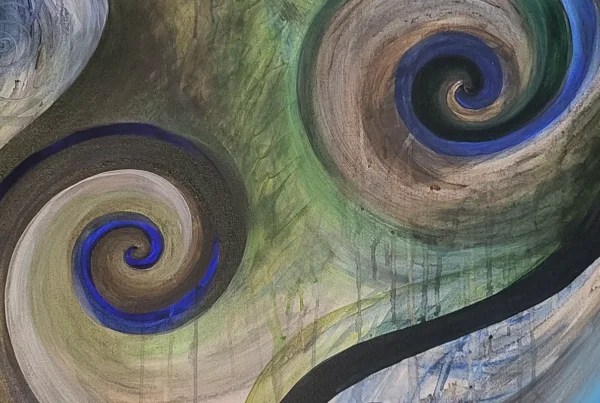
Color often guides those decisions. Francko describes it as an emotional vocabulary, a way to create movement and depth without attaching the painting to a fixed narrative. In Color Collision, rich purples and blues meet earthier tones, producing shifts in mood as areas overlap, soften, or push against one another. A single brushstroke can alter the balance of the composition, so color is not applied merely to fill a predetermined structure. Francko allows it to lead, searching for a point at which harmony and disruption can coexist without either becoming dominant.
That willingness to follow an idea beyond a familiar formula remains active in his current work. Francko is developing a piece that mixes masks, a project he describes as an attempt to think outside the box. He has not defined the work further, which suits a practice that depends on discovery rather than strict advance planning. Across his minimalist compositions, resin based surfaces, color driven abstractions, and studies of natural texture, the common thread is a preference for openness. The painting is allowed to change direction, and the viewer is given similar freedom to encounter it without being told exactly what to find.