“Under the playful surface sit emotions the pursuit of success tends to hide: loneliness, jealousy, emptiness, anger, depression, anxiety, insecurity, pressure, competitiveness, the need for attention, perfectionism, materialism, and conspicuous display.”
Shaping Heat into Meaning
The practice of Hoseok Youn occupies a compelling position within contemporary glass, balancing reverence for history with a curiosity shaped by present-day visual culture. Based in South Korea, he works primarily with glassblowing, grounding his approach in Venetian traditional techniques while expanding those methods toward sculptural and conceptual ends. His academic path reflects this dual commitment to tradition and exploration. After earning a BFA in Glass and Ceramics from Namseoul University in Korea, he continued his studies in the United States, completing an MFA in Glass at Southern Illinois University Carbondale. These experiences offered both technical discipline and conceptual freedom, allowing his work to evolve across cultural and educational contexts. The result is a practice that treats glass not only as a craft material but also as a language capable of carrying psychological and cultural narratives.
At the core of his work lies a deep respect for Venetian glass history, particularly goblets, stemware, and vessel forms that have long symbolized refinement and status. Rather than replicating these forms, he repositions them, reshaping their familiar silhouettes into figures that suggest characters, structures, or imagined landscapes. Architectural rhythms, industrial references, and figurative gestures emerge from the precision of traditional techniques, creating objects that feel both recognizable and slightly disorienting. This tension is intentional. By preserving the visual elegance of classical glass while shifting its purpose, he invites viewers to reconsider what such objects signify in a contemporary context. Craft becomes a tool for questioning value rather than reinforcing it.
Glass itself plays a decisive role in this dialogue. Its clarity, fragility, and technical demands mirror the themes that run throughout his work. The material rewards patience and punishes hesitation, making every decision visible. For Hoseok Youn, this quality aligns with his interest in how surface beauty often conceals vulnerability beneath. The polished finish and intricate stemwork draw viewers in, yet the forms quietly suggest emotional weight and psychological pressure. Through this balance, his practice asserts that tradition is not static. It is something to be carried forward, questioned, and reshaped to speak honestly about the present moment.

5 Magnificent
Hoseok Youn: Discovering Identity Through Making
Hoseok Youn did not begin his creative life with a clear ambition to become an artist. That realization emerged gradually during his college years, when he encountered glass almost by chance. The first experience working with the material created an immediate sense of connection. Heat, movement, and transformation became sources of fascination, and the physical act of making revealed how deeply he enjoyed the process itself. This early attraction was less about concept and more about intuition, yet it laid the foundation for a commitment that would grow stronger with time. Making objects by hand became a way of understanding both material and self.
Graduate school marked a turning point in how he approached his work. During this period, he began to clarify what he wanted to express and why glass was the appropriate medium to do so. Technical mastery remained important, but it was no longer the sole focus. He began asking broader questions, reflecting on personal experience while considering society, culture, and history beyond the studio walls. These inquiries did not remain theoretical. They entered the work through form, scale, and imagery. Learning happened through repetition and experimentation, with each piece functioning as both an answer and a new question. Over time, this process felt increasingly natural, reinforcing his decision to pursue art as a professional path rather than a passing interest.
Today, his style is defined by this synthesis of discipline and curiosity. Venetian traditional glassworking remains central, serving as both foundation and point of departure. He approaches that lineage with respect, aiming to preserve its knowledge while refusing to let it become restrictive. Within that framework, humor, playfulness, and unexpected references emerge. His objects often appear joyful at first glance, yet they carry emotional complexity that resists easy interpretation. This balance reflects his belief that depth comes not from abandoning tradition but from engaging it honestly, allowing inherited forms to carry contemporary concerns.

Hoseok Youn
Skin: Self Portrait #1
Toys, Heroes, and the Weight of Success
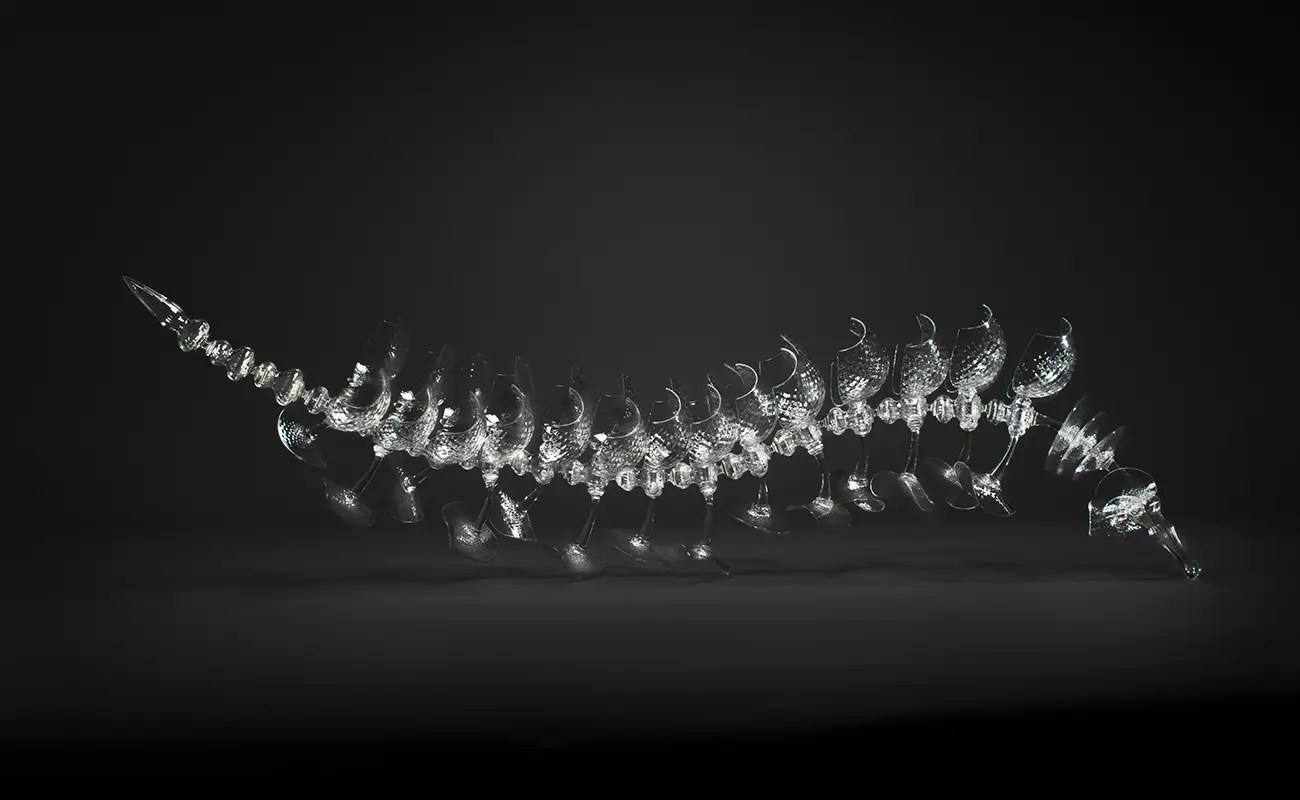
One of the most defining bodies of work in Hoseok Youn’s practice is the series titled IT’S JUST A TOY. This project draws directly from fantasy films, comics, and games, transforming familiar heroic and villainous archetypes into glass objects that resemble elaborate toys. Built using Venetian traditional techniques, each piece incorporates vessel forms, refined stemware, and ornate decorative details historically associated with luxury. These formal choices are deliberate. By pairing playful imagery with materials and methods linked to status and refinement, the series highlights the contradictions embedded in modern ideas of success and aspiration.
The toys within this series function as portraits of an imagined successful self. Crystal-clear surfaces, intricate construction, and excessive ornamentation reflect ideals of perfection, visibility, and achievement. Beneath this polished exterior, however, the work addresses emotions that often accompany the pursuit of success but remain unspoken. Feelings such as loneliness, insecurity, competitiveness, and anxiety quietly inhabit these forms. The objects appear precious and triumphant, yet their fragility suggests how easily these ideals can fracture. The series does not offer moral judgment. Instead, it creates space for reflection, allowing viewers to recognize their own desires and pressures within the gleaming surfaces of the glass.
Personal history gives this series its emotional charge. Growing up surrounded by toys, Hoseok Youn associated them with purity, strength, and excitement. Playing with them meant imagining oneself as a hero within a fantasy world. Adulthood altered that definition. Heroism shifted toward financial stability, recognition, and survival within competitive systems. The toys of adulthood became more elaborate and expensive, yet also more fragile and stressful. In his work, toys become mirrors, reflecting how the meaning of value changes over time. They are no longer meant to be touched or played with, only admired and protected, echoing how success can feel both rewarding and isolating.

IT’S JUST A TOY
Hoseok Youn: Process, Influence, and Future Directions
Influence enters Hoseok Youn’s work from many directions, with pop culture playing a particularly prominent role. Films, animation, games, and toys provide a visual vocabulary that feeds his imagination. He studies character designs, origin stories, and the cultural contexts behind them, finding inspiration in how fantasy worlds construct identity and power. Studio Ghibli’s storytelling offers emotional resonance, while visually rich films such as Avatar spark ideas related to color, scale, and environment. Video games serve as interactive references, allowing him to explore imagined architectures, costumes, and weapons through movement rather than observation alone.
Community also plays an essential role in sustaining his practice. Time spent with other dedicated artists offers more than technical exchange. Conversations, shared experiences, and exposure to different working rhythms contribute to his motivation and growth. Listening to the stories of peers and observing their commitment reinforces his own discipline. This collective energy informs his studio practice, reminding him that art exists within a broader ecosystem of effort and support. Such interactions encourage continual learning, preventing stagnation while reinforcing the value of persistence.
Among his works, Buster from the IT’S JUST A TOY series holds particular significance. Created early in his career, it became a pivotal piece that introduced his work to wider audiences, leading to awards, residencies, and international invitations. More importantly, it encapsulates his central idea by merging the ceremonial language of a Venetian goblet with the approachable charm of a toy. When exhibited, Buster resonates across age groups, triggering memories of childhood play while showcasing technical precision. Produced through blown glass using traditional Venetian stemware forms, hot assembly, and selective cold working, it remains a touchstone for his practice. Looking ahead, he plans to expand his scale with a chandelier shaped like a mythical creature and to explore functional designs inspired by Korea’s strong craft culture, signaling a future that continues to balance ambition, tradition, and play.