“A successful work of art is not something that is immediately recognizable, but rather a series of layers the viewer can discover and unravel over time.”
Fragmented Geographies, Unified Vision
Florian Roeper’s work speaks with the quiet authority of someone who has long observed from the periphery. As the founder of Studio Roeper in Napa Valley, he has spent over two decades creating bespoke, handcrafted furniture for an elite clientele that includes global luxury brands like Louis Vuitton and Dior. Yet beneath this polished surface lies a deeper narrative shaped by constant transition and cultural hybridity. Roeper’s early years were spent moving between Germany, Italy, and California, never settling long enough to claim any single place as home. This recurring dislocation left him feeling untethered, always an observer, rarely a full participant. It is within this internal tension—between belonging and detachment—that the roots of his aesthetic sensibility took hold.
His creative instincts are grounded in this sense of in-betweenness. Unable to fully inhabit any one cultural identity, Roeper developed a visual language that draws from all three. Each country he lived in offered distinct aesthetics and value systems, which eventually found expression in his work as a nuanced amalgamation rather than a direct homage. This synthesis plays out not only in the forms he crafts but also in the materials he selects and the finishes he invents. Whether through the subtle texture of a patina or the sculptural depth of layered media, Roeper’s practice becomes a form of communication that transcends verbal language. It is a conversation between memory and matter, surface and story.
The concept of home, elusive in his childhood, has found partial resolution in his creative output. Through design, Roeper builds spaces—not just physical, but psychological—where ideas of familiarity, displacement, and identity coexist. His studio is not merely a place of fabrication; it is a site where fragmented cultural experiences are translated into tangible forms. The very act of creation becomes an anchor, a way to locate himself within the world while allowing others to find echoes of their own stories in his work. By transforming personal dislocation into artistic clarity, Roeper offers a rare synthesis of emotional depth and material mastery.

Florian Roeper: From Subculture to Silver Leaf
Before founding a renowned furniture studio, Roeper’s first encounter with artistic expression came through the raw energy of street culture. As a teenager in the 1990s, he immersed himself in graffiti, skateboarding, and punk music—subcultures defined by rebellion and reinvention. Spray cans became his earliest tools, sourced from a friend who would later establish the iconic Montana Cans brand. This period of visual experimentation laid the groundwork for a broader interest in design, leading him to explore digital tools like Photoshop and Illustrator as they became accessible in home computers. The fusion of analog defiance and emerging technology sparked an ambition that carried him to the California College of the Arts, where his trajectory took a pivotal turn.
Within just two weeks of entering art school, Roeper discovered the woodshop—and it transformed his life. The tactile, physical nature of woodworking offered something that digital design could not: an immediate, sensory connection to creation. He switched majors and dedicated himself to furniture design, eventually developing a reputation for producing high-end, custom pieces that redefined expectations within the luxury market. What set his work apart was not just aesthetic sophistication, but an insatiable curiosity for material innovation. Over the years, he explored everything from oxidized metals to laser-etched surfaces, embedding each project with techniques few others had attempted. This commitment to pushing boundaries solidified his standing as both craftsman and innovator.
In 2014, Roeper’s artistic journey expanded once more with the opening of his first gallery in San Francisco. This marked a shift from functional design to conceptual fine art, allowing him to transcend the utility of furniture and explore pure visual impact. His artworks incorporate proprietary techniques developed through years of material research, resulting in compositions that defy easy categorization. These pieces are not instantly understood; rather, they invite prolonged engagement, offering layers of meaning that evolve with time and mood. For Roeper, this slow unraveling is the hallmark of enduring art—its power to evoke, transform, and remain relevant across contexts. Through this seamless blend of craftsmanship and conceptual depth, his visual language continues to evolve beyond the boundaries of traditional genres.

Structures of Thought, Materials of Memory
Roeper’s process resists rigidity. Instead of beginning with exhaustive sketches or detailed plans, he prefers to let the work emerge through the act of making. Once an idea takes root, he heads straight into the studio to build physical samples, letting the material inform the next step. This intuitive approach results in artworks that are as much shaped by improvisation as by intention. Each piece becomes a dialogue between artist and medium, a delicate balance of control and surrender. The outcome rarely matches the original vision, but in this unpredictability lies the authenticity of his practice. By allowing space for accident and transformation, Roeper creates works that feel alive, responsive, and emotionally resonant.
His sources of inspiration are often unexpected. A torn magazine page, when viewed through narrowed eyes, might reveal a new composition. This openness to chance encounters makes his creative process both highly personal and refreshingly spontaneous. At the same time, his deep admiration for Italian cultural heritage anchors his work in something timeless. Ancient architecture, ecclesiastical art, and centuries-old craftsmanship continue to shape his visual vocabulary. The grandeur and detail of Italian churches, for instance, serve not just as aesthetic references, but as reminders of what collective artistic effort can achieve. Roeper sees these spaces as collaborations between engineers, artisans, and patrons—models of integrated creation that contrast sharply with today’s often solitary and digital art production.
His critical perspective on contemporary art further sharpens his direction. Much of today’s popular art, in his view, prioritizes virality over substance. He is drawn instead to creators who blur the line between complexity and effortlessness—artists like Jeff Koons, whose work appears deceptively simple but is underpinned by technical mastery. Roeper aspires to a similar paradox: artworks that feel inevitable, even easy, but are the result of years of experimentation and refinement. In this way, his art rejects superficial appeal in favor of enduring impact, positioning itself against trends and in favor of deeper resonance.

Florian Roeper: Dualities Beneath the Surface
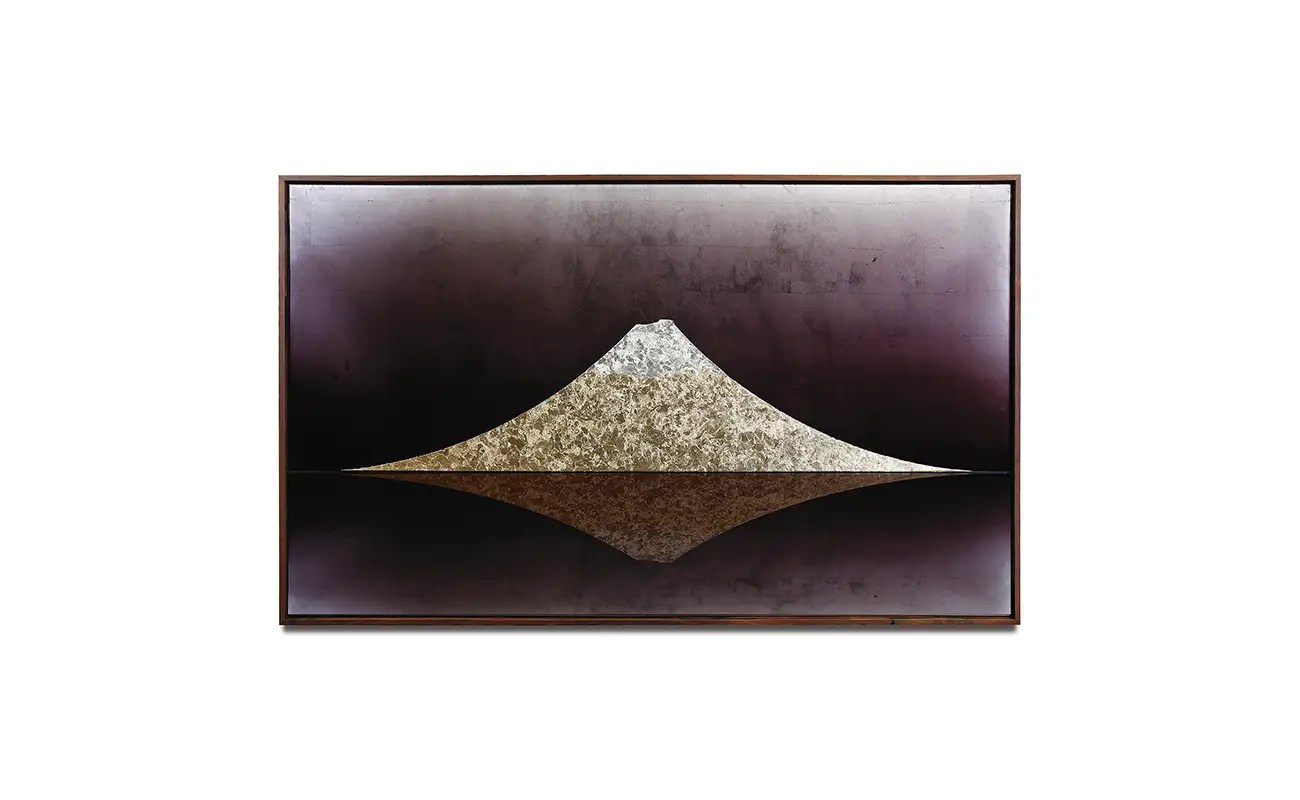
Among his recent works, MEDUSA stands as a defining piece—both technically and conceptually. Part of the OTHER WORLDS series, this artwork showcases a silver leaf technique that Roeper developed after years of trial and error. The result is a luminous surface that reflects and absorbs light in ways that conventional paint cannot replicate. It glows with a depth that seems to shift with the viewer’s position, creating an optical interplay that draws the eye and quiets the mind. Yet beyond its physical beauty, MEDUSA invites reflection on the contrasting layers of human experience, bridging the visible and the invisible, the conscious and the unconscious.
At the heart of MEDUSA is a philosophical inquiry into the dual nature of existence. Roeper distinguishes between the surface-level reality—where most people spend their lives navigating survival, productivity, and ambition—and a deeper, intuitive awareness connected to the universe. The artwork’s city-in-a-bubble motif symbolizes this outer world: structured, pressured, and externally defined. Beneath it, flowing root-like forms represent the hidden self, the subconscious wisdom that eludes rational thought. Roeper suggests that true peace and clarity emerge not from understanding these depths with the intellect, but from feeling and trusting them. Through this layered symbolism, MEDUSA becomes a visual meditation on mindfulness, stillness, and the search for inner grounding.
The physicality of the piece underscores its message. Every layer, every contour is crafted to mirror the complexity of the inner world it represents. The silver leaf’s glow is not merely decorative—it stands as a metaphor for inner light, the subtle but powerful force that guides us when we allow ourselves to be still. In this sense, Roeper’s technique is inseparable from his thematic exploration. The material does not serve the concept; it is the concept, brought into form. MEDUSA exemplifies Roeper’s evolving ambition to create works that are not just visually arresting, but emotionally and spiritually evocative. It signals a new direction for his practice, one that is both grounded in his past and reaching toward an ever-expanding vision.

Designing Experience, Not Just Art
Each day in Roeper’s practice follows a carefully structured rhythm that balances administrative focus with creative freedom. Mornings begin with email and logistical management from his home office, a necessary prelude to the immersive studio work that fills the rest of the day. Once inside his woodshop, digital distractions are set aside entirely. This boundary creates a sacred space for experimentation and execution, allowing him to move fluidly between ongoing furniture commissions and new fine art pieces. With over 30 new artworks produced in the past two years, his time is now split between these two creative streams, both feeding into and informing each other.
His latest endeavor marks a significant expansion of his artistic ecosystem: the opening of a private gallery adjacent to his Napa Valley studio. More than just a venue, this space redefines the way luxury art is experienced. Roeper understands that today’s collectors are no longer content with transactional encounters. They seek immersion, storytelling, and authenticity. His gallery provides exactly that—a place where visitors engage directly with the artist, explore the physicality of the work, and understand the narrative that underpins each piece. The industrial backdrop of the warehouse contrasts beautifully with the sophistication of the art, creating a dynamic environment where curiosity and connection flourish.
What sets Roeper apart is his refusal to separate the artwork from its origin story. His clients do not merely purchase objects; they become participants in a broader creative journey. The act of walking through his gallery, speaking with him about process, and witnessing the studio in action transforms the experience into something personal and lasting. For Roeper, this model represents the future of high-end art and design: not a sterile gallery interaction, but a dialogue. It is in these intimate exchanges that his work reveals its full impact, offering not just visual engagement, but emotional resonance. Through this holistic approach, Roeper is not only redefining his own practice, but also challenging traditional models of how art is made, shared, and experienced.