“Post-Birth became a way for me to use art to heal myself and question the systems that shaped me.”
Where Flesh Meets Fabrication
Yidi Wang’s practice flows from the intersection of biology, performance, and digital experimentation, crafting a space where technology coexists with intimacy and lived memory. Based in Chicago, Wang approaches the body not only as a subject but as a central medium—merging it with silicone, bacteria, and circuitry to question how identity, care, and reproduction might evolve beyond gendered tradition. Her upbringing in a traditional East Asian household, steeped in cultural expectations of daughterhood and silence, remains a critical lens through which her work emerges. These inherited frameworks of emotional labor and gendered roles continue to shape the way she envisions hybrid existence—where softness is strength and vulnerability a conduit for transformation.
Through performance-based installations and speculative sculpture, Wang brings together personal narrative and technological innovation in ways that challenge conventional understandings of motherhood, autonomy, and embodiment. Her interdisciplinary foundation in product design and digital fabrication informs the tactile and conceptual dimensions of her art. Silicone, with its bodily tactility, has become a recurring material in her practice, capable of conveying the emotional residue and sensual traces left by life’s most intimate moments. Rather than rely on representational drawing, Wang models ideas in 3D software and tests physical prototypes through material exploration, allowing her to shape complex concepts through form and physicality.
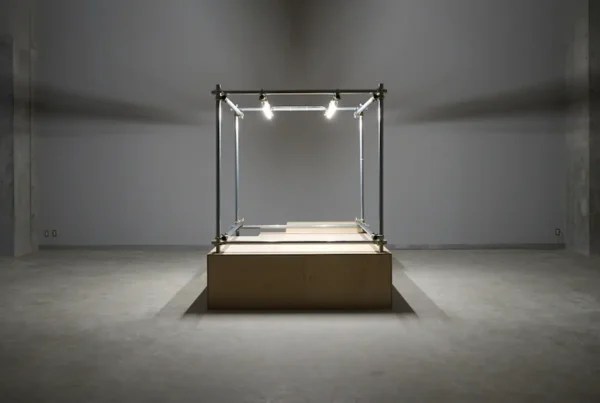
Her evolving project Imprint exemplifies this method. It investigates how silicone may store and communicate emotional memory through soft forms that act as bodily archives. The process began with exhaustive material testing and has unfolded into a broader inquiry into how the body can be documented, preserved, and reimagined in non-biological yet lifelike materials. Wang seeks to expand this series into an immersive installation that examines preservation as a form of care, creating sculptural records that reflect both personal history and posthuman speculation. The work speaks to a larger philosophical question: how might emerging technologies allow us to carry our stories, scars, and silences into the future—not as relics but as regenerative sources of identity and empathy?

Yidi Wang: Motherhood Without Mothers
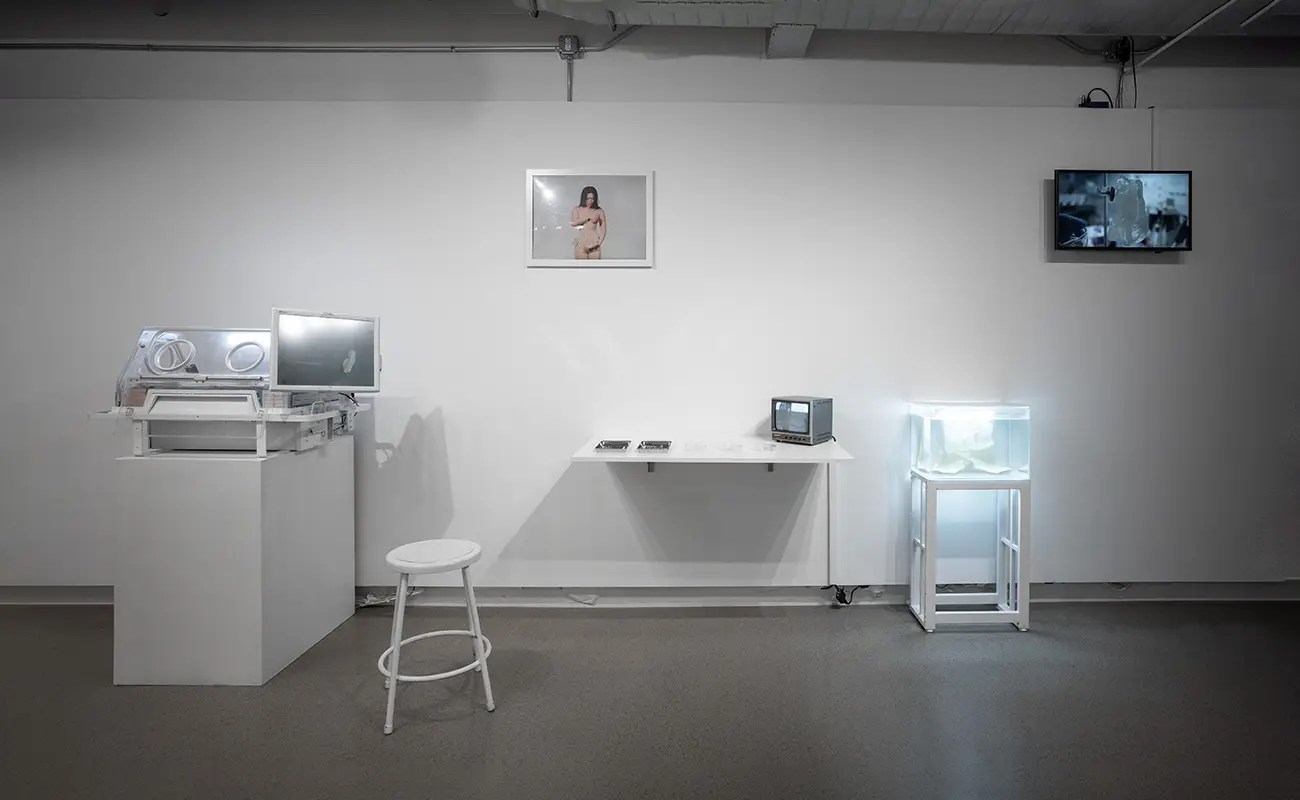
At the heart of Wang’s practice is a profound investigation into motherhood, not as a biological fact but as a cultural construct that she seeks to reframe through posthuman feminist thought. Her performance-installation Post-Birth serves as a pivotal expression of this inquiry. In the piece, she cultivated bacteria from her own body within a silicone uterus affixed to her abdomen, engaging in daily prenatal rituals typically associated with human pregnancy. The act of feeding, moving, and journaling within this speculative caregiving scenario reframed the maternal act as one decoupled from traditional gendered expectations. Displayed via CRT monitors and preserved biological artifacts, Post-Birth forged a poetic space in which care transcends biology, and reproduction is liberated from the confines of heteronormative structure.
The personal history underpinning Post-Birth brings a powerful emotional depth to its conceptual framework. Raised in a family that prized silence and sacrifice, Wang reflects on the burdens passed from mother to daughter—burdens rooted in patriarchal ideals of obedience, femininity, and self-erasure. This generational inheritance formed the psychological soil from which Post-Birth emerged. The work allowed Wang to confront and reinterpret these dynamics through a speculative biological act that imagines new architectures of care. The external uterus becomes more than a metaphor; it functions as an experimental device for healing and defiance, redefining what it means to birth not children, but futures.
The performance’s materials—silicone, resin, microbial cultures, and analog video—are not chosen merely for aesthetic effect but for their conceptual resonance. These substances echo themes of containment, decay, preservation, and transformation. By preserving the uterus in formalin and transferring the bacteria to an infant incubator, Wang symbolically transferred emotional labor from her own body into another vessel. The result is a complex and haunting meditation on motherhood beyond biology, inviting viewers to consider how care might be decentered from the human experience and recast as a relational, interspecies practice. Post-Birth reimagines reproduction as something expansive and plural, rather than limited to binaries or biological determinism.

Beyond the Human, Toward the Intimate Machine
Wang’s work thrives at the intersection of emerging technology and emotional resonance, challenging the idea that machines are inherently cold or detached. Her academic trajectory—from engineering and industrial design to a Master of Fine Arts in Design for Emerging Technologies—demonstrates a consistent commitment to bridging technical systems with expressive potential. Whether working with AR/VR, digital fabrication, or biology-inspired materials, she leverages technological tools to explore not only what bodies are but what they could become. Her installations often function as speculative devices—blurring the line between scientific apparatus and ritual object, synthetic material and emotive relic.
Central to her practice is the question of how technology can extend or distort the boundaries of identity. Drawing influence from thinkers such as Donna Haraway and Rosi Braidotti, Wang approaches posthumanism not simply as an academic concept but as a lived philosophy. Her work confronts anthropocentrism and the binary structures of gender, life, and care, making space for alternate modes of being. Artists like Lauren Lee McCarthy and Xin Liu inspire her consideration of intimacy through machine interfaces, while Anni Liu’s poetic engagements with identity and transformation resonate with Wang’s own merging of the speculative and the deeply personal. Each of these references helps ground her inquiry into how bodies—digital, biological, or hybrid—carry emotion, memory, and potential.
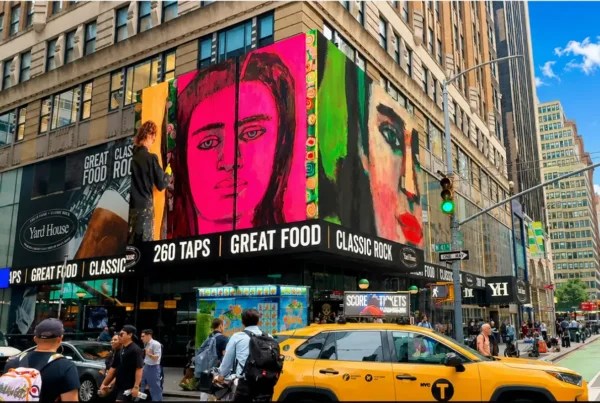
At the same time, Wang remains rooted in physical processes. She sees performance not as theatrical spectacle but as a research method, allowing her to inhabit the vulnerabilities and contradictions of her ideas with immediacy. The body is not abstracted but pushed to its limits, made to hold and transmit care, pain, and transformation. Her recent exhibitions across Chicago, New York, and Barcelona showcase this integration of conceptual depth with material sophistication. By blending biotechnology, sculpture, and live performance, Wang opens up a space where speculative futures can be felt in the present, not as science fiction but as lived, tangible provocations.

Yidi Wang: Community, Memory, and the Poetics of Design
While her installations often focus on individual embodiment, Wang’s practice also maintains a strong commitment to collective experience and educational engagement. As a teacher and curator, she develops and facilitates technology-integrated art programs for both youth and adults, curating exhibitions and fostering access to tools that allow participants to explore identity through digital media. Her approach emphasizes accessibility, inclusion, and curiosity, treating the art space not only as a venue for display but as a site for dialogue and co-creation. This community-centered perspective reflects her belief that art should not remain confined within institutional boundaries but serve as a catalyst for shared learning and growth.
Wang’s previous positions—as teaching artist, curriculum developer, and arts event planner—have equipped her with a versatile toolkit for fostering artistic environments where experimentation is encouraged and personal narratives are honored. Her background in multiple educational systems across China, Italy, and the United States has deepened her sensitivity to cultural context and the complexities of translation across media and meaning. Whether teaching a digital fabrication workshop or curating a group exhibition, she builds bridges between technical fluency and conceptual inquiry, empowering others to explore the possibilities of art and technology in their own lives.
This educational ethos also influences how Wang frames her own practice: not as solitary authorship, but as a continuous exchange with the communities and histories she engages. Her work, though often deeply introspective, extends outward—inviting others to consider how their bodies, memories, and identities might be archived, performed, or reimagined. Whether preserving an artificial uterus in formalin or testing silicone forms that remember touch, Wang creates objects and experiences that function as both personal relics and communal touchstones. In doing so, she encourages us to rethink how we define humanity in an age where memory can be modeled, care can be simulated, and the boundaries between self and system grow increasingly porous.