“Art, for me, is the most authentic form of self expression, it gives room for magical moments and connections that without it would not be possible.”
Where Vulnerability Shapes Vision
Bridget Provan’s art holds a mirror to the inner world—tender, complex, and unresolved. A multidisciplinary artist and educator, Provan draws upon a rich palette of materials and processes to communicate deeply personal experiences. Working across glass, textiles, painting, sculpture, and printmaking, she resists the notion of a fixed medium. Instead, she allows concept to dictate form, choosing materials that best embody emotional truth. Based in Connecticut and originally from Northern New Jersey, Provan creates work that traverses abstraction, material study, and symbolic exploration. Her artistic voice echoes with both sensitivity and defiance, confronting trauma, imperfection, and the intricacies of healing with a rare blend of subtlety and power.
Her formal training in the arts spans some of the most respected institutions in the United States. She earned a Bachelor of Fine Arts in Glass and a Master of Arts in Teaching from the Rhode Island School of Design, followed by a Master of Fine Arts in Fine Art from the Rochester Institute of Technology, where she is on track to complete her studies in 2025. Her academic work has also explored structural change in the field of art education. In her 2022 thesis at RISD, she investigated themes of accessibility, care, and inclusivity in glass education—topics that reflect her broader commitment to equity and personal connection in the arts. That focus will deepen in her forthcoming MFA thesis, which centers on domestic abuse, trauma, and the emotional landscape of recovery, interpreted through her evolving studio practice.
Provan’s art has crossed national borders, exhibiting not only in the United States but also internationally in Ireland, Italy, and Canada. However, the reach of her work is measured not solely in geography but in emotional resonance. Whether she is sculpting a luminescent snail in glass or binding a dyed textile into corporeal form, her pieces remain grounded in a profound sensitivity to the body, memory, and the often-invisible truths that linger in both. These works are not just objects; they are sites of transformation, inviting viewers to engage with the painful, the poetic, and the quietly powerful.

Bridget Provan: A Life Reshaped by Process and Pain
A pivotal encounter in Provan’s adolescence ignited her commitment to creative exploration. At 15, she apprenticed with the eccentric artist Ricky Boscarino at Luna Parc in New Jersey. Immersed in ceramics, mosaic, metalwork, and large-scale outdoor sculpture, she was encouraged to pursue curiosity without boundaries. Boscarino’s devotion to living fully within his artistic vision left an indelible mark. That early exposure to unrestrained creativity encouraged her to follow a multidisciplinary path, which eventually led to her focus on glass during her undergraduate studies. Yet her artistic journey would not unfold without profound personal challenges that would reshape her approach forever.
While completing her undergraduate degree, Provan sustained two permanent injuries to her left hand—events that drastically altered the way she interacts with materials. This physical transformation influenced not just her technical choices, but her conceptual priorities. Rather than seeing limitations, she reoriented her practice to embrace adaptation, exploring media and gestures she might not have previously considered. The injuries introduced a new sensitivity to the nuances of movement, labor, and vulnerability. They also brought into sharper focus the emotional and psychological dimensions of making, which now serve as the cornerstone of her work.
From this redefined perspective, Provan embraced imperfections as a powerful aesthetic and philosophical stance. Rather than pursuing polish or symmetry, she sought rawness and sincerity. Her process became more than a means to create objects—it evolved into a mechanism for processing grief, mental health struggles, and unresolved trauma. The decision to focus on what she refers to as “the unknown,” or what cannot be neatly defined or resolved, infuses her work with a haunting presence. She often returns to the spider as a symbol—a creature that, for her, represents the quiet observer of truth. Through these forms, she externalizes the pain she has endured, offering visual metaphors that allow others to access their own memories and associations.

Forms That Bleed, Bloom, and Whisper
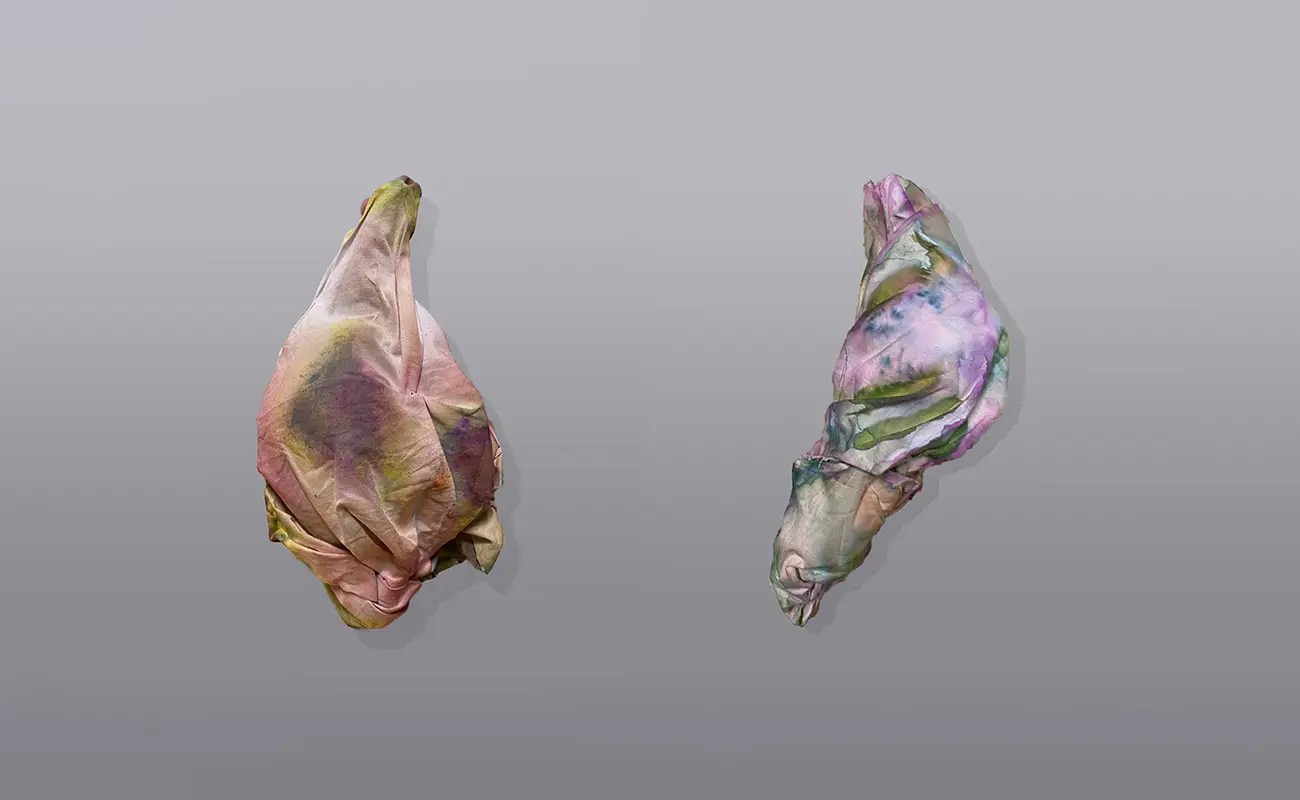
The visceral and the ephemeral coalesce in Provan’s sculptural works, where dyed textiles and bound fabrics often evoke flesh, bruises, or wounds. Her natural dye sculptures—ranging from palm-sized objects to towering forms larger than the body—anchor her most recent explorations. Using color palettes that range from bloody reds to deep blues reminiscent of healing bruises, she investigates the body as both site and symbol. These tactile pieces evoke a sense of exposure and shelter simultaneously, shaped in ways that feel both organic and abstract. The process of binding and dyeing serves as a ritual act, echoing cycles of injury and repair, memory and erasure.
Equally compelling are her glass sculptures, particularly her intricate representations of snails and other often-overlooked animals. These miniatures, crafted through lampworking, exude a quiet radiance that contrasts the heavier emotional weight of her textile works. Rendered with a jewel-like glow, the snails embody themes of survival, camouflage, and unnoticed beauty. Though whimsical in appearance, they hold layers of significance, acting as meditative counterpoints to her more corporeal work. In their compact scale and fragile translucency, they reflect the same care and attention she devotes to larger pieces, reinforcing her interest in the power of the subtle and unseen.
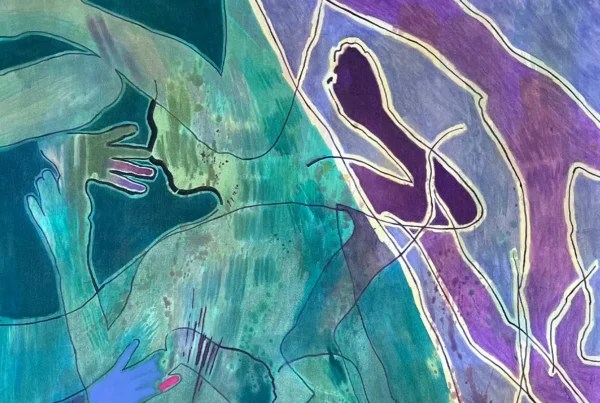
Her fascination with overlooked creatures extends beyond glass. Embroidered and quilted pieces often feature spiderwebs, planetary shapes, and repeated hand-stitching, creating a sense of continuity and rhythm. These motifs are not simply decorative; they operate as symbolic structures within psychological landscapes. The spider reappears as a recurring emblem of hidden knowledge and truth, quietly constructing fragile yet durable architectures. These textile works serve as narrative fields—part map, part memory, and part magical speculation. Through them, Provan expands her exploration of metaphysical spaces, where trauma, healing, and feminine identity blur into abstraction.

Bridget Provan: Art as Shelter, Art as Spell
Bridget Provan’s work exists in a space where personal mythology and tactile materiality converge. Her upcoming focus on wearable pieces—small talismans designed to evoke protection and healing—signals a new phase in her practice. These objects are intended not just as adornments, but as conduits for emotional resonance. Rooted in the same conceptual foundations that guide her larger works, these new forms seek to connect the intimacy of the body with the sanctity of ritual. By transforming symbols of protection into portable, touchable objects, she continues her inquiry into how art can act as both mirror and balm.
Her studio practice is evolving to accommodate this vision. Day by day, she is shaping a workspace where sketches, ideas, and found materials can coalesce into these amulets of meaning. This direction underscores her ongoing interest in the overlooked, particularly the miniature creatures that often surround us unnoticed. Whether exploring the resilient quietude of a snail or the woven intricacy of a spiderweb, Provan consistently invites viewers to reconsider what they deem insignificant. She elevates these quiet forms into powerful symbols of endurance, observation, and transformation.
What remains constant across all of Provan’s work is an unwavering devotion to honesty—both emotional and material. Her visual language avoids artificial polish in favor of process, presence, and poetic intuition. Whether sculpting with cloth, dyeing with plant-based pigments, or rendering fragile animals in molten glass, she creates with an awareness of fragility and strength as simultaneous forces. Art becomes a shelter for difficult truths, a vessel for grief, and a spell cast toward hope. In this space of contradiction and care, Provan crafts not just objects, but invitations—spaces where the viewer can pause, reflect, and perhaps even find a piece of themselves.