The Studio is the Canvas: Reimagining Space Through Process
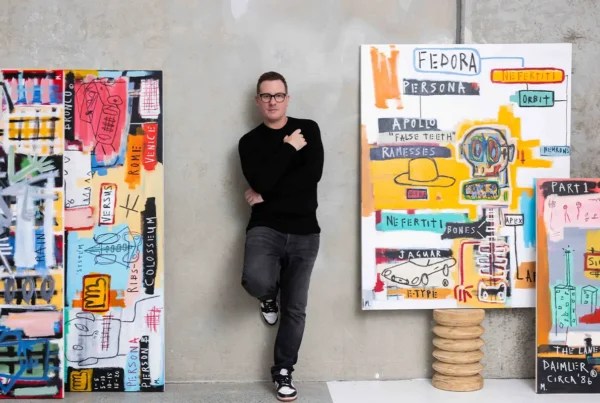
Pascal Vilcollet’s artistic approach is inseparable from the space in which it unfolds. For him, the studio functions not merely as a place of production but as a psychological map and conceptual site where his paintings begin to take form. He moves around the canvas in fluid, circular rhythms, engaging with the surface from multiple vantage points, and in doing so, shapes a layered structure that recalls the complexity of both spatial and emotional perspectives. The large-scale canvases become arenas for performance and experimentation, where the initial gesture marks not only territory but also intention. Rather than executing a fixed vision, Vilcollet allows the painting to evolve organically, each mark reacting to the previous one in a continuous dialogue. This active negotiation with space is what transforms his studio into an extension of his thought process, grounding his abstract visual language in lived experience.
This process unfolds in two interconnected phases. In the first, the artist establishes a foundation through deliberate mark-making, constructing a preliminary sense of depth and orientation. These early gestures, though abstract, carry the weight of spatial cues and visual anchors. The second phase draws heavily from memory, personal symbolism, and cultural references, deepening the layers with subjective content. Though non-representational in nature, Vilcollet’s paintings never veer into visual chaos. They retain a sense of structure and coherence that invites the viewer into a mediated intimacy. Through this method, perspective is no longer a matter of optics alone but becomes a composite of recollection, material response, and bodily movement across the canvas. This duality—between the physical and the psychological—creates a multidimensional surface that feels both immediate and contemplative.
Even in abstraction, Vilcollet constructs a world in which hierarchy and emotional proximity are keenly felt. His use of color and texture is not incidental but central to the communicative power of the work. Symbols, marks, and layered pigments generate a visual syntax that balances spontaneity with precision. The result is a body of work that speaks not through narrative but through sensation. The artist’s decisions—whether a gestural sweep, a chromatic clash, or a delicate overlay—become expressions of thought rather than illustrations of it. By treating the studio as both laboratory and landscape, Vilcollet elevates the act of painting into a sustained reflection on perception, memory, and the material conditions of making.

Pascal Vilcollet: Reconstructing the Floral Still Life
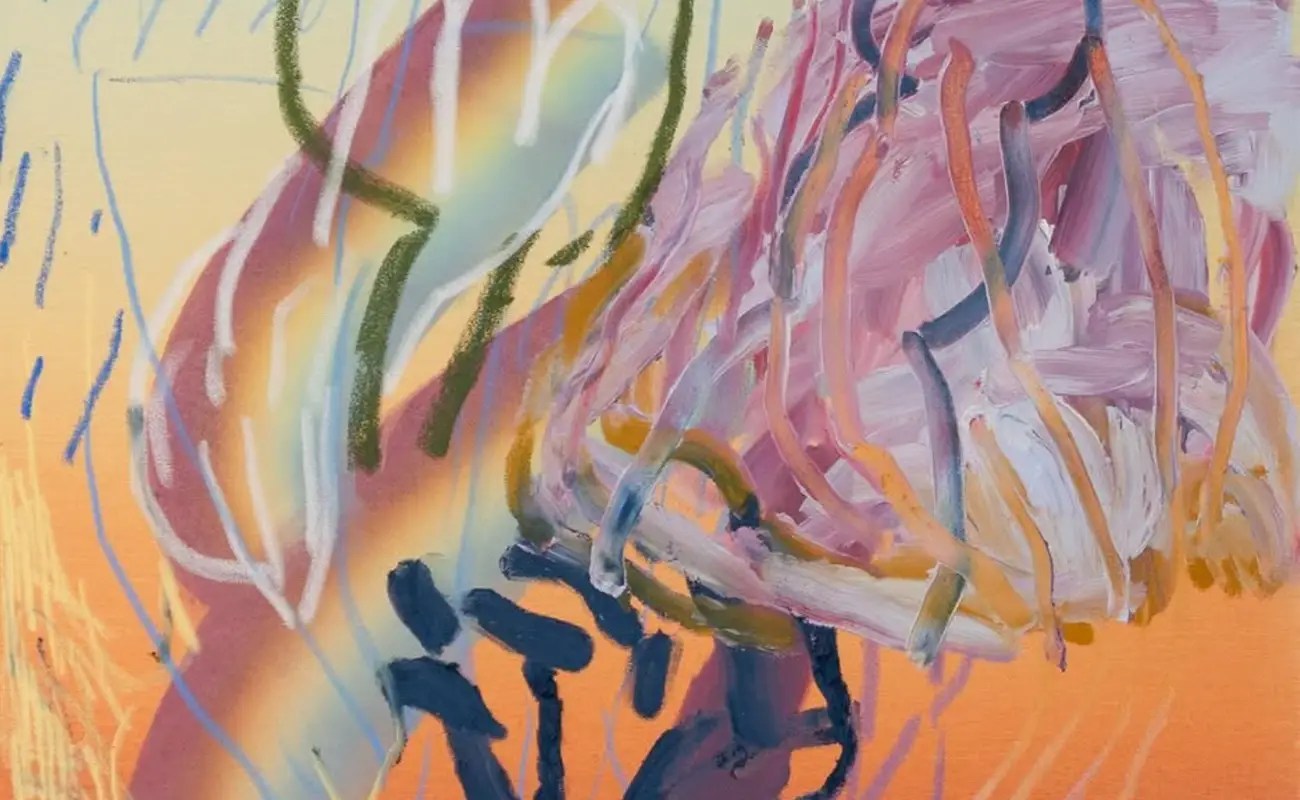
In his recent work, Pascal Vilcollet takes the timeworn motif of the floral still life and reimagines it through the lens of abstraction and emotional resonance. Drawing on a rich history of painters who have used flowers to contemplate transience and beauty, Vilcollet subverts traditional composition by dismantling its formal boundaries. The bouquet becomes less a static object and more a moment in flux—a cluster of marks that hover between presence and disappearance. His canvases begin with the recognizable structure of the floral arrangement, only to be fractured by erratic lines, smeared pigment, and ephemeral gestures that deny permanence. These acts of deconstruction reveal a desire not to destroy form, but to renew its meaning by stripping it of aesthetic convention and allowing emotion to resurface through gesture.
What emerges from this process is a dynamic interplay between control and spontaneity. Classical compositional anchors such as vases, stems, and petals remain visible, but are often obscured or partially erased by overlays of abstract scrawls and blurred transitions. Vilcollet transforms these interruptions into narrative elements of their own. Drips of paint, sudden color shifts, and non-linear marks become records of decision-making and introspection. The viewer witnesses a constant push and pull between precision and dissolution, as if the artist were searching for honesty through rupture. His still lifes are not polished arrangements but living documents of the act of painting itself. This layered approach positions his work within a lineage of modern painters like Willem de Kooning and Cy Twombly, while maintaining an individual voice marked by tenderness and emotional clarity.
The emotional tone of these floral works is underscored by Vilcollet’s careful handling of light and texture. Areas of the canvas glow with translucency, while others carry the weight of dense impasto. Flowers rendered with delicate glazes dissolve into fields of ambiguous color, challenging the viewer’s perception of what is being seen and how it is being remembered. These surfaces are charged with both presence and absence—each decision to obscure or reveal contributing to a visual narrative that feels both deeply personal and universally resonant. In transforming the floral still life from an object of observation into a medium for self-inquiry, Vilcollet invites viewers to confront the instability of perception and the poetics of the ephemeral.

Abstraction in Bloom: A New Visual Temporality
Vilcollet’s florals do not simply reinterpret the past; they challenge the static temporality traditionally associated with still life. Where classical Dutch painters sought precision and symbolic permanence, Vilcollet chooses movement, transformation, and fragmentation. His flowers are rendered in flux—emerging, dissolving, and morphing across the canvas in unpredictable ways. By refusing visual stability, he invites the viewer into a continuum of time, where each brushstroke signifies not a final image, but a moment within an ongoing process. This deliberate engagement with impermanence marks a shift in how the floral motif operates, turning it into a metaphor for memory and the fleeting nature of perception.
Color is central to this temporal sensibility. Soft, historical hues such as ochre and muted green are punctuated by jolts of acid yellow, crimson, and cobalt. These chromatic intrusions prevent nostalgia from settling in, instead infusing the works with urgency and surprise. The palette does not simply evoke mood; it constructs a visual rhythm that mirrors the mind’s oscillation between recollection and immediacy. Here, Vilcollet’s background in printmaking—his training in lithography and offset—becomes evident. He treats the surface as a plate to be layered and reworked, balancing density and lightness, opacity and translucency. This sensitivity to the physicality of paint enables him to embed time within the medium itself, with each layer carrying traces of what came before.
The overall effect is a body of work that vibrates with contradiction and continuity. Flowers appear not as isolated subjects but as conduits through which the artist explores the passage of time. A single painting might contain moments of serenity alongside visual chaos, where a controlled glaze meets an impulsive smear. The coexistence of these opposing forces reflects the very nature of painting as both a physical act and a philosophical inquiry. Vilcollet’s florals are not depictions but propositions—gestures toward a way of seeing that accepts flux, embraces imperfection, and acknowledges that to paint is also to remember, to forget, and to begin again.

Pascal Vilcollet: When Gesture Speaks Louder Than Form
At the core of Vilcollet’s artistic identity lies a deeply personal approach to mark-making—an idiosyncratic language built through the fusion of drawing and painting. His gestures, often improvised and instinctive, are layered over more representational elements, functioning less as decoration than as extensions of thought. These lines and scribbles, rendered in luminous pastel tones or stark contrasts, disrupt and animate the surface, adding an emotive charge that transcends composition. Echoing the influence of artists like Philip Guston and Cy Twombly, Vilcollet’s marks appear spontaneous, yet they emerge from a refined understanding of balance and rhythm. They act as emotional punctuation, infusing each piece with intimacy and immediacy.
What distinguishes Vilcollet’s visual syntax is its refusal to privilege one kind of gesture over another. A polished glaze holds equal importance to a chaotic scrawl. This democratic approach to form reflects a broader cultural shift toward hybridity and nuance, where the boundaries between refinement and rawness are intentionally blurred. Each canvas becomes a site of negotiation, where sincerity is pursued not through perfection, but through vulnerability. In this, the artist’s belief in the dual phases of painting—construction followed by deconstruction—becomes more than philosophy; it becomes practice. By stripping away the ornamental and allowing raw mark-making to coexist with delicate form, Vilcollet creates a space where authenticity can surface through contradiction.
These painterly conversations unfold not as narratives but as fields of sensation. Vilcollet’s works do not tell stories in the conventional sense; instead, they invite contemplation through the sheer physicality of the painted surface. The floral motif, recurrent and familiar, serves as an entry point but quickly dissolves into something more abstract and psychological. It becomes a stage upon which memory, emotion, and gesture interact without hierarchy. This openness to interpretation and emotional resonance reaffirms the enduring power of painting as a language of experience. In Pascal Vilcollet’s hands, the gesture itself becomes a form of knowledge, a means of exploring the spaces between what is seen, felt, and remembered.