Portraits of Possibility: The Vibrant Rebirth of a Creative Life
Margo McDaid, widely recognized as Margo in Margate, embodies the kind of artistic reinvention that defies expectations and redefines timelines. Known for her vivid female portraiture and a prolific daily painting practice, McDaid has become a compelling voice in contemporary British art. Since February 2014, she has committed herself to painting every single day, transforming a deeply personal act of recovery into a bold and resonant body of work. Her Kent studio, overflowing with artwork in progress, bears witness to an unstoppable drive to create — not for prestige, but for survival and joy.
Her work radiates color, vintage-inspired styling, and an unmistakable emotional authenticity that has drawn thousands to her online platforms, where new paintings frequently sell out within moments. A particularly significant milestone came in January 2024, when she held a solo exhibition at Brighton’s Helm Gallery. Featuring 126 powerful portraits of women, the entire show sold out within 24 hours, confirming her growing prominence. Each face on display reflected McDaid’s signature blend of strength, optimism, and individuality, offering a visual chorus of resilience that resonated with audiences far beyond Margate.
Yet McDaid’s creative journey wasn’t linear. After studying applied arts at Camberwell College and spending formative years in Manhattan, she spent much of her career teaching and working on community art projects. It wasn’t until a traumatic event during her time as a primary school teacher — the murder of a young student she had fought to protect — that she returned to painting as a lifeline. What began as a way to process grief and trauma became a daily compulsion, a healing practice that slowly evolved into a full-fledged artistic identity. That decision, sparked by both tragedy and maternal instinct, reshaped her life and led to a professional second act few could have predicted.

Margo McDaid: Reclaiming Joy Through Relentless Practice
Margo McDaid’s decision to paint daily didn’t emerge from a place of ambition but necessity. At 44, following a physical breakdown brought on by emotional trauma, she sought something that could anchor her. The turning point came in 2012, when her then two-year-old son told her, “Mum, I need to paint.” Struck by his words, she cleared the dining table and began painting beside him. That ritual, initially modest and spontaneous, evolved into a fierce and disciplined commitment to create every single day — sometimes producing up to twenty pieces before sunset.
This compulsive creativity, far from chaotic, became her structure. Having once smoked for two decades, McDaid likens her painting practice to other deeply ingrained habits — only this one heals rather than harms. For her, repetition is not dull routine but a catalyst for growth. Like a musician running scales or a child learning cursive, she has used daily practice to sharpen her skills, expand her visual language, and build a body of work that’s both spontaneous and sophisticated. The discipline of showing up daily has transformed not only her technique but also her sense of purpose.
Her artistic evolution is deeply intertwined with emotional healing. The raw need to express pain slowly gave way to a celebration of life, especially through the faces of women who populate her canvases. These figures — bold, bright, and unafraid — speak to an audience that craves more than aesthetic pleasure. They offer a message of hope, strength, and transformation. One particular painting, titled Brave the Stormy Seas, has become a touchstone for many collectors, echoing the emotional complexity that lies beneath her joyful colors. For McDaid, the work may be visually cheerful, but its emotional roots run deep — woven through loss, resilience, and the quiet determination to rebuild.

From Kitchen Table to Global Walls: Art Without Permission
McDaid’s ascent as an artist is as much a story of technology and self-belief as it is of paint and canvas. Without gallery representation in her early years, she turned to Instagram to share her work directly. This digital platform became her window to the world, bypassing traditional gatekeepers and allowing collectors to find her on their own terms. The immediacy and intimacy of her portraits struck a chord, and soon she was selling originals directly to buyers, one post at a time. Over time, interest from notable institutions and celebrities began to snowball, lending even greater visibility to her practice.
Among her many collectors are high-profile names like Drew Barrymore, as well as cultural institutions such as the Turner Contemporary, which stocks her work in its shop. Her pieces have appeared on television — spotted on Celebrity Gogglebox — and even decorate the players’ lounge at Brighton and Hove Albion Football Club. These successes, however, have not altered her daily rhythm. She continues to work from her studio in Ramsgate, surrounded by canvases and supplies, and maintains the same creative hunger that sparked her return to art more than a decade ago. Her process remains rooted in the same essential belief: that creativity must be lived daily, not performed occasionally.
McDaid’s openness about her beginnings — starting again at 44, without funding or art world connections — has inspired a broad community of followers, many of whom are women finding their own paths through reinvention. Her journey serves as a powerful counter-narrative to the myth of the young prodigy. In her 50s, she is expanding her reach, entering conversations with international collectors, museums, and creative collaborators. A recent inquiry from a museum in Madrid hints at the global appeal of her work, yet she remains grounded in the rhythm of her painting practice, letting the art lead the way.

Margo McDaid: The Artist as Persona, Place, and Possibility
The name Margo in Margate is more than a brand; it’s an artistic identity born from a sense of place and personal liberation. After opening a pop-up shop in Margate in 2016, McDaid adopted the moniker as a way to step into a bolder, more fearless version of herself. Margate’s creative energy, influenced by institutions like the Turner Contemporary and artists such as Tracey Emin, provided the ideal backdrop for this transformation. Through this identity, she carved out space to explore with full freedom, embracing a version of herself that could lead with instinct and resist external validation.
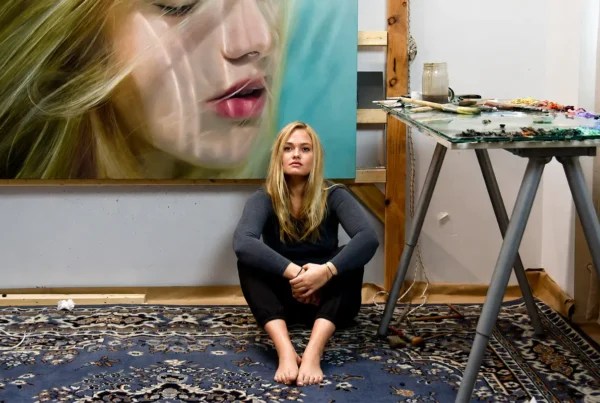
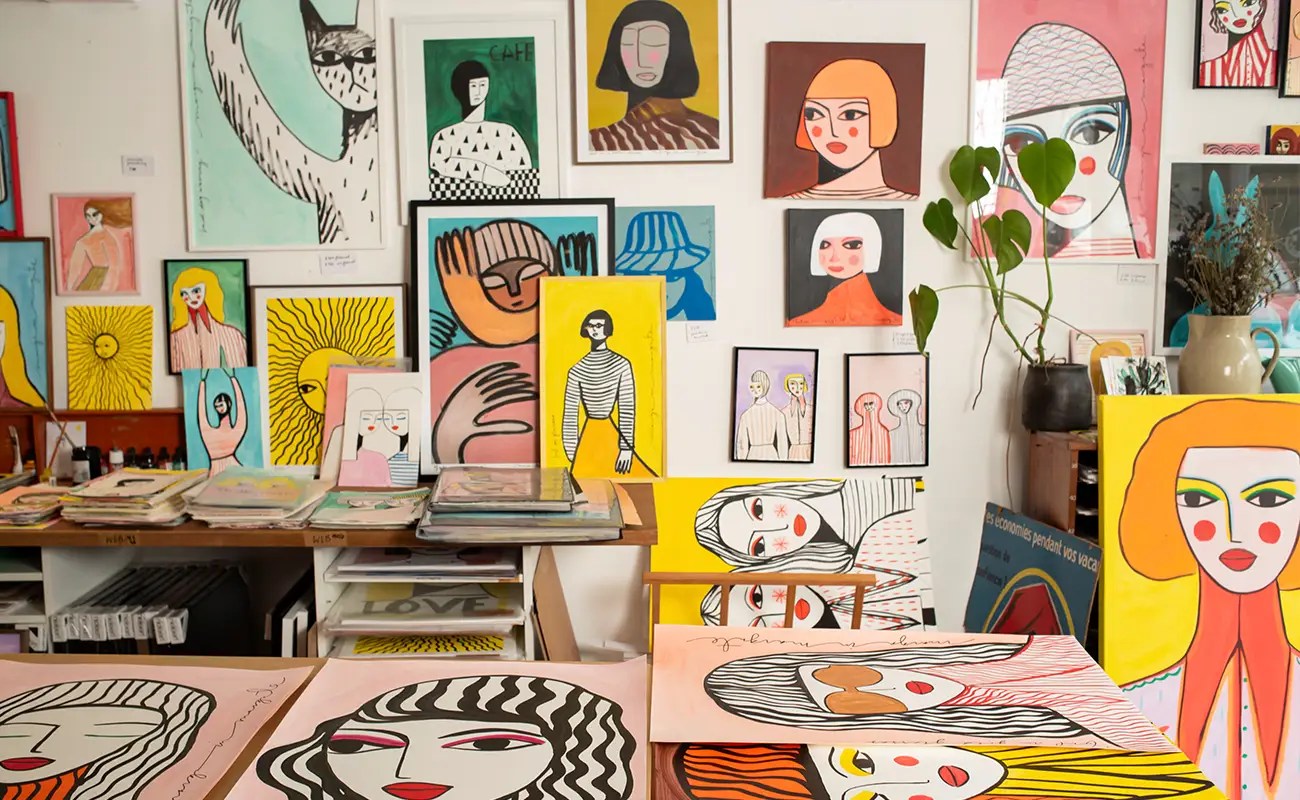
In the studio, Margo in Margate is unfiltered and fully alive — painting not just with brushes but with memory, emotion, and intent. Her workspace overflows with works in progress across a variety of media: paper, ceramic, wood, and canvas. Each surface carries her visual language of thick black lines, expressive female faces, and saturated hues. She often works on several pieces simultaneously, switching between formats without hesitation. Portability is central to her process, as she carries painting supplies with her at all times, ready to create wherever inspiration strikes — whether at a beach, a gallery, or a café table.
This freedom of movement reflects the larger philosophy behind her practice: that art should not be bound by rigid boundaries or imposed hierarchies. McDaid’s work rejects elitism in favor of connection. Her portraits speak directly to the viewer, bypassing pretense in favor of emotional clarity. Collectors often report a deep personal resonance, especially in moments of grief or transition. Stories like that of Kara-Louise Ziebart, who found strength through McDaid’s paintings after the death of her mother, reveal the profound impact of her work. These connections — forged through authenticity rather than art-world conventions — are what sustain McDaid’s daily dedication to her craft.