
“I explore the borderlands between the visible, association, and inner life.”
A Practice Shaped by Seeing and Writing
Photography and language have accompanied Ulrike Pichl throughout her life, long before she consciously placed her work within an artistic framework. Raised in Germany, she completed her secondary education with a strong focus on art and German literature, a dual orientation that continues to inform her sensitivity to both images and words. She later studied communication design and earned her diploma with a specialization in photography, grounding her creative instincts in formal training. From early on, photography was not merely an academic pursuit but a lived experience, deeply rooted in her family environment, where analog photography played a central role. Learning to develop film in the darkroom and working with large-format cameras during her studies shaped her understanding of photographic materiality and patience, even though her current practice is fully digital.
Although her tools have changed, the attentiveness cultivated through analog processes remains present in her way of seeing. Today, she works exclusively with digital photography, yet she approaches the medium with restraint and intentionality. Writing has been equally constant in her life, something she practices almost daily. For many years, these two forms existed side by side without formally intersecting. It was only in 2023 that she began to consciously unite photography and poetry, allowing text and image to function as a single expressive gesture. Collectors now receive handwritten poems alongside her photographs, turning each work into a layered encounter that extends beyond the visual.
This convergence reflects a broader understanding of creative work as a lived process rather than a defined category. Pichl does not separate her artistic identity from her everyday perceptions. Her background in literature sharpens her attention to nuance, while her design education supports clarity and composition. Together, these elements shape a practice that values atmosphere, intuition, and emotional resonance over explanation. What emerges is not an attempt to document the world as it appears, but to translate how it feels to inhabit it, moment by moment, through light, color, and language.

Ulrike Pichl: From Photographer to Artist Through Recognition
For a long time, Ulrike Pichl did not describe herself as an artist. She understood her work simply as photography, without feeling the need to draw a line between technical skill and artistic intention. Whether such a boundary exists at all remains an open question for her. Interestingly, it was not an internal decision that marked a shift, but the perception of others. People around her recognized an artistic quality in her work long before she felt comfortable claiming that identity herself. This external recognition became more tangible in 2023, when she presented her work publicly for the first time at a small art fair in Nuremberg.
Approaching that exhibition, she carried a deep fear that her photographs might not resonate, that no one would want to engage with or acquire them. The reality was quite different. Her work received warm, thoughtful feedback and encouragement from viewers as well as from established artists. Beyond sales, what mattered most was the realization that her images and texts touched people, that they offered something viewers could carry into their own lives. This experience provided the confidence to continue presenting her work within an artistic context, even though photography and writing had long been essential private practices for her.
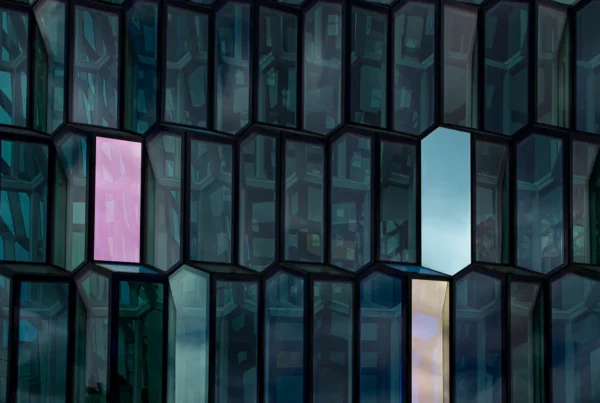
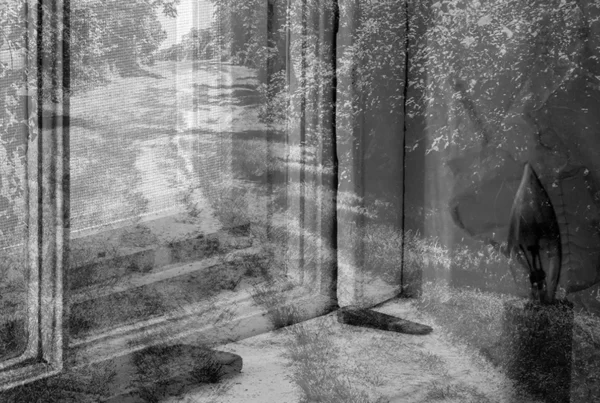
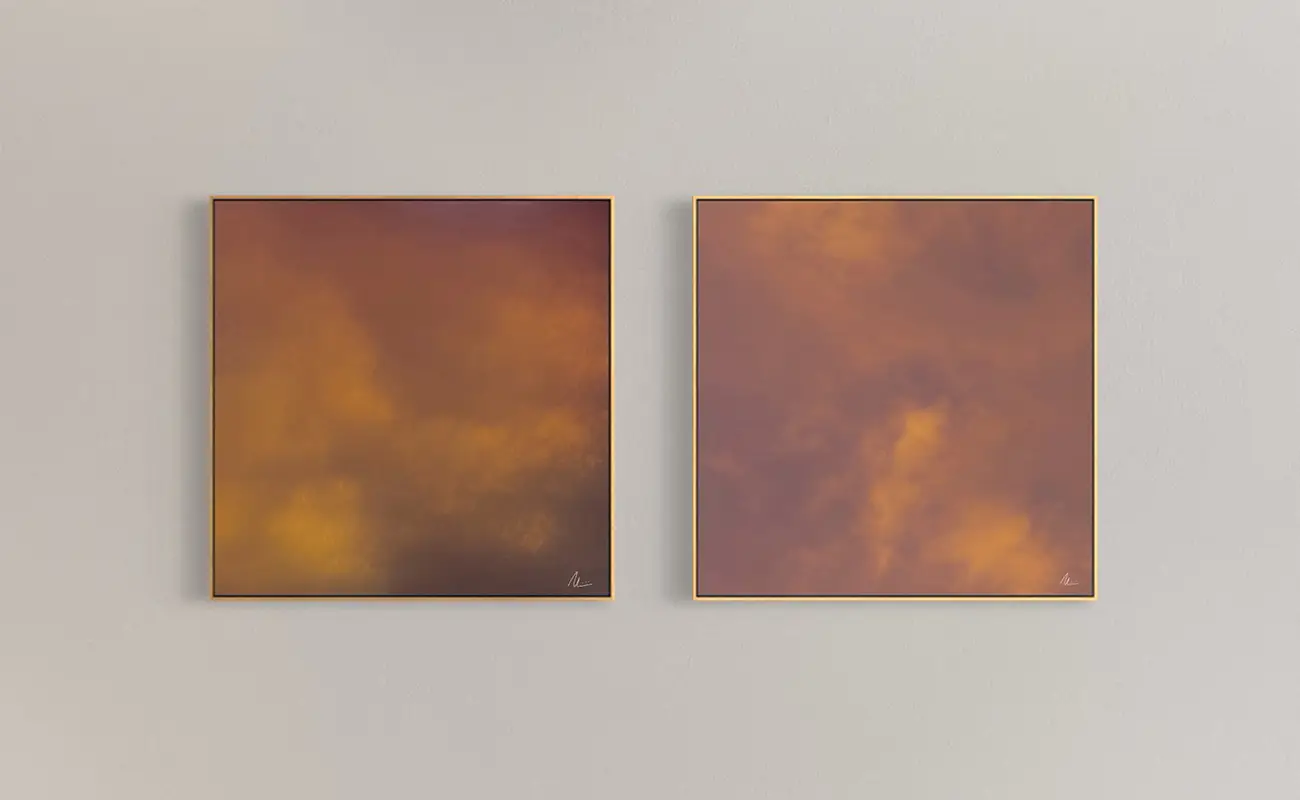
Her style today is immediately recognizable through its softness, blur, and intentional vagueness. She currently restricts her subject matter to nature, photographing during walks, in her garden, or through her window. Naturalism and sharp definition do not interest her. Instead, she seeks the emotional force of light and color. She works with elements many photographers avoid, such as backlighting, overexposure, underexposure, and even allowing her thumb to enter the frame. Liquids and grease applied to the lens create shimmering, dreamlike surfaces that soften form and dissolve structure. These effects are produced physically, not through digital filters, leading her to describe her images as “sfumatographs,” a term borrowed from painting to express gradual transitions and atmospheric ambiguity.

Living With Pain, Writing Toward Beauty
The emotional depth of Ulrike Pichl’s work is inseparable from her lived experience. She consciously leaves grainy, smeared, and unretouched areas within her photographs, allowing them to exist like visual sediments. These areas are not imperfections to be corrected but integral parts of the image, carrying weight and texture. Her aim is not to beautify reality or to darken it artificially, but to convey what it feels like to see and exist within a moment. Beauty, darkness, melancholy, and tenderness coexist in her work without hierarchy, reflecting an honest engagement with inner life.
Her writing processes themes that are present in her life at a given time. Limitation, illness, and pain recur frequently, shaped by her experience of chronic migraine, endometriosis, and lipedema. Chronic migraine, in particular, defines an existence marked by constant fluctuation between bearable days and moments of overwhelming intensity. This instability creates a sense of living several lives at once, moving back and forth between different states of being. Such experiences introduce a subtle heaviness into her images, something some viewers intuitively recognize while others do not. Both responses are equally valid within her understanding of art.
Despite this, her work is not an expression of despair. Writing and photographing carry her away from pain and toward what is beautiful and sustaining. Love, hope, and longing appear repeatedly in her texts, alongside a deep awareness of transience. One of her poems, “In Suspension,” speaks of walking into walls of light, of forests without age, and of a present moment reflected through the body. This sensitivity to fleeting experience aligns with her belief that many people long for art that can be understood intuitively rather than intellectually. She often describes her practice as exploring the borderlands between the visible, association, and inner life, a phrase that accurately captures the quiet intensity of her work.

Ulrike Pichl: Time, Light, and Future Worlds
Among Ulrike Pichl’s works, one piece holds particular personal significance. Titled On the Brink of Time, it measures 75 by 100 centimeters and depicts light filtering between tree trunks in a forest. The image is suffused with a golden glow that gives it an almost living presence, especially when encountered in person. Printed as a fine art work on Alu-Dibond, matte laminated and framed in oak, it exists as a unique piece, consistent with her approach to singular, unrepeatable works. While the photograph itself is powerful, what matters most to her is the accompanying text.
The poem attached to On the Brink of Time addresses a sense of timelessness and an inner tipping point, the moment when one becomes aware that something internal has shifted. Everything within the work remains vague and unresolved, mirroring experiences familiar to those who live with anxiety or depression. Beauty begins to blur as time feels suspended, always returning to the same hour. Lines describing forests shifting, pupils turning into golden lakes of trees, and time dissolving branch by branch articulate a quiet groundlessness. Image and text together convey a state where perception and emotion are inseparable, offering neither resolution nor explanation.
Her daily working process remains simple and intuitive. She photographs almost every day, without setting out with a specific intention, using only her smartphone and available light. There is no tripod or additional equipment, allowing complete freedom of movement. Thoughts and fragments are collected continuously in a notes app, while poems intended as finished works are always written by hand in a cherished notebook. She understands art as a dialogue between disciplines and often suggests music to collectors to deepen their experience of an image. Looking ahead, she is planning an exhibition in 2026 where texts, light, and audiovisual elements will carry greater weight, creating immersive environments visitors can enter. She also aims to produce backlit textile works, particularly with cloud images, to give them an object-like presence that extends her exploration of light into physical space.