
“I paint to inspire, never to impress.”
Formed by Discipline and Early Devotion to Art
Jo Paff occupies a distinctive position within contemporary abstraction, bringing a lifetime of structure, endurance, and intellectual rigor into a painting practice that favors clarity over spectacle. His work reflects decades of lived experience that extend well beyond the studio, yet the paintings never rely on biography as a crutch. Instead, they communicate through confident geometry, assertive color, and a refined sense of order that immediately signals authorship. Viewers encountering his canvases often recognize a visual authority that feels earned rather than performed. This authority has roots in his earliest artistic commitments, long before his return to painting in recent years. The strength of his current output is inseparable from the patience, restraint, and persistence cultivated across multiple chapters of his life. Within today’s visual culture, where immediacy often overshadows intention, his work stands apart by insisting on deliberation and coherence. Each composition asks for attention without demanding admiration, encouraging thoughtful engagement rather than passive consumption.
Before entering military service, Jo Paff studied Art and Art History at the University of Nebraska in Omaha from 1976 to 1980, a formative period that established both his aesthetic direction and his expectations of artistic rigor. During those years, contemporary hard edge painting became central to his thinking, offering a language built on precision, flat color, and exacting structure. His education was shaped by influential mentors Peter Hill and Sidney “Buzz” Buchanan, whose guidance emphasized originality, discipline, and a refusal to settle for familiar solutions. Their impact extended beyond technique, instilling an understanding that serious art demands commitment and accountability. Alongside his academic studies, Paff also pursued competitive running, achieving All American status in the 10K distance at the Division II level and completing three marathons. This parallel dedication to physical endurance reinforced habits of focus and perseverance that would later resurface in his studio practice, linking athletic discipline with artistic resolve.
After completing his studies, Paff embarked on a 20 year career as a United States Combat Marine, a chapter that profoundly shaped his worldview and work ethic. Military service introduced a heightened awareness of structure, responsibility, and preparation, values that would eventually reappear in his approach to painting. Following retirement from the Marine Corps, he pursued a Master’s Degree in Business and Marketing from the University of Phoenix and spent a decade teaching business, marketing, and financial planning at the college level. Although art remained present as an internal compass, time constraints limited his ability to produce new work. Only within the past year did circumstances allow him to return fully to painting, resulting in the creation of more than 50 works in a concentrated period. This renewed output did not represent a stylistic shift but rather a continuation, informed by experience, of principles established decades earlier.

Jo Paff: A Language of Hard Edges and Bold Color
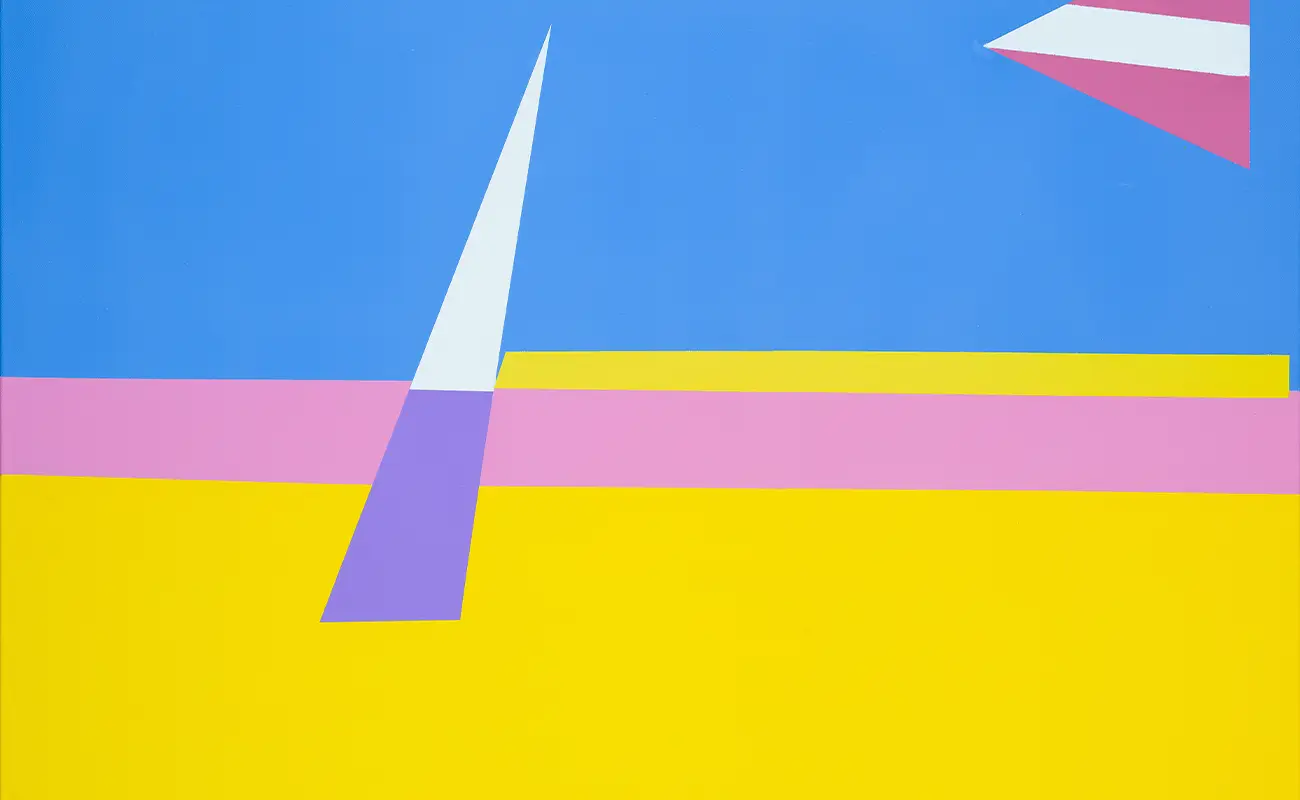
At the core of Jo Paff’s painting practice lies a deep commitment to contemporary hard edge abstraction, expressed through crisp boundaries and intentional composition. His canvases are built from sharply defined shapes that often suggest architectural fragments or directional cues without resolving into literal imagery. This balance between suggestion and restraint allows viewers to project meaning while remaining anchored in formal relationships. Paff’s use of geometry is neither decorative nor nostalgic. Instead, it functions as a structural framework that supports tension, balance, and visual rhythm. Each element is positioned with care, contributing to a unified whole that feels resolved yet open to interpretation. The precision of his edges reinforces a sense of control, while the overall composition invites curiosity about the choices behind it. Through this language, he establishes a visual identity that remains consistent without repetition, ensuring that no two paintings feel interchangeable.
Color serves as a primary driver of impact in Paff’s work, operating not as embellishment but as a structural force. He favors bold, saturated hues that command attention while remaining thoughtfully balanced across the surface. These colors interact through contrast and adjacency, creating visual tension that animates the canvas. Rather than relying on expressive brushwork, Paff applies paint in flat, confident fields, allowing hue and shape to define space. This approach reinforces clarity while amplifying intensity, producing compositions that seem to project outward rather than recede. The sharp interplay between colors encourages sustained looking, as subtle relationships emerge over time. His consistent preference for durable latex paint with a matte clear coat, a medium introduced by his mentor Peter Hill, supports this clarity while ensuring longevity. The material choice aligns with his broader philosophy of making work that endures both physically and conceptually.
Process plays a crucial role in how Paff’s visual language takes form. He paints nearly every day, working above his canvases rather than on a traditional easel. This horizontal orientation allows him to move freely around the surface, engaging with the composition from multiple vantage points. Walking around the painting encourages continuous reassessment, reinforcing balance and alignment while preventing reliance on habitual gestures. This method mirrors his broader approach to life and work, where adaptability and awareness are essential. Despite the precision evident in his finished pieces, the process remains active and responsive, allowing small adjustments to guide the final outcome. Through this disciplined yet flexible practice, Paff maintains a dynamic relationship with abstraction, one that prioritizes intention while leaving space for discovery.

Meaning, Mentorship, and the Power of a Single Work
Among Jo Paff’s recent paintings, one work holds particular personal and professional significance: “Passage to Santa Fe.” This piece represents more than a successful composition. It marks a moment of affirmation within his renewed commitment to painting. The work earned Juror’s Choice recognition in CEV Art Gallery’s exhibition “Viral Visuals: Art That Pops in the Feed” and also received Best in Show in the gallery’s “Square” exhibition in July 2025. These honors underscored the resonance of his approach within a contemporary exhibition context, validating years of preparation and patience. While the painting aligns with his broader visual language of bold color and sharp edges, its impact lies in how confidently it communicates intention. Recognition for this work did not alter his direction but reinforced the value of staying aligned with his principles.
“Passage to Santa Fe” also reflects Paff’s belief that art should prompt reflection rather than provide answers. He paints to inspire, never to impress, a philosophy that shapes both his process and his expectations of the viewer. Rather than guiding interpretation, he prefers that collectors and audiences leave his work asking themselves what the artist was thinking. This open ended engagement allows the painting to function as a conversation rather than a statement. Bold colors and sharply defined forms serve as entry points, drawing viewers in while resisting narrative closure. The work stands as an example of how abstraction can remain accessible without sacrificing complexity, inviting sustained attention rather than quick consumption. Its success within juried exhibitions demonstrates that this balance resonates with both curators and audiences.
Mentorship remains an enduring presence within Paff’s practice, shaping not only how he paints but why he continues to paint. He has consistently acknowledged the influence of Peter Hill and Sidney “Buzz” Buchanan, honoring their impact through his ongoing commitment to rigor and originality. Painting functions, in part, as an act of respect toward these formative relationships, extending their lessons into the present. By maintaining high standards for himself, he preserves the values they imparted while adapting them to his current circumstances. This continuity underscores the depth of his practice, which is grounded in gratitude rather than nostalgia. Each new canvas becomes both a forward looking exploration and a quiet acknowledgment of the guidance that shaped his artistic foundation.

Jo Paff: Looking Forward Without Compromise
Jo Paff’s current trajectory reflects an artist fully engaged with the present while remaining attentive to future possibilities. Having returned to painting with sustained focus, he now produces work at a steady pace that supports both refinement and exploration. His refusal to paint landscapes or portraits stems from a conviction that true artistic expression requires moving beyond what is encountered daily. While he respects representational traditions, his own practice is driven by a desire to create visual experiences that cannot be passively absorbed. Abstraction provides that space, allowing him to construct forms and relationships that feel both deliberate and unfamiliar. This commitment to originality ensures that his work remains aligned with his values rather than market expectations, reinforcing authenticity across his output.
Looking ahead, Paff is eager to expand the physical scale of his work, exploring very large canvases that allow for even greater engagement with space and movement. Larger surfaces will amplify the impact of his geometry and color, offering new challenges while remaining consistent with his established language. He also plans to participate in more physical exhibitions, valuing the direct interaction between viewer and object that only in person presentation can provide. These goals reflect a continued investment in growth rather than reinvention, building upon a foundation that has proven both resilient and adaptable. Through this forward momentum, he maintains a clear sense of purpose, guided by discipline, experience, and a renewed dedication to painting as an essential practice.