
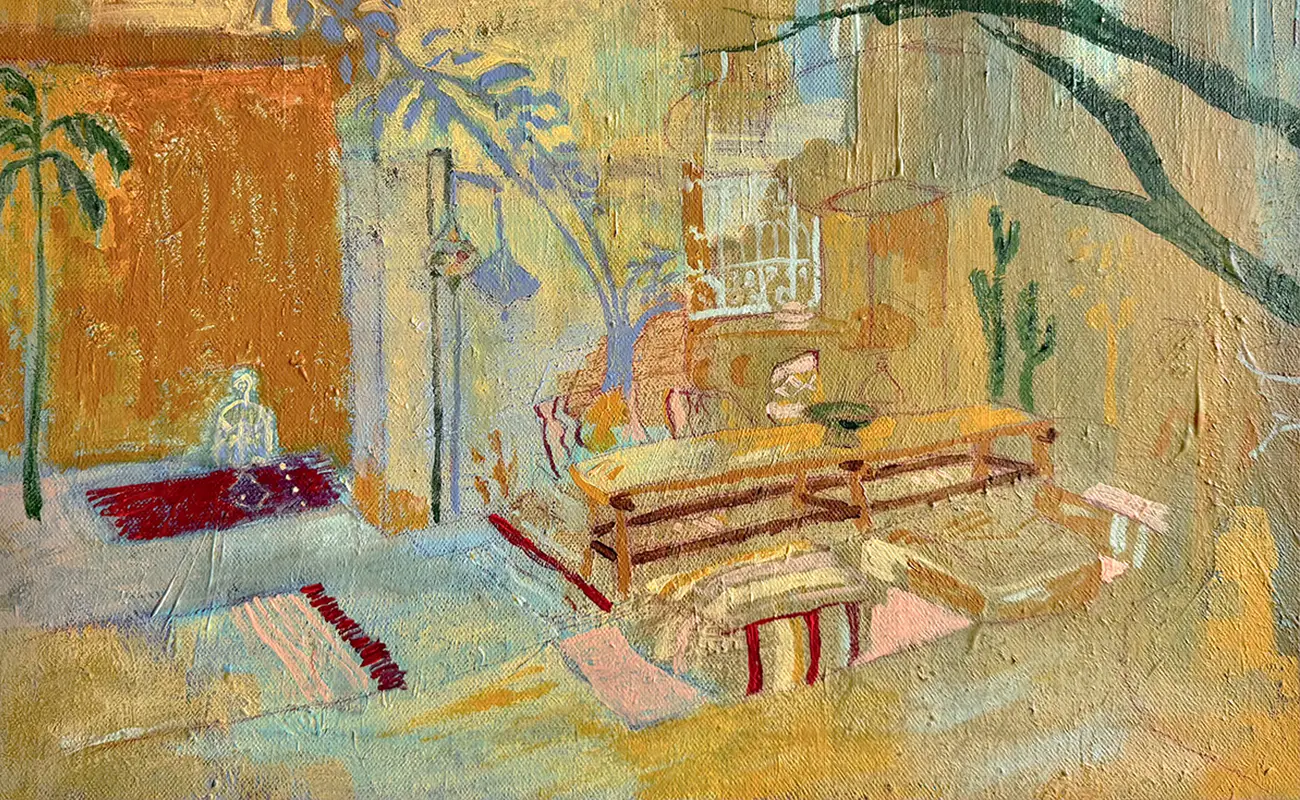
“My art reflects this search for belonging, as I piece together fragments from many places to create worlds that exist only in my imagination.”
The Imaginative Pulse of Displacement
Jasper van den Ham, a visual artist based in a small village in the southern Netherlands, channels a lifelong search for belonging into vivid, emotionally charged paintings. Born in 1978, his creative evolution began not with brushes or canvases, but through the lens of a camera. Early experimentation with photography sharpened his sensitivity to detail, composition, and light—an awareness that later infused his drawing and painting practices. As he began layering ink and pencil over photographs, he gradually stepped away from the camera and into the expressive world of painting, where personal history and sensory memory converge in imagined landscapes.
His childhood, shaped by relocations due to his father’s profession, left a lasting imprint on his inner life and artistic direction. Rather than developing a fixed sense of place, Jasper learned to navigate frequent change, adapting to new environments without becoming anchored in any of them. This fluid experience of space and identity underpins his visual language. His artworks often merge fragments from different geographies into single compositions, reflecting an emotional response to the places that once surrounded him. The result is not documentation but synthesis—new terrains that feel simultaneously unfamiliar and intimately known.
This ever-present movement, both physical and emotional, drives a longing for grounding that animates his work. Through color, form, and rhythm, Jasper builds scenes that seem suspended between reality and reverie. His paintings are not bound to specific locales but evoke the essence of a place—its atmosphere, temperature, and mood. Each canvas becomes a quiet search for stillness, shaped by an internal compass pointing to nowhere and everywhere at once. This tension between rootedness and restlessness forms the emotional core of his practice.
Jasper van den Ham: Evocative Landscapes of the Mind
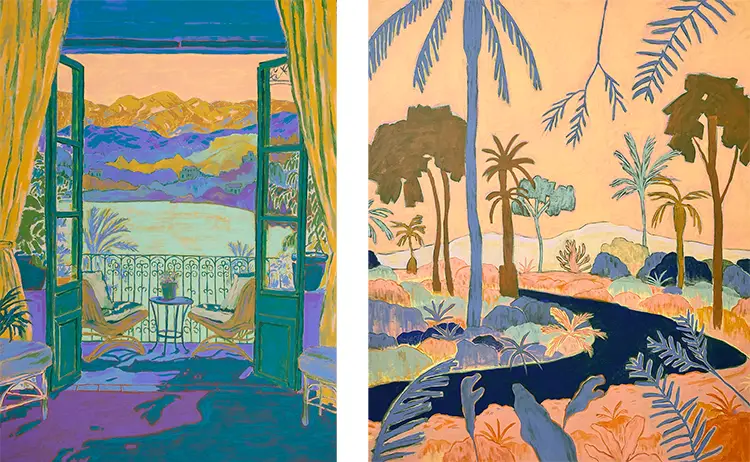
The essence of Jasper van den Ham’s current work lies in how he reimagines the natural world as a conduit for personal and collective emotion. Having transitioned from photography to painting and drawing, his style now leans toward expressive, color-driven compositions where nature becomes a living character. Saturated hues and gestural brushwork give his paintings a dynamic energy, while subtle details hint at a deeper sense of stillness and contemplation. His interest in trees and plants, in particular, reveals a deep reverence for the organic world—not simply as background or subject matter, but as emotional entities that embody memory, time, and change.
Jasper’s visual language captures fleeting, often poetic moments: sunlight casting warm patterns on tiled floors, the quiet silhouette of a palm tree at dusk, or the intimate glow of an interior lit by natural light. These moments are not incidental. They function as emotional anchors in his work, distilling larger experiences into sensory impressions that linger. By capturing these details, he invites viewers to linger within each scene, offering a space where personal reflection and imagination can unfold. His paintings are not about nostalgia, but about the emotional texture of memory, filtered through time and transformed into something new.
Central to his practice is the interplay between what is seen and what is felt. While inspired by both interior and exterior environments, Jasper’s work resists the literal. He moves away from representational accuracy, opting instead to suggest place through mood, rhythm, and color. This fluidity allows his work to remain open-ended, giving viewers permission to project their own memories and associations onto each scene. His landscapes are less about where they are and more about what they feel like—rich, vivid, and quietly resonant with unspoken stories.

The Influence of Color, Culture, and Story
Jasper van den Ham draws from a deep well of artistic and cultural influences, both visual and literary. The works of Henri Matisse and Jan Sluijters have informed his bold approach to color and form, encouraging him to embrace saturated palettes and dynamic arrangements that bring his canvases to life. Vincent van Gogh’s ability to infuse everyday scenes with emotional depth continues to resonate in Jasper’s own pursuit of expressive landscapes. Meanwhile, Paul Gauguin’s imagined worlds and use of color to shape atmosphere have sparked new ways for Jasper to think about constructed spaces that transcend geographic reality.
Beyond these visual inspirations, Jasper finds fuel for his creative fire in experiences that exist far outside the studio. Travel, in particular, plays a significant role in shaping his imagination. Visiting new places allows him to gather visual impressions and emotional cues, which often surface in unexpected ways while painting. These experiences, though not always directly represented, provide a palette of sensory information that informs the tone and structure of his compositions. For Jasper, traveling is less about destination and more about shifting perspective—each journey adding to a growing vocabulary of feeling and form.
Literature, art house cinema, and podcasts also contribute meaningfully to his practice. They offer different ways of thinking about narrative, space, and mood, influencing how he constructs visual stories without words. Whether it’s through a character’s internal monologue in a novel or the atmospheric cues in a film, Jasper absorbs these narrative techniques and allows them to surface organically in his work. This multidisciplinary influence enriches his paintings, making them feel cinematic yet intimate, carefully crafted yet spontaneously emotional. His canvases offer not just images, but experiences shaped by many ways of seeing and sensing the world.

Jasper van den Ham: Embracing Process, Imagining Possibility
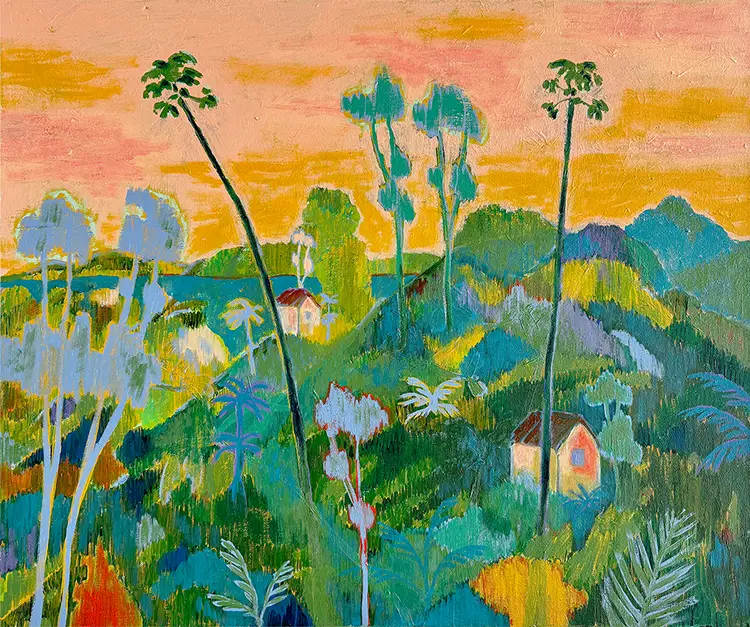
Among Jasper van den Ham’s body of work, Imagined Landscape 16 stands out as a defining moment in his evolution as an artist. It represents a departure from earlier pieces that were more closely tied to specific memories or physical locations. With this painting, Jasper began constructing entirely new environments—ones shaped not by geography, but by intuition, emotion, and memory. The artwork serves as a milestone, marking the point where his imagined landscapes became more confidently untethered from the real world, allowing his creativity to move in freer, more expansive directions.
The creation of Imagined Landscape 16 was marked by an intricate layering process. Jasper devoted significant time to exploring the interactions of color, adjusting each layer until the palette evoked a particular emotional cadence. The interplay between vibrant tones and delicately formed shapes gives the painting a dual sense of energy and calm, inviting viewers to lose themselves in its dreamlike qualities. It is a piece that speaks to the artist’s ongoing commitment to atmosphere—offering a visual space that feels both meditative and dynamic. This balance of tension and harmony is one of the defining features of his mature style.
In his daily practice, Jasper favors a reflective and intuitive rhythm. His mornings begin with quiet rituals—classical music, coffee, and reading—that help him enter a thoughtful, creative state. Studio time typically starts around mid-morning and flows organically, shaped by what the day brings rather than by rigid plans. Afternoon exercise often acts as a mental reset, allowing fresh insights to emerge when he returns to the canvas. Rather than chasing specific outcomes, Jasper trusts the process itself to generate new directions. This open-ended approach keeps his work fluid and evolving, allowing imagination to lead and discovery to unfold naturally, one painting at a time.