
Shadows on the Canvas
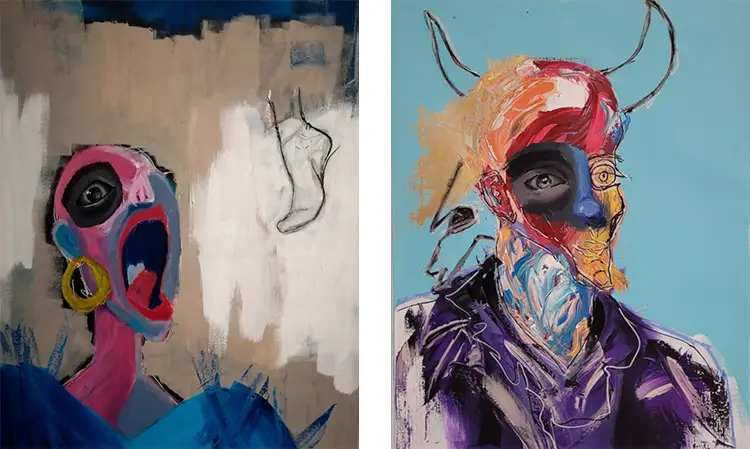
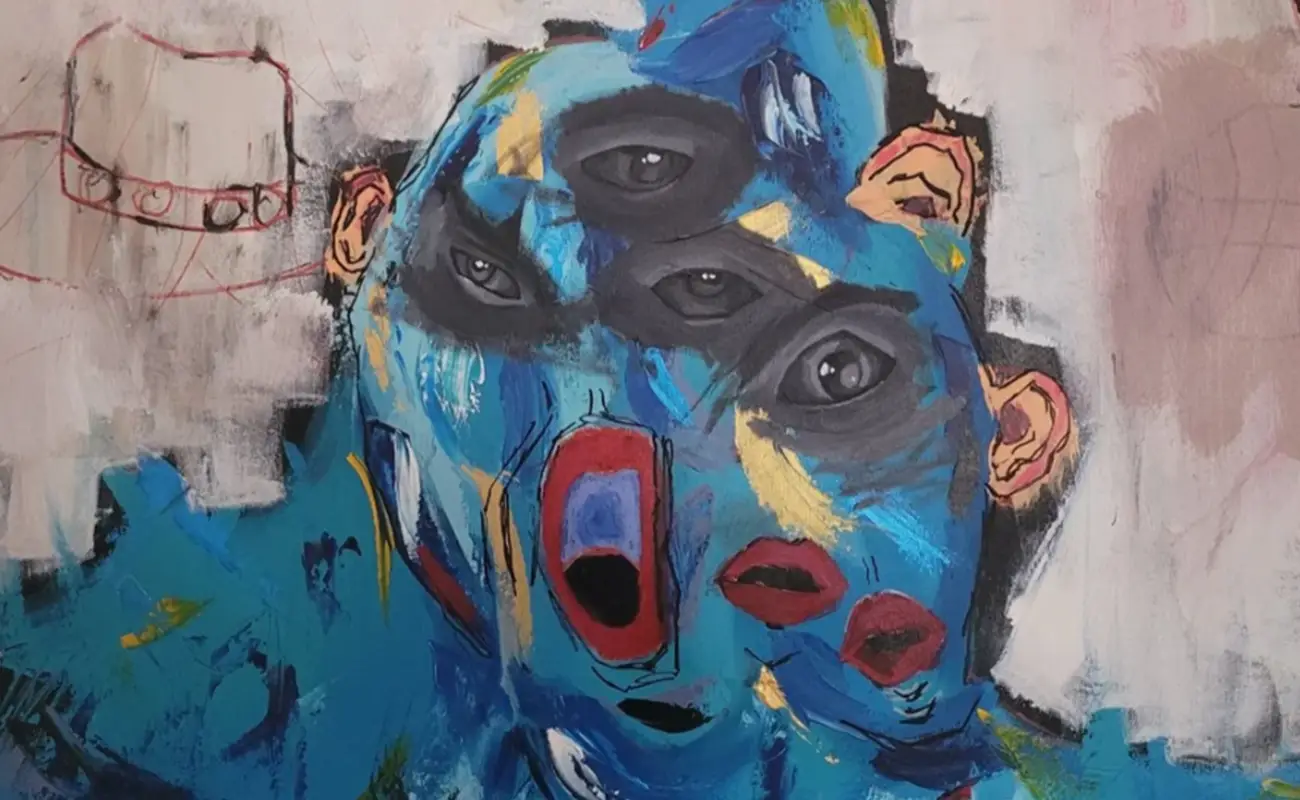
The work of Gabriele La Teana is not easily forgotten. Born in Scandiano, Italy, and raised in Milan from the age of four, La Teana’s art is marked by an unmistakable emotional ferocity that borders on confrontation. His paintings are neither serene nor decorative—they are confrontational reflections of inner turmoil, often depicting distorted human figures wrapped in symbolic, almost primal, gestures. Since his artistic rebirth in 2018, he has found acclaim both in his home country and abroad, captivating viewers with pieces that feel like raw confessions translated into color and form. What makes his work particularly compelling is its refusal to comfort; instead, it challenges, disturbs, and compels introspection.
La Teana’s early years in graffiti laid a foundational aesthetic—improvised, rebellious, and public—that continues to pulse through his mixed-media work today. Beginning with spray paint on city walls and trains, he was part of the street art movement long before taking to canvas. That underground energy, combined with a relentless drive for emotional authenticity, shaped a practice that rejects formal academicism in favor of visceral expression. His shift from graffiti to studio work came abruptly, spurred not by a desire for prestige but by psychological necessity. During a period of personal darkness in 2018, he turned to painting as a form of survival. What began as a desperate outlet soon became a full-fledged vocation.
This newfound momentum led to exhibitions in Florence, Bologna, Rome, Milan, and a pivotal solo show in Alcamo, Sicily. There, at the Museum of Contemporary Art, La Teana not only presented a body of work that marked a turning point in his career but also secured a place for several pieces in the museum’s permanent collection. His rise did not stop at national borders. In the years following, his work was displayed in Budapest’s Pintér Gallery, and one of his pieces even entered an auction alongside works by Dalí and Botero at the prestigious Gigarte House. This international validation underscored what many had already begun to see: La Teana was no longer just an artist responding to trauma—he was shaping a visual language of emotional resilience.

Gabriele La Teana: Between Disorder and Discipline
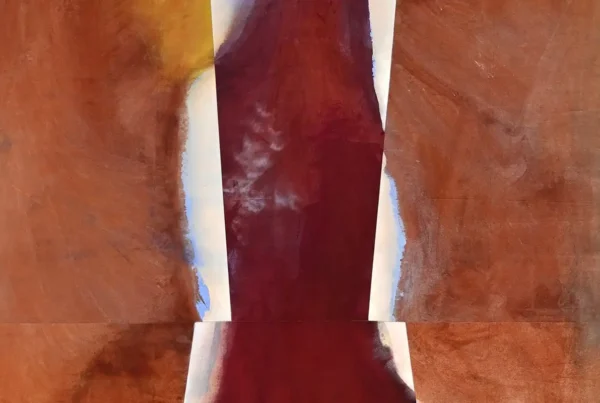
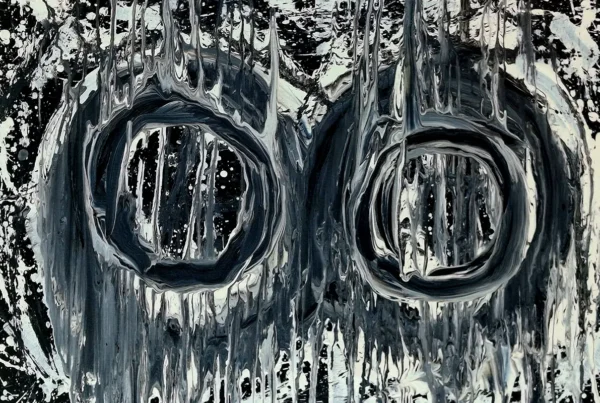
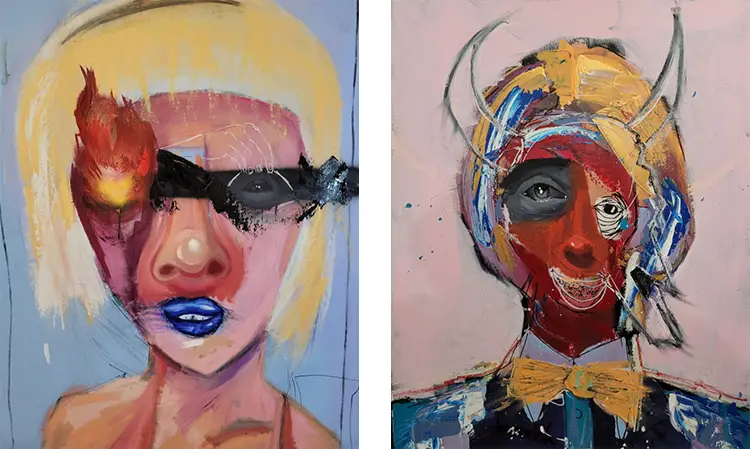
What defines Gabriele La Teana’s art is its fearless vulnerability. His pieces are often filled with visual noise—fragmented forms, distorted anatomy, symbols carved into paint like ancient markings—yet behind this chaos lies a precise and controlled hand. His style straddles a dynamic intersection of street art, art brut, and contemporary figurative work, layered with flashes of realism that only heighten the psychological impact. Despite never receiving formal art education, his deep study of human anatomy, influenced early on by his mother’s medical textbooks, informs a practice that is as intellectual as it is emotional. These anatomical references, often skewed or exaggerated, become metaphors for mental and emotional conditions.
La Teana’s brushstrokes are aggressive yet intentional, each one a gesture of release rather than decoration. He describes painting as a battleground, where he wrestles with personal demons and psychic burdens. Early works bore the aesthetic of tribal masks, almost ritualistic in appearance, as if he were invoking spirits or exorcising emotions. Over time, his approach matured into a more refined but equally intense technique, moving from symbolic distortion to a fusion of realism and surrealism. Despite the evolution, his goal has remained consistent: to capture and externalize the psychological conditions of modern life—depression, isolation, fear, and existential uncertainty—through a deeply personal lens.
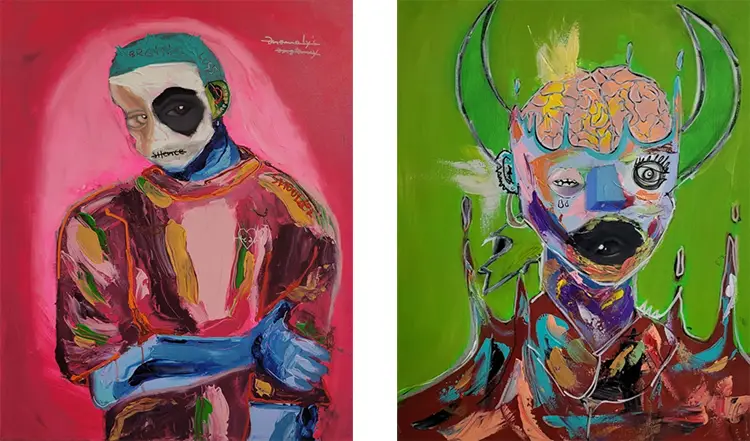
His “Personality Series” and “Shamans” remain among his most meaningful collections. In particular, the “Shamans” series feels like a prophetic exploration of his future self, created long before he fully understood the path he was on. These figures, caught between the sacred and the broken, appear as intermediaries between inner chaos and outward calm. For La Teana, they serve as both mirror and mask. He resists explaining their meanings too directly, preferring that viewers discover their own interpretations. This openness not only invites dialogue but reinforces the intimacy of his work, which, though intensely autobiographical, is never solipsistic. Each painting is both a personal catharsis and a communal invitation to confront discomfort.
Dreams, Demons, and Dualities
Much of La Teana’s creative process begins not in the studio, but in sleep. Dreams, nightmares, and fragmented visions often serve as the initial spark for his paintings. These subconscious images, often charged with intense emotion, are then filtered through real-life experiences—either his own or those of people he knows. The resulting artworks are neither purely dreamlike nor strictly documentary; they hover in a liminal space where fantasy and memory collide. Themes such as claustrophobia, pregnancy, death, and imprisonment emerge frequently, particularly in works created around his 30th birthday. Though painted in vivid, almost cheerful colors, these pieces originate from profound nocturnal fears, embodying the paradox of beauty and dread.
The artist’s relationship with change is foundational to his creative ethic. He refuses to remain stylistically static, insisting that artistic survival depends on continual evolution. His journey began with crude, explosive canvases that mirrored his mental state at the time. Then came a period of figurative study, followed by a hallucinatory phase filled with distorted imagery and psychological symbolism. Now, he is deepening his exploration of realism, merging impulsive emotional energy with structured technique. This adaptive approach allows him to remain authentic while pushing technical boundaries. For La Teana, stagnation is the true enemy, not chaos or confusion. Change itself is the only constant he embraces without fear.
La Teana’s studio reflects his internal world—a chaotic but purposeful mess, filled with energy and potential. He describes it as a space where external noise vanishes the moment he begins to paint. This mental silence, born from creative engagement, is as vital to him as any physical material. It is in this state that he can access the raw emotional currents that fuel his work. He paints not to escape reality, but to translate it into forms that are emotionally legible, even when abstracted. Inspiration comes from everywhere: conversations, news stories, inner thoughts, and spontaneous visual flashes. Each painting is the result of this rich interplay between impulse and reflection.
Gabriele La Teana: Art as Survival, Style as Resistance
For Gabriele La Teana, painting is not a career—it is a means of survival. After a near-decade-long creative silence, his return to art emerged not from ambition but necessity. Depression became a companion rather than a foe, and through art he learned not to defeat it, but to coexist with it. This acceptance redefined his practice. His work no longer seeks resolution or healing in a traditional sense; instead, it acknowledges suffering as an integral part of existence. Rather than sanitizing pain, he confronts it, framing it as something worthy of expression rather than concealment. This honesty is perhaps why his pieces resonate so powerfully—they speak to a universal desire to be seen in all our contradictions.
La Teana’s artistic values challenge not only personal expectations but also societal ones. He believes that Italy, despite its deep artistic heritage, can be slow to embrace new movements that break from tradition. Nonetheless, he maintains a profound love for his country and hopes to contribute to a fresh, unorthodox wave of Italian contemporary art. At the same time, he looks outward, forging relationships with galleries across Europe and the United States. His international projects aim to dismantle geographic and aesthetic boundaries, asserting that personal stories—when told honestly—can transcend cultural lines. He dreams of creating work that is both intimate and global, informed by memory yet untethered to any one place.
One of his most valuable insights for emerging artists is brutally simple: “Don’t think too much. Start doing it.” This philosophy encapsulates the urgency and authenticity of his practice. He encourages constant experimentation, emotional honesty, and the courage to evolve. For La Teana, stagnation equals artistic death. By embracing uncertainty, engaging deeply with personal experiences, and remaining open to transformation, he has built a body of work that not only speaks for itself but also speaks to those who struggle in silence. Whether through primal markings, distorted figures, or increasingly refined oil techniques, Gabriele La Teana’s art continues to insist that beauty can exist in pain, and that expression, above all, is survival.