
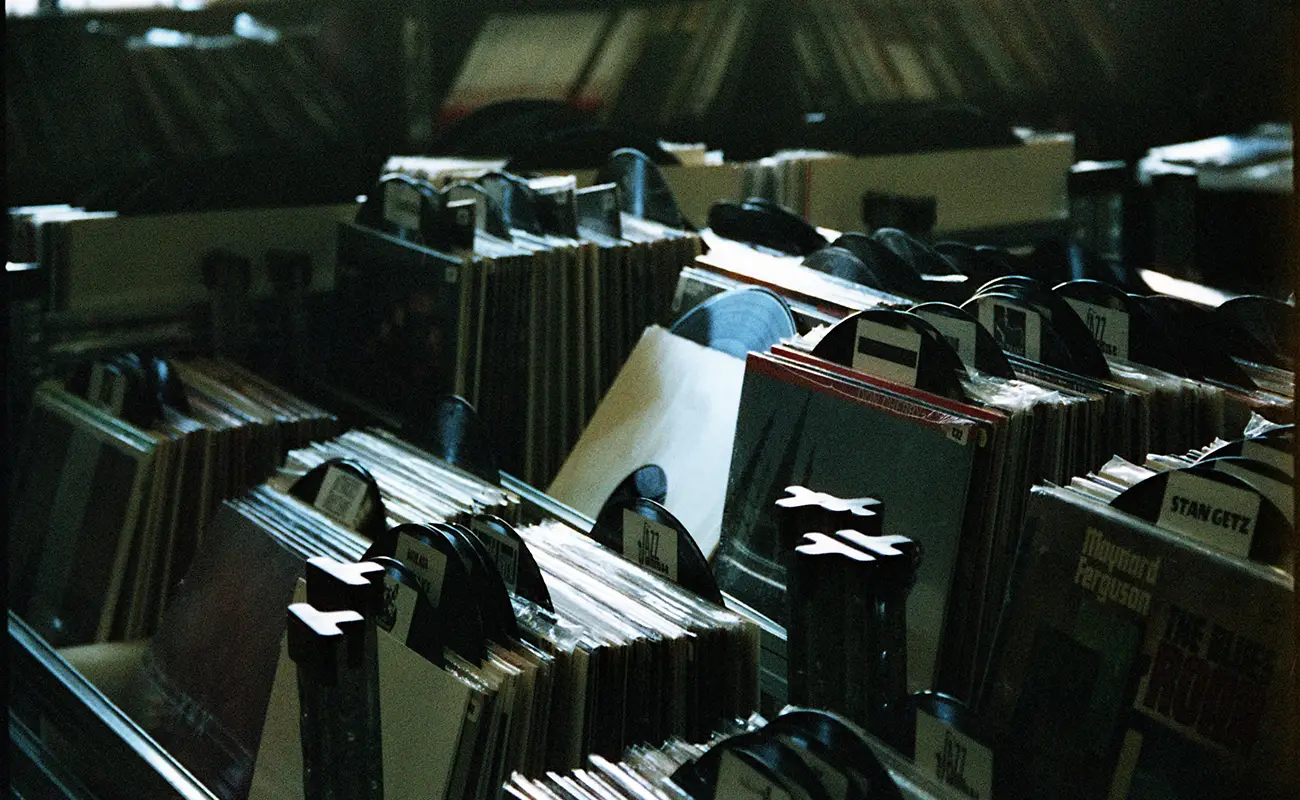
“I’ve always had the call for storytelling, with the mind built up foundation out of the paper.”
Through the Lens of Memory and Motion
Francesca Ogbuachi is an artist whose voice finds its clearest resonance not just in words or visuals alone, but in the powerful synthesis of both. Working fluidly as a photographer, videographer, and writer, she explores emotional depth, temporal shifts, and identity through storytelling that transcends medium. Italian, born to Nigerian parents, her early life unfolded across different geographies, including Italy and later Ireland, culminating in her graduation from the Limerick School of Art and Design (LSAD) with a Bachelor’s degree in Fine Art Photography and Moving Image. These cultural intersections serve as both literal and symbolic foundations in her practice. Ogbuachi doesn’t merely document; she reveals, dismantles, and reconstructs the emotional scaffolding that underpins human experience, whether through a still frame or a passage of prose.
Her journey into creative expression didn’t begin with the camera but through writing. At just eleven years old, she wrote her first story, inspired by the enchanted narratives of fantasy fiction such as The Golden Compass. While that particular manuscript may have been lost with time, the impulse to create never left her. Instead, it evolved—first into drawing, then music, and eventually into moving and still images. This natural evolution wasn’t guided by a specific ambition to become a photographer or filmmaker; rather, it emerged as a way to articulate the unspoken, to match inner mood with outward expression. Films and books consumed during specific seasons, particularly autumn, influenced not only her aesthetic choices but also her understanding of tone and narrative pacing, shaping a creative instinct that is both sensitive and complex.
Central to Ogbuachi’s philosophy is the idea that being an artist means having something to say—and the tools to say it. Whether through photography, film, writing, or a combination of all three, her works stem from a desire to translate inner states into tangible forms. She doesn’t adhere to rigid definitions or genres; instead, she embraces a versatile approach, allowing intuition and emotional resonance to guide her. What connects her output across disciplines is a commitment to honesty and the belief that storytelling is not confined by format. The camera lens, the keyboard, the edit suite—all serve as extensions of her internal voice, enabling her to explore layers of identity, memory, and perception with profound clarity.
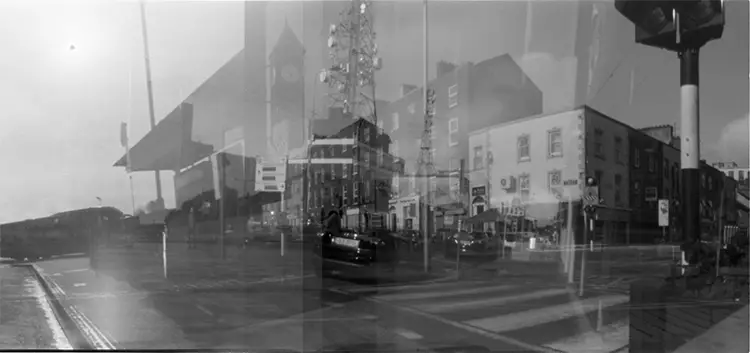
Francesca Ogbuachi: Framing Time and Feeling
Ogbuachi’s creative style is deeply intertwined with her attraction to specific eras, particularly the mid-1970s through to the late 1990s. These periods are not simply aesthetic references but emotional timeframes that inform her visual storytelling. The clothing, color grading, film grain, and cultural tone of those decades often appear subtly in her work, forming a bridge between personal memory and collective history. She constructs narratives in which soundtracks and visuals are treated with equal importance, allowing them to inform each other rather than exist in isolation. Music, for instance, acts as a narrative device in her process, reflecting the emotional palette of a particular moment or character. Her aesthetic isn’t retro for the sake of nostalgia—it is a carefully considered mechanism to locate stories within a timeless yet emotionally specific space.
Color and numerology also play a significant role in her visual language. The color indigo, for instance, serves as a conceptual anchor in one of her chapters, not for its usual associations with blue or purple, but for its ambiguity. Indigo’s inability to be easily classified mirrors her interest in emotional complexity and undefined states of being. Similarly, numbers such as 19 and 5 recur in her projects, often unintentionally, but consistently enough to become part of her symbolic vocabulary. These recurring motifs function almost like cinematic leitmotifs, signaling emotional turning points or hidden structures within her narratives. They aren’t puzzles to be solved but rather emotional cues that deepen the viewer’s engagement with her work.
Among her most significant artistic influences is Vivian Maier, whose work deeply resonated with Ogbuachi since 2021. Maier’s dual life as both nanny and street photographer speaks to a kind of quiet duality that Ogbuachi also explores—living in one world while observing and documenting another. This influence is coupled with her admiration for non-linear storytelling as experienced through directors like Christopher Nolan and films like Hereditary, which impressed upon her the power of fragmented narrative and psychological depth. The experimental documentary Man with a Movie Camera and the poetic stillness of Chris Marker’s La Jetée further cement her commitment to pushing the boundary between documentation and imagination. These references are not simply inspirational—they act as creative landmarks that validate her own instinct to blur storytelling modes.
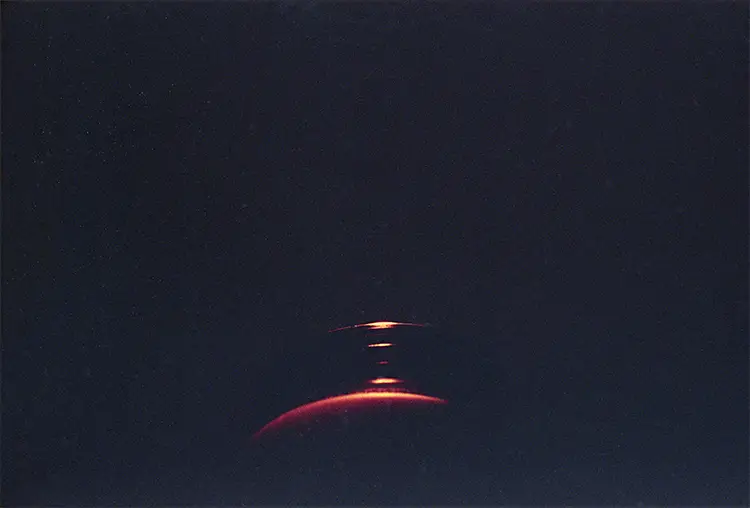
Between Word and Image: The Architecture of “I AM.”
At the heart of Francesca Ogbuachi’s body of work lies her first photobook, I AM., released in April 2023. More than a debut project, this book stands as a crucial touchstone in her career—her first tangible merger of narrative writing and visual storytelling. The book chronicles the internal journeys of two protagonists, one male and one female, through shifting stages of life, emotion, and experience. Ogbuachi treats these characters not as fictional archetypes but as vessels of feeling, using photography and poetic fragments to narrate their transformations. Each image is paired with a stanza, not to illustrate but to coexist. The work argues against the traditional separation of image and text, proposing instead that the two can function as dual languages with equal weight. It is here that her interest in hybrid storytelling finds its most complete expression.
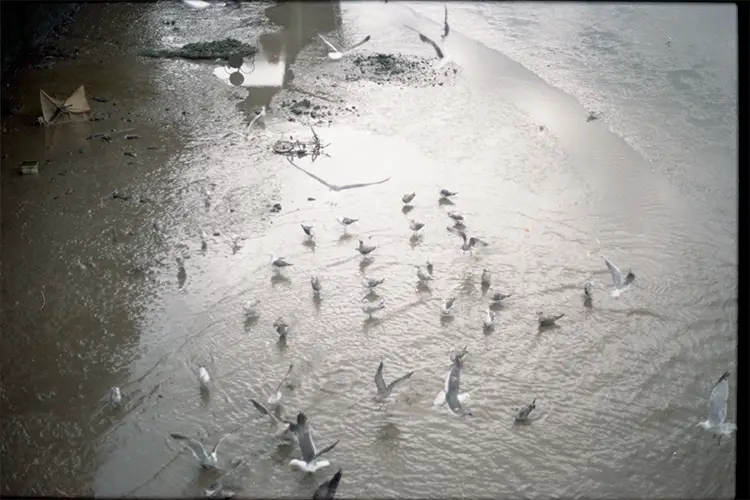
Shot using a Canon A-1 analogue camera with a Tokina RMC 200–300mm lens, the visual language of I AM. is grounded in analog texture and depth. The choice of equipment wasn’t purely technical—it shaped the visual rhythm and pacing of the book. Her preference for both indoor and outdoor environments allowed her to manipulate natural light and spatial contrast, creating a visual experience that mirrors the emotional gradations within the text. The structure of the book follows an intentional rhythm: chapters composed of visuals accompanied by short stanzas, complemented by a second, imagined book titled the book of only words. This duality reflects Ogbuachi’s desire to let images and language breathe individually while remaining deeply connected. Her vision for the book’s physical form—a crimson hardcover with a singular title—further reinforces the minimalist, symbolic tone of the work.
This project represents more than a synthesis of disciplines; it signifies a personal resolution. For years, Ogbuachi grappled with how to unite her multiple creative inclinations without one overshadowing the other. I AM. provided the framework that proved such integration was not only possible but artistically compelling. The book does not seek to resolve its themes in a neat conclusion but rather opens a continuous dialogue between sensation, interpretation, and reflection. It is less a statement and more a starting point, a conceptual springboard for future works that will likely continue to blur, stretch, and challenge the conventions of visual and written narrative.
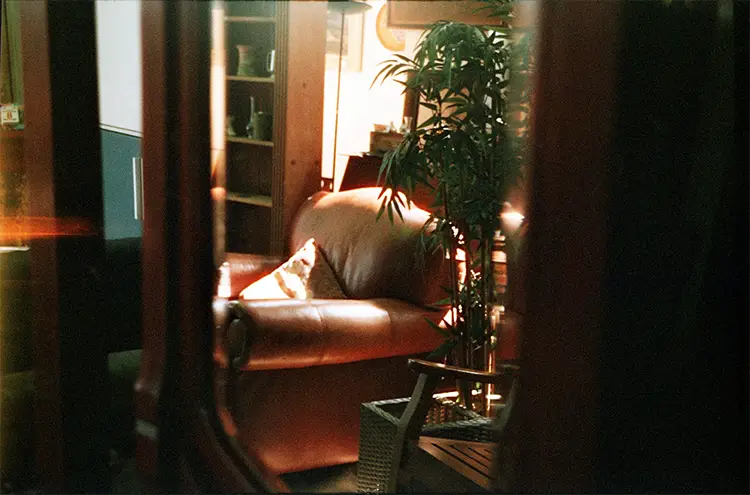
Francesca Ogbuachi: Unfolding Psychological Worlds
Looking forward, Francesca Ogbuachi is setting her sights on fiction—specifically, a full-length novel that will draw deeply from her fascination with psychological tension and emotional drama. While the genre is still taking shape in her mind, she is drawn toward stories that investigate the interior lives of characters, focusing not on what happens to them, but on how they process and internalize those experiences. This interest isn’t rooted in academic study, but rather in lived emotional resonance. Her exposure to films and books that explore psychological complexity has instilled in her a deep respect for narrative structures that leave room for uncertainty, ambiguity, and silence. She is not interested in stories that conclude with clarity but in ones that invite ongoing interpretation.
The idea of having this future book adapted into a film is already part of her vision, though she insists that any potential director must be attuned to the multilayered essence of the work. For her, this is not about simply translating text into image, but about capturing the nuanced emotional atmospheres that exist between dialogue, in glances, silences, and spatial dynamics. Her background in photography and videography gives her an acute sense of how tone and rhythm can be constructed visually, and she envisions working closely with filmmakers who share this sensibility. The goal is not cinematic grandeur, but emotional honesty—a slow, steady unraveling of character through both spoken and unspoken language.
This next chapter in her artistic life won’t replace her visual work but will enrich it. Whether through the lens, on the page, or behind the edit suite, Ogbuachi remains committed to exploring how internal landscapes can be expressed externally. She sees her tools—camera, pen, video software—not as separate instruments but as interchangeable languages. In her hands, storytelling becomes less about linear events and more about psychological echoes, refracted through aesthetic decisions that prioritize mood, memory, and intimacy. Her work continues to resist easy classification, instead inviting viewers and readers into worlds where stories are felt before they are fully understood.