“A painting should not end in one glance. It should stay active in the mind.”
The Pulse of Image and Identity
Ricardo Rodriguez Cosme has built a practice that stands at the meeting point of technical discipline and contemporary symbolism. Born in 1992 and based in Valencia, Spain, he works across painting, printmaking, and collaborative projects, yet painting remains a central language in his artistic identity. His background in Conservation and Restoration of Cultural Heritage at the Polytechnic University of Valencia gave him an uncommon relationship with materials, structure, and the long history of image making. A further period of study at the Accademia di Belle Arti in Naples expanded that foundation, exposing him to another visual tradition shaped by centuries of artistic excellence. Those experiences are visible in the authority of his compositions, where classical control supports modern themes. Rather than treating realism as simple imitation, he uses it as a vehicle for emotion, conflict, and cultural commentary. His work invites viewers to look beyond surface beauty and consider how identity is constructed through symbols, posture, costume, and atmosphere in the present day.
What makes his art memorable is the way it fuses opposing forces without forcing them into easy harmony. Strength appears beside vulnerability, speed beside stillness, glamour beside isolation, and control beside chaos. These tensions are not decorative concepts placed on top of the image. They are embedded in the structure of each composition. Figures often seem poised between action and reflection, carrying an emotional charge that extends beyond the immediate scene. He is interested in the pressures people place upon themselves and the roles society asks them to perform. That concern appears whether the subject is a driver, a cowboy, a horse, or an anonymous figure whose face remains hidden. Each image becomes a study of how people manage ambition, solitude, and expectation. By presenting these ideas through powerful visual archetypes, he gives familiar symbols new psychological weight while preserving their immediate impact.
His paintings also demonstrate a careful balance between reduction and intensity. Spare backgrounds and restrained settings often heighten the presence of the subject, allowing gesture, clothing, anatomy, or machinery to carry narrative meaning. This selective approach creates visual clarity while preserving mystery. The viewer receives enough information to feel the atmosphere, yet not enough to resolve every question. That openness is essential to his practice. He has expressed a desire for paintings to remain active in the mind rather than ending in a single glance. The result is work that operates in stages. First comes attraction through scale, realism, contrast, or drama. Then subtler ideas begin to emerge, such as loneliness inside success or fragility hidden behind public strength. In this way, Ricardo Rodriguez Cosme turns contemporary figuration into an experience that is both immediate and slowly unfolding, rooted in visual pleasure yet sustained by thought.

Ricardo Rodriguez Cosme: Classical Skill in a Contemporary Language
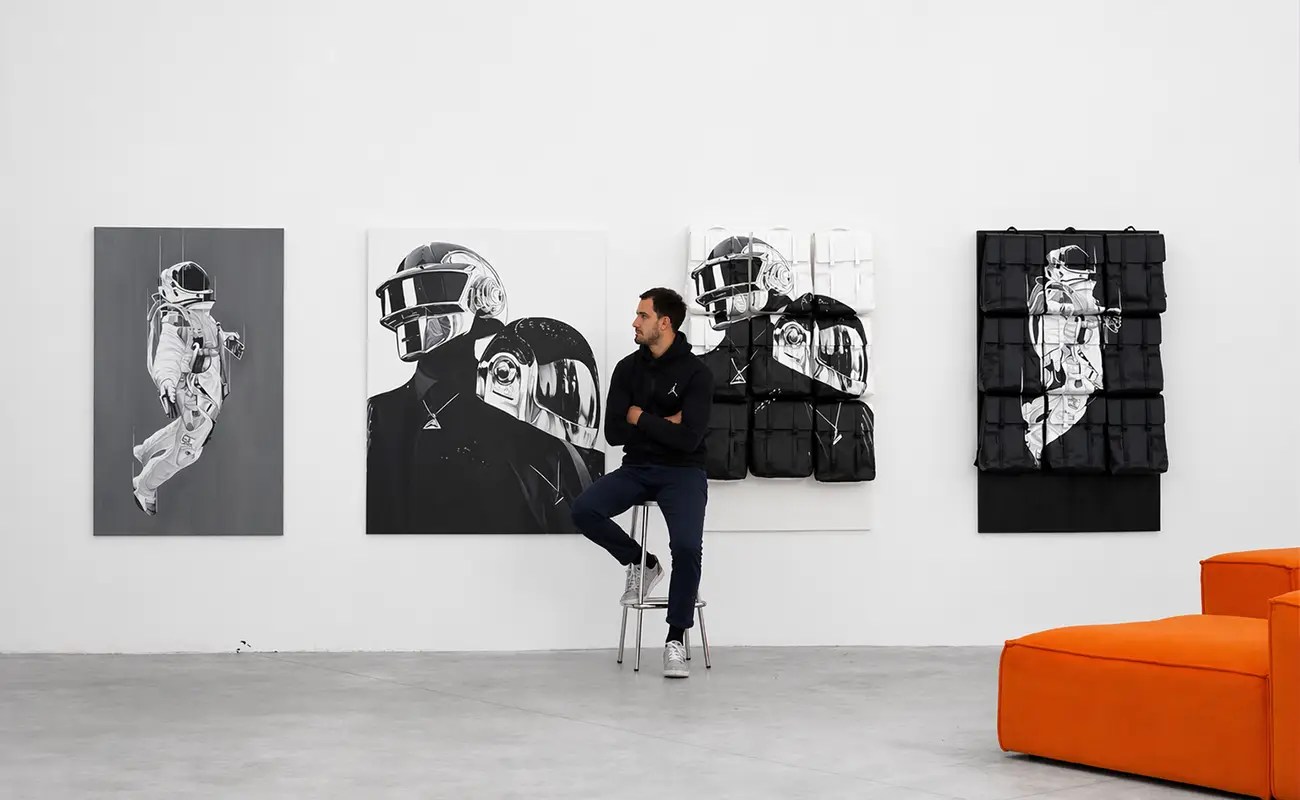
The technical character of Ricardo Rodriguez Cosme’s work reveals a painter deeply aware of historical methods while refusing nostalgia. He often uses oil on canvas, a medium associated with centuries of European painting, because it allows rich tonal transitions, layered depth, and subtle shifts of texture. Through this material he can render reflective visors, leather surfaces, skin, fabric folds, and muscular form with striking conviction. Yet his interest in craft is not separated from concept. He uses precision to strengthen emotional force rather than to display skill for its own sake. His studies in restoration likely sharpened his sensitivity to how paintings are built, corrected, and preserved over time. That awareness appears in his process of layering, revising, and refining until the image reaches its intended presence. Even when a work feels spontaneous or charged with motion, there is evidence of sustained decision making beneath the surface. Such discipline allows contemporary subjects to carry the gravity often associated with historical portraiture.
A defining feature of his visual language is the repeated use of black and white or tightly controlled palettes. For Ricardo, monochrome is not an absence but a concentration. By reducing color, he directs attention toward structure, light, emotion, and the architecture of form. It also introduces a timeless quality, removing the distraction of trend or decorative excess. In these works, shadows become emotional spaces, highlights sharpen psychological tension, and contrast gives figures a sculptural presence. He has described black and white as capable of speaking more deeply than loud color, and that belief can be felt throughout his paintings. Monochrome creates room for memory, silence, and unresolved feeling. When color does appear, it tends to arrive with purpose, intensifying danger, heat, distance, or technological coolness. This selective strategy shows an artist who treats every formal decision as meaningful rather than incidental.
He also enriches painting through the use of text, allowing language to enter the image as another active material. Words can challenge what is seen, complicate mood, or shift the viewer from observation into interpretation. A phrase may function as irony, confession, confrontation, or invitation depending on its placement and relationship to the figure. This interplay between image and language reflects a contemporary awareness of how identity is constantly mediated through slogans, branding, messages, and public statements. At the same time, his compositions remain rooted in the physical authority of painting itself. The combination of written language with classical handling creates a productive friction between permanence and immediacy. In an age of rapid images and fleeting attention, Ricardo Rodriguez Cosme uses old methods to speak to modern consciousness, proving that traditional technique can remain urgent when guided by present concerns.

Symbols of Speed, Solitude, and Desire
Among the recurring subjects in Ricardo Rodriguez Cosme’s art, motorsport imagery holds a central place. His interest is not limited to machinery or competition as spectacle. He sees racing as a condensed theatre of obsession, discipline, danger, and the pursuit of limits. Drivers inhabit enclosed helmets, protected yet isolated, celebrated yet hidden. Vehicles promise control while operating at the edge of disaster. Such contradictions make the world of racing fertile ground for painting. Through these figures and machines, Ricardo explores pressure, performance, ambition, and the emotional cost of success. A racing suit can become modern armor, while the visor becomes a barrier between public image and private experience. Speed itself becomes symbolic, representing the restless momentum of contemporary life. By freezing these themes in paint, he transforms motion into reflection. The viewer is asked to consider what people chase, what they sacrifice, and how identity can become inseparable from performance.
Another enduring symbol in his work is the cowboy, a figure loaded with cultural memory and contradiction. The cowboy suggests independence, masculinity, solitude, resilience, and myth, yet also carries loneliness and uncertainty. Ricardo has described this image as a metaphor for the artist, someone often romanticized from the outside while privately confronting doubt, competition, and vulnerability. This parallel gives the subject unusual depth. Rather than presenting a simple nostalgic character, he uses the cowboy to examine how freedom is imagined and how self reliance can conceal emotional strain. Clothing, stance, and silhouette become tools for discussing roles people inherit or perform. In a similar way, horses appear throughout his paintings as symbols of instinct, nobility, elegance, violence, and fragility. Their physical power is matched by sensitivity, making them ideal carriers of dual meaning. Through these subjects, he studies the unstable balance between force and tenderness within human life.
One of his most personally significant works is Lovelust, a painting centered on intense longing, desire, and the overwhelming wish to know someone deeply and keep them present in one’s life. He has described it as the powerful sensation of new love that reaches through mind, body, heart, and soul, refusing to disappear. This statement reveals another dimension of his practice. Beneath images of helmets, riders, and stoic figures lies a sustained interest in vulnerability and emotional exposure. Desire in Lovelust is not casual attraction but an all consuming state that disrupts ordinary control. It aligns with many of the tensions visible across his broader body of work, where composed surfaces often contain turbulent inner feeling. By identifying this painting as especially meaningful, Ricardo shows that his art is not only about external symbols of power or mythology. It is equally concerned with intimacy, yearning, and the emotional intensity that shapes private experience.

Ricardo Rodriguez Cosme: Building Myths for the Present
Ricardo Rodriguez Cosme often places historical references beside modern objects, attitudes, and identities, creating what he has called visual, cultural, and historical hybrids. This approach recognizes that the past never fully disappears. Classical sculpture, academic portraiture, and older systems of symbolism continue to influence how modern society imagines strength, beauty, heroism, and status. By pairing those traditions with racers, branded clothing, masks, or cinematic poses, he asks how inherited ideals survive inside contemporary culture. A figure in modern attire may carry the authority once granted to nobility. A helmeted driver can echo the heroic anonymity of armor. A sharply lit body can recall the drama of earlier painting while speaking directly to present anxieties. These combinations prevent history from becoming distant decoration. Instead, it becomes active material shaped into new meanings. Ricardo’s art therefore functions as a bridge between eras, showing continuity without surrendering to imitation.
His reach beyond painting into printmaking and sculpture further strengthens this flexible vision. Each medium changes how an image behaves. Printmaking introduces repetition, variation, and the movement of ideas across multiple surfaces. Sculpture asks questions of volume, presence, and how bodies occupy space. Working across disciplines helps him avoid comfort and keeps his visual thinking responsive. This openness also supports his international visibility, since works shown in different contexts encounter audiences with distinct references and expectations. He has noted that viewers bring their own histories and readings, making exhibition a form of exchange rather than one way communication. Yet he has also recognized that themes such as loneliness, ambition, identity, power, and memory remain widely understood. That balance between specificity and universality is one reason his imagery travels well. Symbols may shift in meaning from place to place, but emotional tensions remain recognizable.
What Ricardo Rodriguez Cosme ultimately offers is a contemporary form of mythmaking grounded in realism. He takes figures associated with modern life and grants them the lasting presence once reserved for saints, rulers, and legendary heroes. However, these new myths are unstable. Their surfaces suggest confidence while their inner life remains uncertain. Public identity appears polished, yet fragility constantly shadows it. This complexity reflects current experience, where people perform themselves through images while privately negotiating fear, desire, and doubt. Ricardo’s paintings succeed because they do not simplify that condition. They preserve beauty and tension at the same time. A viewer may first admire technical mastery, dramatic contrast, or iconic subject matter, then gradually encounter deeper questions about what strength means and how symbols shape behavior. Through this layered method, he has created a body of work that speaks vividly to the present while carrying the gravity of art history.