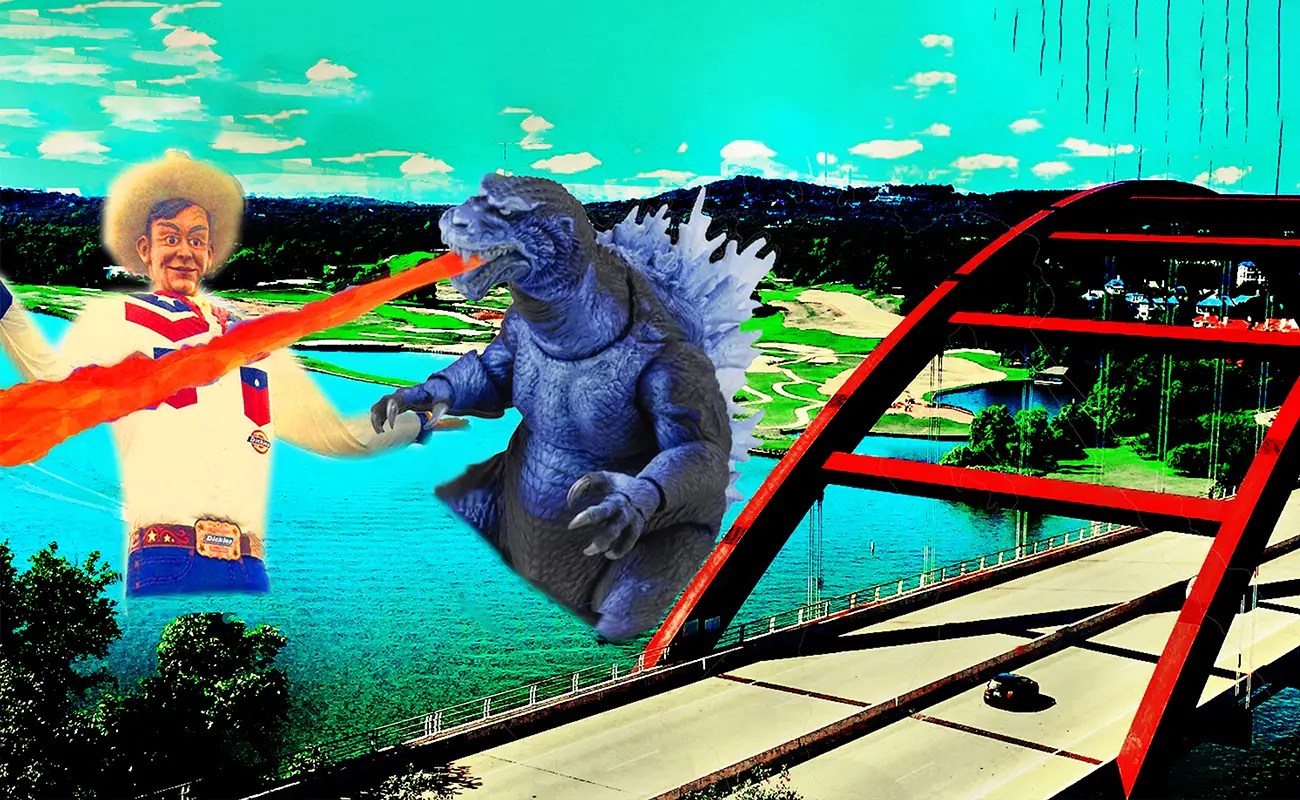
“I see today’s push-button visual effects not as a threat to the purity of my art, but as an ever growing set of brushes that expand my creative palette.”

Reframing the Photograph as a Beginning, Not an Endpoint
From the earliest stages of his creative life, Jeffery L. Brown demonstrated an insistent need to move past the limitations of what the camera initially records. Rather than treating photography as a tool for preservation or documentation, he approached it as an unstable starting point that invited interference, reinterpretation, and transformation. Working first with analog tools and materials, he immersed himself in double exposures, experimental film stocks, improvised filters, and self-taught darkroom experiments. These practices were not exercises in novelty but purposeful attempts to reshape the meaning of the moment being photographed. Brown sought to challenge his own assumptions about visual success, pushing against inherited established ideas of clarity, realism, and compositional correctness. His goal was never to capture the world as it appeared, but to translate how it felt, how it lingered, and how it fractured over time. This early resistance to photographic literalism would become the foundation of a practice defined by subjectivity and emotional reconstruction rather than factual record.
As imaging technologies expanded, Brown’s philosophy matured without abandoning its origins. Digital tools did not replace his analog instincts but extended them, offering new ways to manipulate, layers, and reconsider images long after their initial capture. He rejects the notion that “one-click” visual effects diminish artistic intent, instead treating them as additional instruments available to the artist’s hand. What distinguishes his work is the evolution or development of his intent. A single image may pass through hundreds of layers, each requiring decisions that accumulate into a dense visual argument. These compositions demand sustained focus, patience, and a willingness to revise repeatedly until achieves his vision. Brown’s process reflects a blend of discipline and compulsion, where images are built slowly through prolonged engagement. The final works resist easy categorization, as they are constructed environments shaped by time, intuition, and continuous acts of judgment.
Central to Brown’s approach is his evolving interpretation of memory. After revisiting decades of archived photographs, he recognized that recollection rarely mirrors the clean precision of a well-exposed frame. Instead, memory retains impressions, distortions, and emotionally charged fragments that refuse to align neatly. His practice mirrors his cognitive reality. By disrupting even his most carefully composed photographs, he embraces fragmentation as a more honest form of truth. Faces dissolve, colors exaggerate, and spaces compress, accumulating meaning. These interventions do not obscure reality but reinterpret it, allowing personal emotion to guide structure and tone. Brown’s images offer viewers access to a reconstructed world shaped by intuition rather than accuracy. In doing so, his work asserts that authenticity in photography can emerge not from visual fidelity, but from emotional resonance and personal authorship.

Jeffery L. Brown: Dense Surfaces, Cultural Memory, and Visual Accretion
Viewed collectively, Jeffery L. Brown’s body of work reads as a sustained refusal of photographic transparency. His images are thick with accumulation, built through layers that compress time, memory, and labor into a single surface. This density gives the work a tactile quality more commonly associated with heavily worked paintings than with traditional photography. Each layer carries the trace of a decision, an adjustment, or a return, resulting in compositions that feel physically weighted by attention. Color plays a central expressive role within this structure. Rather than describing light or space, Brown uses color to signal psychological states and emotional tensions. Saturated blues can communicate grief, while aggressive neons suggest altered consciousness or cultural overload. Color becomes a narrative force, shaping how an image is experienced rather than how it is viewed. The result is imagery that demands slow viewing, rewarding sustained engagement with evolving details and moods.
Brown’s visual language also maintains an active conversation with popular culture and art history, though never in a purely reverential way. Influences from French New Wave cinema, comic art, and twentieth-century American iconography surface through irony, humor, and affectionate distortion. Figures such as G.I. Joe, Barbie, or exaggerated Texan symbols are not deployed as nostalgic props but as carriers of cultural memory, reshaped to reflect personal mythology. Seriality, graphic patterning, and visual exaggeration echo artists like Roy Lichtenstein and Andy Warhol . Brown absorbs these references into his own system, allowing them to mutate through layering and repetition. Humor often serves as an entry point, inviting viewers into compositions that gradually reveal deeper concerns related to identity, masculinity, longing, and the instability of meaning within mass-produced imagery.
Emotionally, Brown’s work operates in a charged oscillation between playfulness and mourning. Bright palettes and visual jokes coexist with deeply personal loss, creating tension that keeps the images from settling into a single emotional register. Works such as Broken Blues reveal this balance with particular clarity. In that piece, a woman who was a close friend and frequent subject appears rendered in a heavy blue palette that communicates grief and emotional weight. The fractured form rising from her head suggests a damaged spirit and the rupture left behind by her death from an accidental fentanyl overdose. This vulnerability contrasts with other works that lean into excess, satire, and wordplay. Across the practice, joy is never uncomplicated and sorrow is never silent. Even the most visually exuberant images carry an undercurrent of introspection, reinforcing the emotional complexity that defines Brown’s vision.

Images Discovered Through Return, Trance, and License
A defining feature of Brown’s practice is his willingness to abandon images and revisit them years later, allowing time and experience to reshape their meaning. Joe & Barbie Hunt Mushrooms exemplifies this method. Originally photographed during his youth, the image featured G.I. Joe and Barbie staged in a jungle setting. At the time, Brown dismissed it as unsuccessful and relegated it to what he calls his warehouse folder. Years later, upon rediscovery, the image resolved itself with sudden clarity. Drawing from his formative experiences with psychedelic substances during his teens and early twenties, he reconceived the figures as seekers wandering through the jungle in search of mushrooms. Once this conceptual shift occurred, Brown entered an intense state of focus, working continuously until the piece reached completion. The work reflects his belief that images sometimes require distance before revealing their purpose, rewarding patience and return.
This trance-like working state appears repeatedly throughout Brown’s process. Robot Assassin emerged from a moment of chance observation at Emo’s, a frequented Austin night spot where he noticed a young friend leaning against the back wall. She began striking exaggerated poses, mimicking the confidence of a Charlie’s Angels character while brandishing finger guns. While refining the image later, Brown attempted to remove an unwanted background element and discovered an unexpected visual effect created by the erasing process across her legs. That accidental discovery redirected the entire composition, pulling him into a prolonged period of experimentation and refinement. A similar sense of irreproducible discovery defines Roy’s Gun. The photograph began as a straightforward request for an image of a woman holding a pistol at a bar. After delivering that version, Brown revisited the image in a heightened state of concentration, transforming it into a graphic homage to Roy Lichtenstein using offset-style dots and bold visual rhythm. Because he doesn’t keep a log of the steps he takes to create a new image, he admits it would be impossible for him to recreate another piece with the same look and style.
Underlying these processes is Brown’s license, or freedom, to alter an image without fear of critical ridicule or self-censorship. He openly rejects the idea that tools, software artifacts, or automated effects are illegitimate. Instead, he treats them as extensions of his artist’s hand, available for use when guided by intention and sustained attention. His background in film photography and darkroom printing informs this approach, as he applies digital tools in a tactile, manual manner that echoes analog manipulation. As audiences gain insight into the deeply focused mental energy behind his work, they understand his images are not born of AI whimsy, but rather carefully crafted within a deeply personal place.

Jeffery L. Brown: Wordplay, Accumulation, and Post-Verisimilitude Truth
Several of Brown’s works demonstrate his interest in accumulation and linguistic play as structural devices. Texas Cattle Drive gathers nearly every visual element he encountered while traveling through far West Texas while shooting for a Netflix pilot. With the notable exception of Big Tex, the image compresses regional icons, clichés, and observations into a single, crowded composition. The piece functions as an exercise in excess, where meaning emerges through density rather than hierarchy. Similarly, My Dinner with Andrea draws its conceptual strength from observation and reference. The title nods to the film My Dinner with Andre, while the image itself captures a lunch with a friend and business associate who remained absorbed in her phone throughout the meal. Her face disappears behind her hands and device, framed by the stone walls of the restaurant, creating a closed, almost surreal atmosphere that comments quietly on presence and disconnection.
Oui Conduit further illustrates Brown’s sensitivity to overlooked spaces and his fondness for wordplay. Regular visits to Ruby’s, a barbecue restaurant in Austin, familiarized him with its vividly painted, cramped restrooms, where exposed electrical wiring ran visibly through conduit along the walls. Upon learning the restaurant was closing, Brown decided to preserve that chaotic visual environment. Rather than relying on an ultra-wide lens, he constructed a montage of color and form to capture everything occurring within the confined space. The resulting image transforms an ordinary restroom into a compressed field of visual energy, honoring a place through reconstruction rather than documentation. The playful title underscores his approach, where language and image reinforce one another without becoming explanatory or literal.
Taken together, Jeffery L. Brown’s practice can be understood as post-verisimilitude photography, a mode that prioritizes emotional accuracy over visual precision. His images do not ask to be believed as records of reality. They invite viewers to enter reconstructed worlds shaped by memory, intuition, and sustained labor. By dismantling the assumption that photography must serve truth through clarity, Brown offers an alternative vision grounded in personal experience and psychological depth. Each work stands as a testament to prolonged attention, return, and license, asserting that meaning often emerges only after the image has been taken apart and rebuilt. Within this framework, photography becomes not a mirror of the world, but a site where personal truth is assembled piece by piece.